
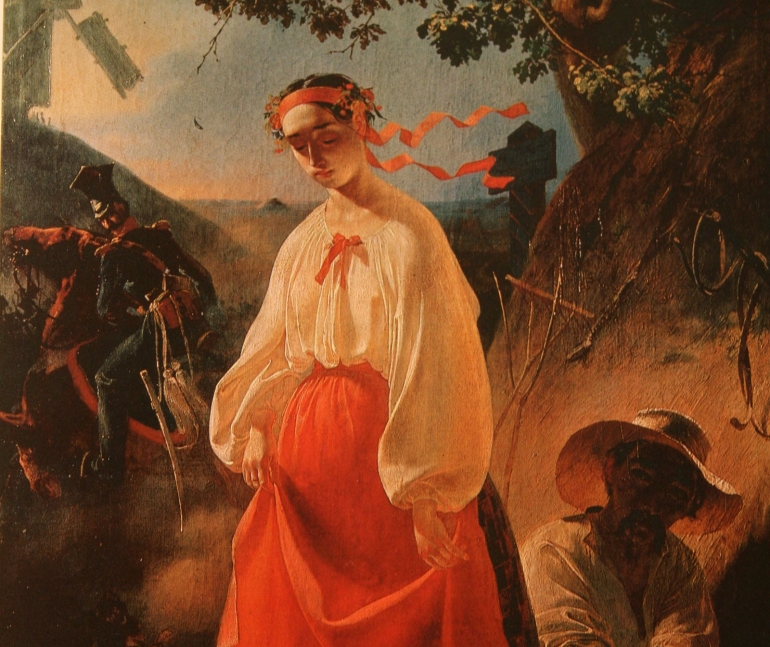
Around the time when public torture and executions in the West were gradually losing their popularity (not among the common people, of course, but among those in power who set the tone) and giving way to closed trials and imprisonment, a new Ukrainian literature was emerging. Declaredly oriented toward the mass reader and popular format, it serves as an encyclopedia of social moods and customs. With one important caveat: sometimes these moods and customs are products of the populist imagination of the intelligentsia — invented first, and only then offered to the reader.
Literature in the Service of Ideology
Frankly, this remains true to this day — the only difference being that the position of that part of the cultural sphere which “strays from the path” and strives to create primarily “art for art’s sake,” and only secondarily to influence the value system of ordinary citizens, has been gaining strength.
However, aesthetic progressiveness in literature does not automatically translate into the promotion of democratic values and the principles of gender equality and tolerance. Even the classics sometimes contain things that are appalling by today’s standards. And our contemporaries also often cross the line of established norms of ethics and democracy. The boundary between public accountability and censorship is, in fact, quite thin. We may raise our voices around the most outrageous cases — but we should not aggressively overuse this approach. Neurotic self-censorship among the most vulnerable artists is hardly the goal of feminist critique.
A civilized discussion of what, from the standpoint of basic values, requires a new approach — and the marking of gross violations of equality, human rights, and freedoms — appears to be the most effective tool in the long run.
There is much to work on. For instance, Ukrainian literature of the past two centuries abounds with violence of all kinds and scales. We are used to thinking of our culture as patriarchal, yet it is simultaneously filled with images of flower-like girls, gentle and unhappy maids, and courageous, noble — though often equally unfortunate — men. Serfdom was abolished long ago, which means the path to happiness for the heroine of Ukrainian classics seems shorter now: all she has to do is escape the village stove, get an education, find paid work, and secure “a room of her own” — and, ideally, avoid drowning herself in despair over unrequited love or an unwanted pregnancy.
If you think that’s all there is to it, you’re underestimating Ukrainian literature — and its role. In a literature-centered culture, the influence of popular texts is enormous. Those in power — both the deeply concerned moral majority of the community or nation, which guards ethical values, and those who shape domestic policy — know this and seek to keep it under control.
The Male Gaze: Alleged Sympathy
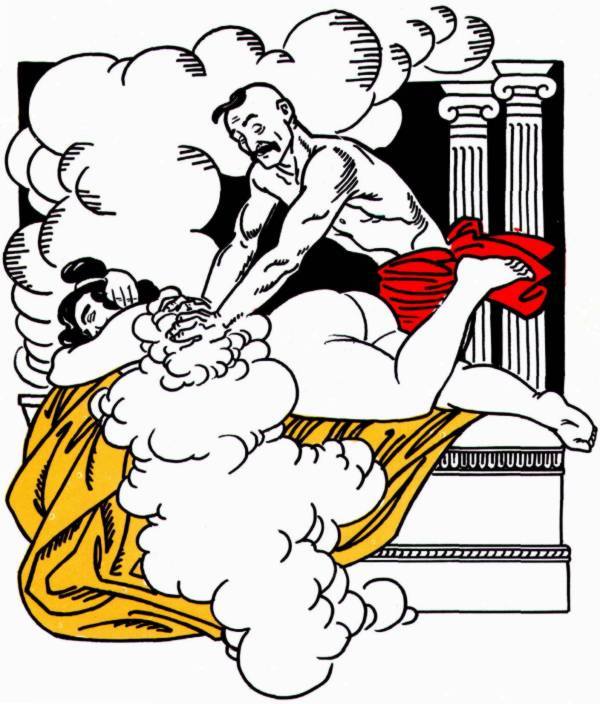
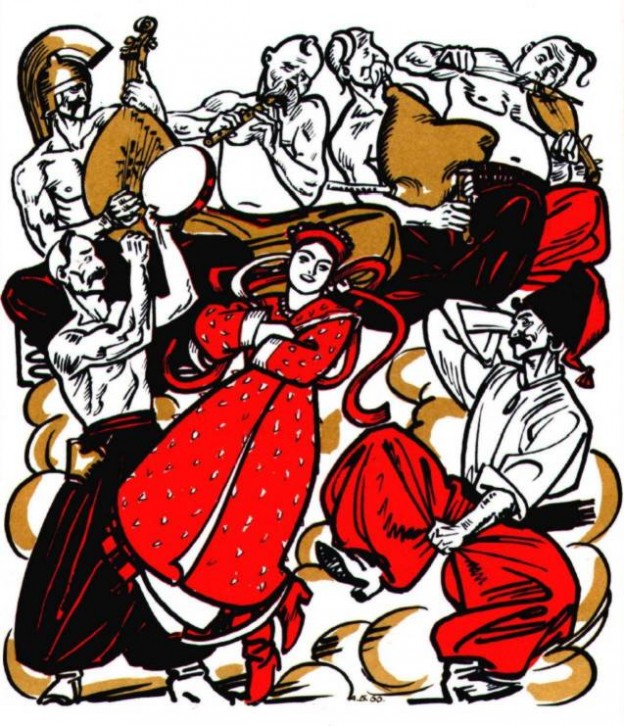
Traditionally, the origins of modern Ukrainian literature are traced back to Eneida by Ivan Kotliarevsky. Such a cheerful poem — where could there possibly be violence? Here, for instance, Aeneas begins an affair with the queen Dido, starved for male affection: joy, adventure, eroticism — everyone’s happy. But as soon as the “brisk young man” sets off toward his destined goal, the widow immediately commits self-immolation.
Flames blazed all around her,
The dead woman was no longer seen,
Smoke and fumes rose from her pyre! —
So deeply did Dido love Aeneas
That she burned herself alive
And sent her soul straight to hell.
Thus, she herself becomes the object of condemnation — and, being the source of power in her own kingdom, she also becomes the one who punishes herself for violating the unwritten law of adultery: she betrayed the memory of her dead husband and surrendered to a foreign prince. The worst part is not even that she will be condemned — it’s that she will be ridiculed. The moral violence of public judgment still lies ahead, but the queen chooses not to live to face it. Or rather, the author chooses to tell us the story this way — for he would like widows who have found comfort to end just so.
And what about Aeneas?
Though he hurried to sail away from Dido,
He wept bitterly, inconsolably.
And when he heard she’d burned in the fire,
He said: “May she have eternal glory,
And may I have long-lasting power,
And soon find another widow too!”
But the “fallen woman” Kateryna — the most famous heroine of Taras Shevchenko — actually lived to see public condemnation. And she must have regretted it a thousand times: when her parents cast her out of the house (“Had I known, I would’ve drowned myself before sunrise,” her mother says in farewell, advising her to look for a mother-in-law in Moscow), when she wandered with her child, begging for food. Eventually, Kateryna meets her unfaithful lover again, but he wants neither her nor their son. The heroine drowns herself in grief, and the child, growing up as a beggar, later becomes a blind minstrel’s guide.
Shevchenko writes about Kateryna with compassion and tenderness — he truly pities her. The poem remains wildly popular even today: countless readers and listeners have wept over it in every Ukrainian home; now it is recited at cultural centers during commemorative events. Yet no one ever defends the girl’s right to raise an illegitimate child. It is worth noting that in reality, not all “fallen women” shared Kateryna’s tragic fate — yet classical literature has cemented precisely this image as typical.
In schools, the traditional reading of this sentimental story is still used for moral instruction: Kateryna is condemned for her recklessness and naivety, while her tragic end evokes sympathy. The seducer is a clearly negative figure — that point is never debated. But the parents’ actions remain unquestioned: as captives of harsh folk morality, they simply “couldn’t do otherwise.” A lesson on Kateryna could become an opportunity for an open conversation between teachers and students about the evolution of moral and ethical norms and sanctions — after all, two centuries have passed since Shevchenko’s time!
And of course, Kateryna is a Ukrainian girl — one of “our own.” But non-Ukrainian women fare even worse: they become objects of revenge, forced to atone through suffering for the sins of all oppressors of the Ukrainian people — and their children, too. The scene of infanticide in the poem Haidamaky is shocking: Honta publicly slaughters his own sons because they are Catholics, like their mother. National identity comes second, as do paternal feelings. The children stammer, “We are not Poles.” Later, under cover of night, Honta buries them according to Cossack custom — yet he must remain loyal to his oath and kill the little “Catholics” with a consecrated knife.
A Woman’s Cruelty Toward Another Woman
No one describes a woman’s cruelty toward another woman as truthfully as a woman herself. Mariia Vilinska — an emancipated writer who told stories of young women leaving their parents’ homes, earning their own living instead of perishing, and later marrying for love by their own choice — began her literary career with Ukrainian-language Folk Tales under the pen name Marko Vovchok. There she outshone everyone in depicting the brutal life of female serfs. Sadistic masters and mistresses prick their maids with needles, crush their hopes for love and marriage, scold, and beat them.
From the school curriculum, we remember Horpyna: a serf mother so overworked that she doses her baby with poppy extract to keep it quiet — and the child dies. The mother has no right to rest, no medical help, no shred of compassion from her enslavers. The culmination of this period in the writer’s work is undoubtedly The Boarding School Girl (Instytutka).
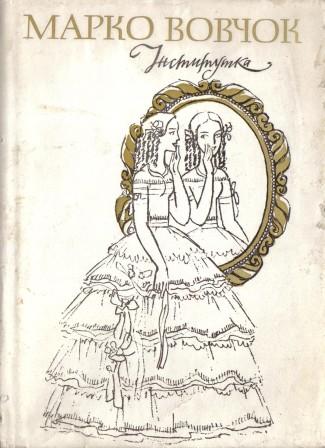
Violence inflicted by a woman upon another woman — or upon a man, or her subordinates — appears unnatural and tragic, more repulsive even than that committed by men. The educated young lady in The Boarding School Girl ostensibly pursues a noble goal — to reform and “optimize” the management of her estate:
“…she found hard work and bitter misery for everyone. The crippled and the children, even the tiniest ones, were not spared. The children swept the gardens, herded turkeys; the cripples sat in the vegetable patch, scaring away sparrows and other birds.”
She has also learned well that the serfs are her property, her enslaved labor force — and that she not only can but must train and beat them:
“At first she would only pinch or push lightly… and then blush like fire, ashamed of herself. But once she got used to it, settled in — that’s when we truly learned where in this world evil lives.”
The cruelty reaches its climax:
“I looked at her — she had become so terrifying my legs gave way. She grabbed me by the neck with both hands! Her hands were cold as snakes. I tried to scream, but the breath was knocked out of me — I fell by the apple tree and came to only after being splashed with cold water.”
The writer leads the reader to the conclusion that the problem lies not in the inhumanity of one individual, but in a social order that itself requires reform.
The drama of society is best illustrated through the example of the family. Ivan Nechui-Levytsky’s The Kaidash Family — seemingly comic — is, on closer inspection, deeply tragic: it depicts a struggle among several women for power within a single household. The men try to stay out of these domestic quarrels and instead divide the world into female and male spheres. The house belongs to the women, who literally divide the shared space — sweeping their respective halves of the entryway in turns. The distaff becomes a symbol of domination: both the mother-in-law and the daughter-in-law need it, and rather than obtaining another, they fight over it, ending in a physical scuffle.
Nechui-Levytsky loved to converse with ordinary women “from the people,” observing their speech and behavior. In his depictions of the Kaidash family, as well as of old women like Baba Paraska and Baba Palazhka, we see the fruits of these observations — vivid sketches “from life.”
It is evident that under different circumstances, an intelligent, strong-willed, and passionate woman could have achieved far more than victory over her mother-in-law. Even the marriage of two equally strong personalities — Karpo and Motria — could have been a partnership of potential rather than conflict. Yet, confined within the domestic space, the family, and the village, these women gossip, scheme, reproach their husbands, and draw them into their local battles.
The Feminism of the Champions of Human Equality
A few decades after Shevchenko’s Kateryna, male moralizing resurfaces in Panas Myrny’s The Loose Woman (Повія). This Ukrainian “sister of Carrie” (written several years before Dreiser’s Sister Carrie) reveals the author’s clear intent to punish a woman who dared defy social morality. Khrystya Prytyka escapes her village for the city, first becoming a maid, then the mistress of a wealthy man. After her lover’s death, she is forced into prostitution, ending in humiliation, disease, and death. The scene in which Khrystya’s nose falls off deserves a place among the most horrifying moments in Ukrainian literature.
The stories of Khrystya’s friends are no less shocking. For instance, Mar’ya recounts how a landowner raped her, kept her chained for resisting him, and how, after escaping, she lived with another gentleman who blackmailed the first for money in exchange for silence — only to keep most of it for himself. When Mar’ya became pregnant, he neither wanted the child nor marriage:
“…the next day he came home from work with a little bottle. Something yellow, almost red, inside. ‘Here,’ he said, ‘drink it — it’s just wine.’ I didn’t know anything, of course, so I drank it. At first — nothing; I even had lunch. Then I started to tidy up, and suddenly the pain struck — sharp, unbearable. My eyes went dark. I fell and remembered nothing. When I woke up, I was lying in a pool of blood… such a puddle! My heart hurt so much… I wished I’d died right there. But he stood over me: ‘Clean it up,’ he said, ‘and bury it in the garden.’ I couldn’t bear it — ‘Clean it yourself, if you caused it!’ Then he stomped his feet: ‘I’ll throw you out on the street! I’ll show you!’ So I gathered it all in a broken bowl, waited for evening, and buried it in the garden.”
Later, the girl was imprisoned and sent to a convent — punishment for her “crime.”
Panas Myrny does not condemn his heroines or their thinking — he condemns the social order that gives peasant girls, many born into serfdom, so few options. Was Myrny a proto-feminist? Undoubtedly yes — as is every author who sympathizes with the oppressed. In his other works, he shows the same empathy toward men: for him, the root of human tragedy lies in class position, poverty, limited opportunities, and low social mobility — the real sources of suffering.
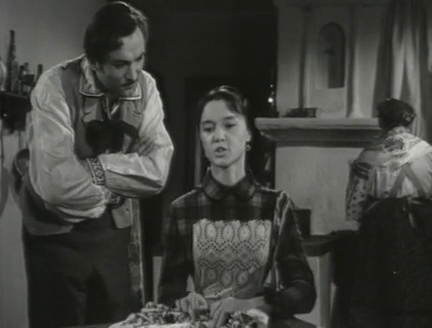
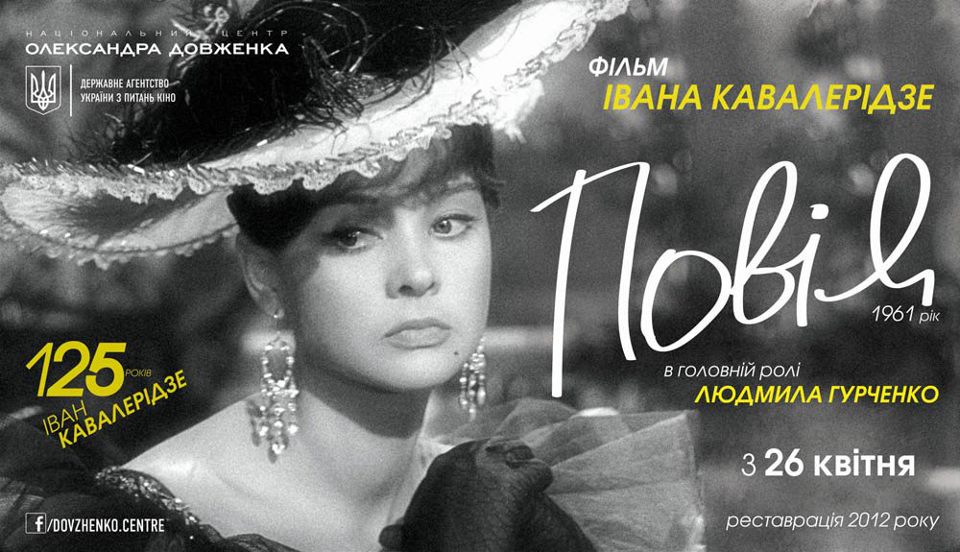
The consciousness of these unfortunate heroines is quite simple: they are uneducated, accept suffering as fate, believe it impossible to resist, are unaware of their rights, and their dreams of the future are limited in imagination. It is Panas Myrny who understands that beating and rape are wrong; his ill-fated heroines — Khrystia, Mar’ya, Maryna — like those of Marko Vovchok and Taras Shevchenko, can only hope that in the next episode, luck might finally favor them.
It would be difficult to accuse Ivan Franko of violating women’s rights. Yet his feminism is but a natural extension of his socialist worldview — and nothing more. Recall his backhanded compliment to young Lesia Ukrainka: “This sickly, frail girl is perhaps the only real man in all of modern Ukraine.” Torn from context, this phrase has followed the writer ever since — even after her death.
Lesia Ukrainka’s works often depict the suffering of those who differ from the dominant majority. In The Forest Song, for instance, both Lukash’s mother and his brisk, red-cheeked peasant wife Kylyna — a woman made for fieldwork and housework — torment the fragile Mavka, who is “not of this world” and capable of something far beyond reaping rye. Instead of finding her a fitting domestic task or simply leaving her in peace, the village women mock the girl for her otherness. The fact that their beloved Lukash loves Mavka is no reason, in their eyes, to accept her into their community.
A similar pattern appears in Boyarynia (The Noblewoman). Thrust into a foreign society with entirely different customs, the Ukrainian Oksana finds herself unable to survive there: she is far too emancipated for Muscovy. She is shocked to learn of the local tradition — marriages arranged through matchmakers, without courtship or affection. The ritual itself horrifies her:
“You will bring them a tray of honey,” says her mother, “the lady will arrange it all as required — you bow, and the boyar will kiss you on the lips…”
At first, Oksana refuses to take part, but her husband Stepan insists:
“You only need to greet them and return to the women’s quarters.”
He reasons pragmatically:
“I never told you there’s freedom here. But if we didn’t bow our backs here, the Muscovite voivodes would have bent our family thrice over back in Ukraine. You faint from disgust that some old man may touch your lips — but when I must call myself ‘Stepka the serf’ and kiss their hands like a slave, is that not worse?”
Oksana has no choice but to suppress her pride and play along — for the sake of the family’s survival.
In the end, she dies — crushed by the unbearable weight of social pressure. The domestic comfort of home, even her husband’s support, cannot save her from the suffocating atmosphere around her. (Similarly, Princess Yevpraksiya, the heroine of Pavlo Zahrebelnyi’s novel of the same name, perishes after being married off to a foreign land. We see again how a woman — especially a foreigner, young and inexperienced — remains powerless in a patriarchal world, where noble birth offers only illusory protection.)
In The Stone Host, Lesia Ukrainka’s drama about Don Juan, the enamored Dolores sacrifices herself to atone for his sins, while the widow Donna Anna must remain faithful to the husband Don Juan has slain. Yet the Commander’s statue punishes the seducer, not the “unfaithful” woman: woman here remains an object, a possession. Slaves are punished only when they begin to think for themselves — when they cease to be slaves.
War, Revolution, and the Woman
When it comes to war, violence reveals itself most starkly.
Woman is, traditionally, the unprotected being. And if there is an opportunity to access her body without consequence — it is usually taken. Does Valerian Pidmohylny condemn the rapist in his story The Third Revolution? After yet another anarchist raid, “in a corner of the bourgeois house, Ksyana lay sprawled, her head thrown back, her knees bent — a grotesque heap of violated flesh.” Earlier that day, she had planned to surrender herself willingly to Makhno himself. Pidmohylny’s disgust is evident.
But does he condemn his protagonist Stepan Radchenko, when Stepan rapes Nadiyka? The answer is less clear. Stepan is intelligent, strong, ambitious — a charismatic scoundrel. His brilliance and promise seem to eclipse his crime. Readers — and even critics — often forgive him in silence, focusing instead on his rise in The City, as if the assault were a minor footnote on his path to success.
If Pidmohylny, Khvylovy, and Yanovskyi treat violence in the Civil War with moral anguish — feeling it as both personal and collective trauma — then later, in canonical works about World War II, the tone changes. Soviet authors, though ostensibly humanist, always know exactly how things “should” happen and how readers should feel about them.
Oleksandr Dovzhenko’s Ukraine in Flames is a prime example of male fantasy disguised as patriotic tragedy. Olesia gives herself to the first passing soldier — to ensure that she is deflowered by a Ukrainian, not a German — and then remains eternally faithful to Vasyl Kravchyna, whom she may never see again. Her friend Khrystia, however, makes no such gesture (perhaps the idea simply never occurs to her?). She becomes the lover of an occupier — though an Italian, not a German — and perhaps for that reason, the author ultimately forgives her, but only after forcing her to repent with the same intensity as Shevchenko’s Kateryna.
And indeed, portraying a woman as an object of violation is a perfect tool of propaganda meant to stir aggression in the humiliated male who is convinced that this woman, left on occupied territory, belongs to him.
Yet things are no better for women at the front. In Oles Honchar’s “The Standard-Bearers,” Shura Yasnohorska is the darling of the entire regiment—so much so that when her fiancé is killed and she later falls in love with another man, the brotherhood at the front must approve her choice (recall Dido and Donna Anna!).
Later, Oles Honchar would write “The Cathedral,” where Yelka, raped by a village brigade leader, is tormented by the loss of her “honor.” It then becomes clear that the problem exists only in Yelka’s own mind. She need not repent, nor keep silent; rather, she should not fear publicly naming the unworthy act of another woman’s husband.
Marusia Churai: a woman, a killer, an artist
It is difficult to name a male Ukrainian writer who has portrayed a woman-killer as a sympathetic heroine—not merely attractive or charismatic, but genuinely positive.
Such is Marusia Churai in Lina Kostenko’s eponymous poem: strong, proud, talented, she did not kill out of baseness. And in any case, she poisoned—she did not stab. A classic, typically feminine method. Yet men judge her without allowances for her sex, and the verdict of the public court is stern and “just,” as expected—public execution. In the end, she is pardoned by a special hetman’s decree, but the broken poet is no longer fit either for creativity or for love.
Marusia is loved and respected for her “artistic merits”—at the time, typically masculine ones, hence the authorities’ keen attention to her case. What kills the artist in her—society’s attempts at censure, however tinged with sincere sympathy, or her own convictions about a single love for life and a notion of femininity incompatible with killing her beloved with her own hands? Marusia places first the dream of family life with a specific man, and when that dream shatters, all other possible options—from marrying someone else to focusing on her art—prove unacceptable.
Violence and erotica in the struggle against Sovietness
The anti-official literature of the last thirty years became a space for experiment and innovation. The performative masculinity of Andrukhovych’s characters, the demonstrative eroticism of Pokalchuk’s and Vynnychuk’s prose, the feminist essays of Yevhenia Kononenko… Descriptions of violence—physical and moral—are scattered generously throughout these texts.
Authors often resort to this deliberately: such details more easily hook or move the reader—or catch them with “juicy bits,” if we are speaking of mass literature. In men’s prose, erotic scenes became one of the standard devices for creating mass-market fiction (amid the oft-declared shortage of contemporary Ukrainian popular reading) and/or an outrageous means of shattering the prudery of Soviet literary norms.
Which of these books have become classics? First and foremost, Oksana Zabuzhko’s “Fieldwork in Ukrainian Sex.” Violence here is dissected and meticulously described. Bad sex? It’s there. An attempted rape? Of course. Need a character with a damaged psyche? The father, the lover, the heroine herself, people in her milieu… indeed, everyone. Want something larger in scope? The drama of violence against an entire nation unfolds before you, and the love story of a writer and an artist turns out to be only a pretext.
Yevhenia Kononenko’s “Without a Man” is a classic of Ukrainian feminist essay writing. The narrator recounts her private biography—from a mother’s and grandmother’s admonitions about the image of a “decent woman” to several romances and matrimonial attempts of various kinds. One man turned out to be impotent; with another, premarital sex was marvelous, but marital sex less so, because “for most men, getting married means buying a live mattress on the cheap”; yet another was fine in everyday life but did not understand the writer’s literary ambitions.
And then the heroine sighs ironically:
“A feminist must be married, and happily married. (Happily not in the patriarchal sense—i.e., well provided for—but happily in the sense of established partnership with a beloved man.) This is necessary less in the interest of the feminist herself than of feminism as such. Because the people still perceive feminism as the cry of an under-satisfied female. The people cannot decide which is worse: under-satisfied or over-satisfied.”
Against this backdrop, Andrukhovych’s earlier alcoholic epic, in which Otto von F. engages in “an unlawful sexual act with a citizen of the Malagasy Republic, Tatnaketea. The poor girl still believes she was visited by Ananmaalhoa—the spirit of fertility, horticulture, and procreation,” and breaks the heart of Halyna K., seems to belong to a different category: too much irony, too little authorial tragedy.
By contrast, Maria Matios’s prose—beginning with the novella “Yuriana and Dovhopol”—is an expressionist portrayal of Ukrainian (more precisely, Bukovynian) history through the prism of suffering and violence. The culmination so far appears to be “Moskalytsia”—a novel about the daughter of a Bukovynian peasant woman and a Russian soldier who came to the village during World War I; her origins fatally determine the heroine’s fate.
Violence as revenge: a return
The first swallows of the newest “war literature” are not particularly encouraging. There are no new Khvylovyi or Pidmohylny yet. Instead, third-rate authors under the brand of combatants… well, no, they still do not enter contemporary Ukrainian literature proper, but their editions are present on bookstore shelves and at major book fairs.
For example, the poetic fantasy about “winning a Muscovite woman” on a White Sea shore (Borys Humeniuk) has already become a classic example of an inappropriate patriotic call. And the story about a veteran hero who asks a prostitute to sing the anthem of the Russian Federation—and their sexual act becomes more intense because of it (Vasylisa Trofimovych)—is striking in its realism. We are not discussing artistic merit here, so the questions are for publishers and editors, who could have noted such points in the manuscript stage and set their own limits of the permissible.
The collection “Against Violence” as a conscious gesture
In light of all this, the collective project “Against Violence” stands out—where a group of Ukrainian writers deliberately undertakes educational work with the broadest audience and provides their texts, which in one way or another address domestic violence, for publication. If previously violence in literature was analyzed by critics (mostly feminists), now we have an anthology in which short stories by well-known Ukrainian authors are dissected by professional psychologists. The appendices include annotated legal provisions, and templates for properly drafted petitions for divorce and child support.
It is unprecedented that writers have voluntarily agreed to have their texts accompanied by commentary—not literary scholarship, but analysis that examines characters and actions through the lens of human psychology, moral-ethical norms, and current law. In fact, this is the very approach long resisted, since a short story is an artistic work and ought to be discussed aesthetically rather than ethically.
The commentators, of course, do not intend to condemn the authors; they focus on the events described and the characters’ motivations. But here lies an obvious danger: will an unprepared reader who needs clarification of her rights in a relationship with a man grasp this fine, still-unpassed boundary? Will it affect her perception of contemporary literature and her attitude toward individual writers? The claim that ordinary readers do not influence the literary process much is irrelevant.
It is precisely ordinary people who write letters to newspapers, purchase most of the print runs, and become tools in the hands of the organizers of pogroms. Although the choice of authors—Yurii and Sofiia Andrukhovych rather than the headliners of women’s pop-prose, Liuko Dashvar and Iren Rozdobudko—targets philology graduates more than most residents of bedroom suburbs, philology graduates also become victims of violence and are left without child support no less often; this observation only adds value to the project.
Using the anthology “Against Violence” as an example, we see how skillfully and knowledgeably contemporary Ukrainian writers depict hurts, traumas, and blows. If the continuity of the Ukrainian literary tradition has survived anywhere, it is precisely here: the developed language of prose and the richness of expressive means are realized to the fullest when the task is to turn one’s soul inside out—one’s own and another’s. For example, Marianna Kiyanovska’s story “She Who Is Dying” about an eight-year-old girl who works as a model and dreams of getting cancer so she can rest. Or Serhii Osoka’s “The Bitter Smell of Father”: the boy’s father is replaced by his mother’s new husband, who tries to raise a “real man” through military-style violence and drill; in the end, the broken teenager provokes the hated stepfather into a particularly brutal beating, and the mother divorces him—no one in this story inspires sympathy.
Conclusion. Two Ukrainian literatures
“…the impression is that there are two Ukrainian literatures. The first is represented in textbooks and monographs, by both Western and Ukrainian scholars, in literary histories. The second exists in real texts that seem entirely unread. And these are not marginal works, but canonical ones,” wrote Solomiia Pavlychko in a proposed study of the discourse of violence in Ukrainian literature. She explained this by noting that for centuries Ukrainian literature was a literature of revenge—and this, precisely, was its political pathos. Beyond revenge against invaders, colonizers, foreigners, and those of other faiths, there is also much seemingly causeless violence, especially against women, along with the hysterical self-hatred of those who wield it (“Violence as Metaphor,” in Solomiia Pavlychko’s collected works “Theory of Literature,” p. 591).
Violence against members of a given sex begins to be recognized and marked from the modernist era onward; whereas nearly a century of literature before that mirrored stereotypes and brandished sabers in all directions: the divisions among Poles, Russians, Jews, and Ukrainians, between masters and serfs, mattered more.
In the newest period — counting either from 1985 or from 1991 — the situation is complicated by the disappearance of the single common enemy who could unite even the most irreconcilable dissenters. Everyone chooses their own object of hatred (most often descending into opportunism or banal domestic squabbles). A few years ago the common enemy returned, almost in the same guise, and it turned out that writers of middling rank have advanced little beyond fantasies about “winning a Muscovite woman.” And men insufficiently affirmed on the field of real struggle try to do so in the family (or on paper—each to his capacity).
The line of what is permissible — this is not about shock value or experiment, but about propriety and the promotion of certain values in artistic works, about rules of good taste and moral-ethical standards in daily life — still stretches farther than it ought in our progressive era, when human rights and freedoms are declared and ought not to be contested.


