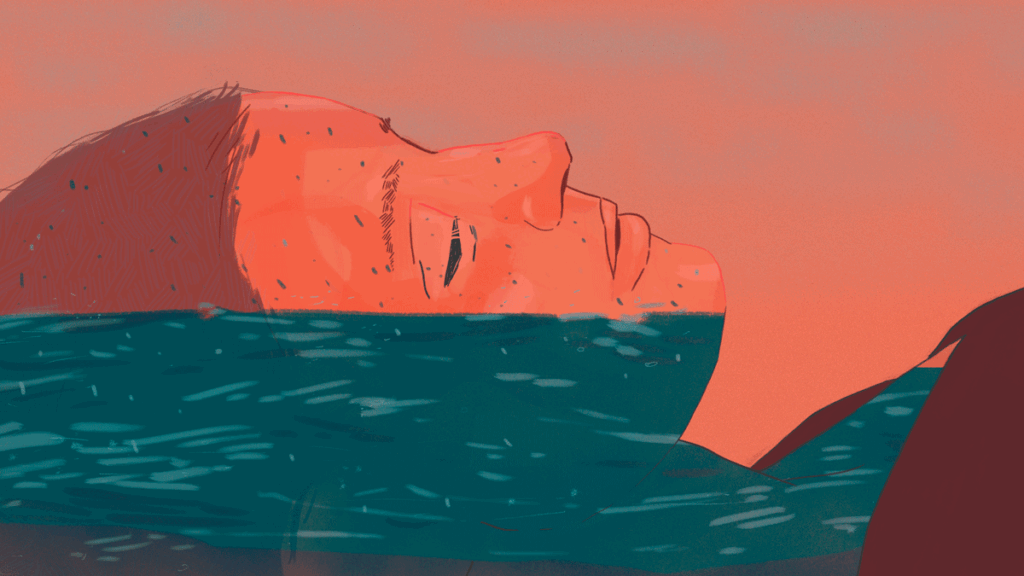
Who is Lucrezia? Lucrezia di Cosimo de’ Medici (February 14, 1545 – April 21, 1561) was the third daughter and fifth of eleven children of Cosimo I de’ Medici, Duke of Florence, and the Spanish aristocrat Eleanor of Toledo (Lady Whistledown would have definitely rated “the most prolific family in the upper echelons of society”).
The duchess made sure that her children received the best education: when teachers come to your palazzo, you can’t skip “school”, so all the Medici children were enrolled in science, whether they were boys or girls.
But what’s the point of educating a girl if you can’t demonstrate your knowledge to your husband?
So in 1552, Lucrezia was engaged to Pope Julius III’s nephew, Fabio Dal Monte, but the engagement had to be called off three years later due to the Pope’s death. It seems like we can breathe a little, but will it get better?
In 1557, after the death of her older sister Maria de’ Medici, Lucrezia takes her place as the bride of the future Duke of Ferrara, Alfonso II d’Este. Her dowry was 200,000 scudi – a huge sum by the standards of that time. With this money, three Palazzo Pitti could have been built and there was still enough left for pins and lace. But what is money worth if even the best doctors were powerless and could not prevent Lucrezia’s death from tuberculosis in 1560? The sixteen-year-old girl was buried in the monastery of the Corpus Christi in Ferrara, but after her death, rumors circulated for a long time that the young wife was poisoned by her own husband.
And what about the book? The author took care to ensure that Lucrezia’s life on the pages of her novel was authentic: she allows only a number of factual inaccuracies, justified sometimes by design, sometimes out of concern for the reader, so as not to confuse him with names and statuses. Thus, the line of relations of Alfonso II d’Este’s sister Elisabetta (in reality also Lucrezia) is shifted in time by 14 years and became an important and vivid episode of the story.
Lucrezia de’ Medici was indeed an educated and intelligent girl, but we know nothing about her keen hearing, clumsiness in dancing, or talent for drawing. These are details added by the author to make the character’s image more voluminous.
Why a tigress? In the Palazzo Vecchio of Cosimo I Medici there was a menagerie with exotic animals, among which were majestic tigers, but information about whether the children of the Duke of Tuscany were allowed there, if they were, has not been preserved.
It is worth noting that the parallel drawn by the author transforms the usual expression “like a bird in a cage”: the girl is no longer seen as a poor helpless bird. She is a tigress. Strong, powerful, with extremely great potential, with energy and abilities that are capable of conquering the world if they are recognized and not neglected.
The theme of suppression of inner strength, abilities and self-realization becomes one of the key ones in the novel.
Did Lucretia have the opportunity and right to be happy?
Few people were concerned about women’s happiness in the 16th century, because if you are a woman, your function is reduced to the role of “wife” and “mother”. Lucretia was expected to be submissive, modest, and to follow moral standards. She was to become an electron that revolved around her husband, without the right to exist in a world separate from him.
Lucretia had no chance of becoming free in a society where you were taught music and art only to entertain your husband. What kind of happiness could there be if you were perceived only as a bargaining chip to strengthen the status and influence of the family?
Freedom of choice was not something a woman had then. And Lucretia was no exception. Even clothes were chosen for her.
When first your mother, and then your husband, tell you what to wear, it relieves a little of the headache. At least, you can deceive yourself with this thought. Maggie O’Farrell pays a lot of attention to the clothes of women of that time, so let’s take a look at Lucretia’s wardrobe.
Sottane is the main item of clothing of the Duchess. A kind of designer dress, consisting of a skirt, bodice and sleeves (they could be fastened with ribbons, laces or buttons). Lucretia wears it both under another layer of clothing and on its own.
Zimarra is a loose dress that a girl wears over the bottom layer, like a modern cardigan.
Giorneas is a sleeveless cape dress, open on both sides and in front. Fur lining makes it an outfit for any season.
Camicia is an undershirt made of white linen, wool, cotton, hemp or silk. It protects outerwear from sweat and dirt. Lucretia’s camicia is guaranteed to be decorated with sewing and decoration.
Scuffia is a net into which hair was laid. In Lucretia, it is woven from gold threads, decorated with stones and pearls.
It sounds and looks very beautiful.
Would you be willing to bring back Renaissance fashion at the cost of your own freedom? After all, not all women managed to get into progressive circles of like-minded people. Usually they spent their lives in a golden cage of a tigress.
Joined by — Oksana Kis, Bohdana Stelmakh, Tetyana Guzenko, Mykyta Burov, Alena Gruzina, Dasha Nepochatova, Alla Shvets, Anna Dovgopol, Yevheniya Shevchuk, Bohdana Romantsova, Maria Dmytrieva, Iryna Grabovska, Yulia Yurchuk, Svitlana Babenko, Iryna Vyrtosu, Yulia Yarmolenko, Olena Zaitseva, Maria Poltorachenko.
Women and Full-Scale Invasion: Reportage and Documentary Nonfiction Berlyand, Iryna, Parubiy, Khrystyna (eds.). (2024). Women at War. Spirit and Letter.
Bilyakovska, Khrystyna, Sereda, Viktoriya. (2024). I Love You… War. Vivat.
Bros, Oreli (eds.). (2024). Women and War. Letters from Ukraine to the Free World. Boston: Academic Studies Pres. The Ukrainian translation in open access was made possible thanks to the financial support of the Heinrich Böll Foundation, Kyiv-Ukraine bureau.
Bobyk, Iryna. (2024). D’voina. Bilka.
Ivantsova, Mila (ed.). (2024). Kyiv. Women. War: a collection of memories and reflections of women about life in the capital during the full-scale invasion. Creative agency “Artil”. Published with the support of the Deputy Head of the Kyiv City State Administration Marina Honda and with the budget funds of the Department of Public Communications.
Kari, Olha. (2024). What do you know about war?! Another page.
Nikorak, Iryna. (2024). Strong women of a strong country.
Gundorova, Tamara. (2024). Transit Culture and Postcolonial Trauma. Vikhola.
Oleksandra Ekster. Histories of Ukrainian Artists. (2024). Projector.
Lodzynska, Olena. (2024). Alla Horska. Flash Before Dawn. Clio.
Lomykamin. (2024). Women’s Resistance in Crimea. Exhibition Catalog. Initiator Tamila Tasheva, Curator Tetiana Filevska. Representation of the President of Ukraine in the Autonomous Republic of Crimea)
Tulchynska, Maya. (2024). I Forgot My Panties. Creative Women Publishing.
Academic Publications Maierchyk, Maria. (2024, reprint). Ritual and Body: Ukrainian Rites of Passage. Criticism.
Otrishchenko, Natalia (ed.). (2024). Conversations with Those Who Ask About War. Lviv: Center for Urban History.
Pavlychko, Solomiya. (2024, reprint). Discourse of Modernism in Ukrainian Literature. Fundamentals.
Samoilenko, Hryhoriy. (2024). The Stars Continue to Shine: Maria Zankovetska and Her Eaglets: Monograph. Nizhyn: NDU named after M. Gogol.
Ukrainian-Canadian Research and Documentation Center. (2024). Ukrainian Women of the Ravensbrück Concentration Camp. Voices of Prisoners. Author: Kalyna Bezhlibnyk Butler (Solonynka); Chief Co-Editor: Lida Eliashevska Replyanska; co-editor and translator: Khrystyna Eliashevska Shraybi; co-editor: Oksana Martsyuk.
Shvets, Alla (ed.). (2024). “In the name of our national unity”: the voices of the authors of the almanac “The First Wreath”. Lviv: Ivan Franko Institute of the National Academy of Sciences.
Shevtsova, Maryna. (ed.) (2024). Feminist Perspective on Russia’s War in Ukraine. Hear Our Voices. Lexington Book.
References Ukraine is not silent: Chronicle of the SNPK’s resistance (2022–2024). Folio. The publication was prepared and published within the framework of the project “Standing together. Improving the support system for victims of war-related sexual violence”, implemented by the Ukrainian Women’s Fund in partnership with the public organization “La Strada-Ukraine” and the Association of Women Lawyers of Ukraine “YurFem” with the support of the Office of the Deputy Prime Minister for European and Euro-Atlantic Integration and the Office of the Government Commissioner for Gender Policy and with funding from the European Union.
Literature for children and adolescents Amson-Bradshaw, Georgia. (2024). Incredible women. Stories of women from around the world who inspire. RM.
Babkina, Kateryna. (2024). Mom, do you remember? Squirrel.
Vengrinyuk, Khrystya. (2024). My mother is a mountain. Vivat.
Kolb, Lyudmila. (2024). Train. Vikhola.
Kornienko, Kateryna. (2024). Dyvokrovtsi. Staroy Lev Publishing House.
Kupriyan, Olga. (2024). Miss Olya. Morning
Omelyanenko, Liliya (ed.). (2024.) She is fighting. Publishing house.
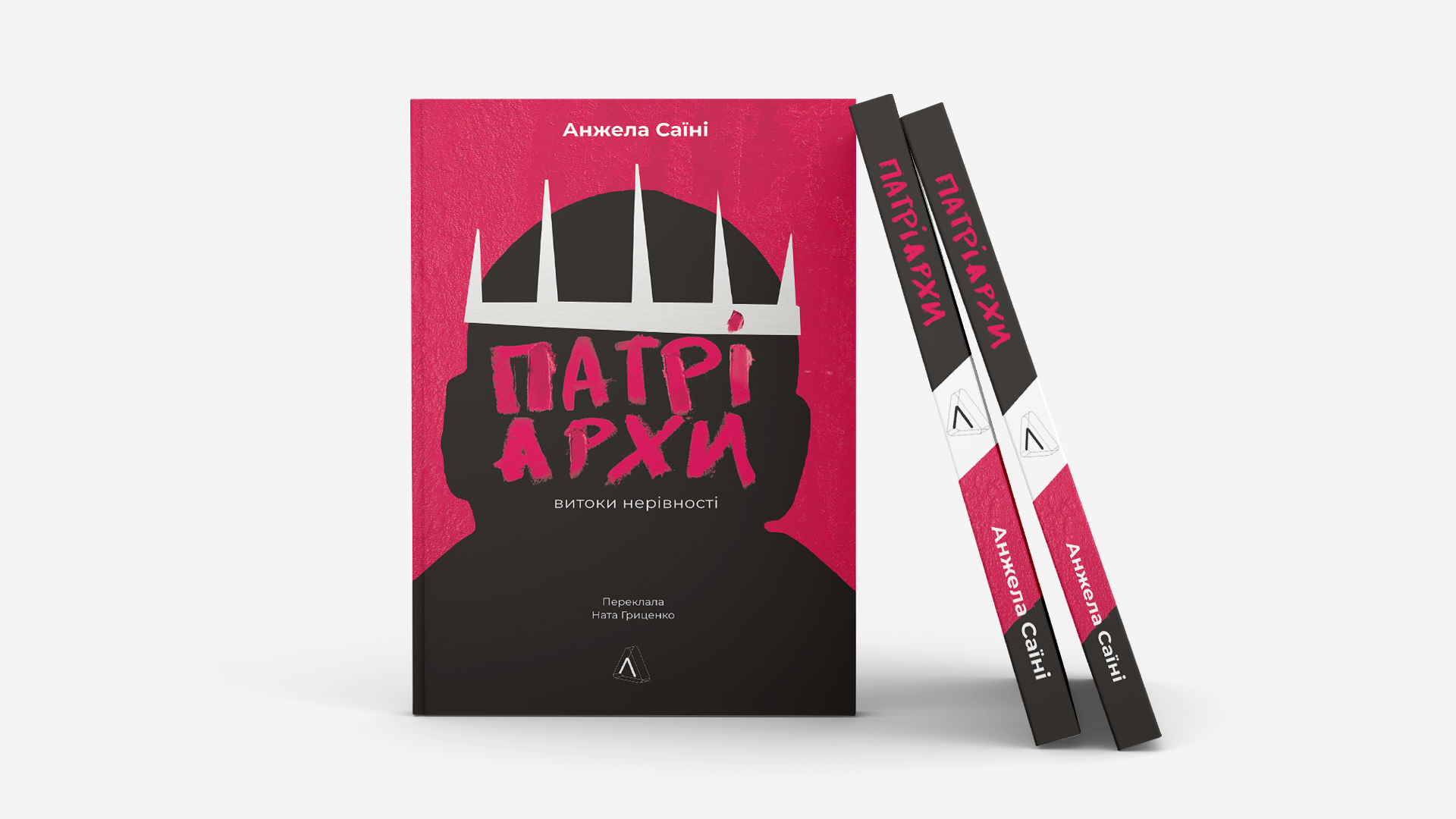
In this bold and radical book, Patriarchs: The Origins of Inequality, forthcoming from Laboratorio, science journalist Angela Saini explores the roots of what we call patriarchy: how it first took root in societies and spread across the world from prehistoric times to the present. Saini travels to the oldest known human settlements, analyzes the latest research findings, and traces cultural and political histories, arguing that colonialism and empires have radically changed the way of life in Asia, Africa, and the Americas, spreading rigid patriarchal customs and undermining the way people organize their families and work. In our time, despite the fight against sexism, violence, and discrimination, even revolutionary efforts to achieve equality often end in failure. But “Patriarchs” inspires hope—it reveals the multiplicity of human arrangements, challenges old narratives, and exposes male supremacy as an ever-changing element of control.
A dusty road lined with pistachio trees leads me from the ancient Turkish capital of Konya, home to the tomb of the Sufi poet Rumi, to the ruins of Çatal Göyük, once described as the world’s first city.
The place defies comprehension. Most of the settlement was long buried beneath a rise in the generally flat and arid plains of southern Anatolia. The small part that has been excavated reveals a society in which nothing follows the rules we’d expected. The edge of the archaeological site abruptly disappears into several floors of caves. The houses at Çatalhöyük—which means “fork of the road,” because that was all it was until the excavations—were built tightly together, back to back and wall to wall. They had flat roofs but no windows or doors. Residents entered and exited by ladders through openings in the roofs, walking on top of the houses, not between them. The dwellings were built in layers on top of older dwellings.
What makes Çatalhöyük special is that it was inhabited at the end of the Old Stone Age, at least 7400 BC, in the Neolithic period, before humans invented writing. This means it was inhabited almost 5,000 years before the first pyramids in Egypt and more than 4,000 years before Stonehenge was built in Britain. It is likely older even than the Harappan civilization in the Indus Valley. Çatalhöyük is located near the Fertile Crescent, a region in the Middle East that supported some of the world’s earliest farming communities. The land appears dry now, but it was once a wetland teeming with fish and birds. People gathered berries and herded goats nearby. They had clay and reeds to build their homes. But as incredibly early as Çatalhöyük is, it is still brimming with social and artistic complexity.
Thousands of people once called it home. The walls were regularly plastered, and striking works of art were created on the fresh surface. Bright red frescoes depict tiny stick figures hunting huge animals. Headless bodies, stalked by soaring vultures with wide wings. The walls are set with bull heads, their horns jutting out, as if in the interior of some American cowboy ranch.
“It was thought to be in the middle of nowhere, this huge mound with a really rich material culture that was 9,000 years old,” says Ruth Tringham, a professor of anthropology at the University of California, Berkeley, whose work focuses on the archaeology of Neolithic Europe. Almost as soon as excavations began in May 1961, Çatalhöyük became a focal point for those seeking to understand human organization at one of the oldest known settlements on the planet. In 1997, Tringham led part of a team that continued archaeological work at the site, helping to piece together a picture of what life might have been like for the people there.
It wasn’t just the buildings or the murals that fascinated archaeologists. My attention focused on something much smaller, something that would fit in the palm of my hand. Now proudly displayed in its own glass case at the Museum of Anatolian Civilizations in Ankara, the treasure is known as the “Seated Woman of Çatal-Göyük.”
Experts believe that Çatal-Göyük may have been the site of an ancestor-worshiping cult. The remains of dead ancestors were kept in the same houses as the people, under platforms in the floor. The skulls were sometimes removed, even plastered and painted, and then passed on to one another. Hundreds of small figurines have been found at the site—some clearly human, others resembling animals or something more ambiguously anthropomorphic. Yet the sculptural finds at many Neolithic sites in this region and beyond are unmistakably replete with the likeness of the female form. There are dozens of them in the museum, a handful of tiny Barbara Hepworth-style clay figures. One figurine depicts the torso of a pregnant woman on one side and the protruding ribcage of a skeleton on the other. But nothing compares to the awesomeness of the Seated Woman.
When I see her, I understand the general admiration. Her head had to be reconstructed because it was missing when she was found, but that’s It doesn’t matter when the rest of her body says so much. Several scholars have described her as a symbol of fertility. To me, at least, she doesn’t look pregnant or particularly provocative. She’s curvy, and the bare curves of flesh cascade down her body like waterfalls. Deep grooves mark her knees and navel. These are the signs of a body that has lived a long time—perhaps an older woman, hardened by age. But what stands out most is her posture. Her back is perfectly straight. On either side of her thighs, beneath her palms, are what look like two large cats, perhaps leopards, staring straight ahead.
So the most intriguing aspect of the Seated Woman of Çatalhöyük is not her famously curvaceous body. It’s her posture, commanding two large cats. In a society apparently preoccupied with animals, hunting, and death, her appearance is admirably commanding.
Why does Ukraine need the Istanbul Convention? One of the international treaties around which numerous myths and stereotypes have been born, and manipulations have continued, is the Council of Europe Convention on Preventing and Combating Violence against Women and Domestic Violence (hereinafter referred to as the Istanbul Convention).
In my opinion, this is due to the fact that this document is valuable and holistic. It contains norms that oblige states to review established practices in combating violence against women and domestic violence, and primarily to eradicate gender stereotypes. After all, stereotypes about the “desirable” or “acceptable” behavior of a woman or a man in Ukrainian society are not just harmful, but also lead to tolerance of violence and human rights violations against those who, in our opinion, behave “not in accordance with the rules”, or against those who have less power, protection opportunities, etc.
In her book “How to Understand Ukrainians: A Cross-Cultural Perspective,” Maryna Starodubska explores our national mentality, culture, and values, which explain our attitude and perception of certain processes in the country. The author notes that at the personal level, the most important value for Ukrainians is freedom (83.9%), but at the same time, justice (72.5%) is lower than freedom, and the demand for dignity (60.4%) and equality (56.5%) is decreasing from year to year.
“It is not surprising that under such conditions, it is so difficult for people from different communities (we often call them “bubbles”) to negotiate, because everyone strives for maximum freedom of choice and benefit for themselves and does not think about its fairness or accessibility for others.” We have gone through this path of heated discussions, debunking myths, and have come to the conclusion that we still need to ratify the Istanbul Convention, because the country really lacks tools to combat domestic violence and violence against women.
We have faced new challenges generated by Russia’s full-scale war against Ukraine; after all, we are the ones confidently moving towards the EU, and therefore, we must not only bring our legislation into line, but also work to systematically change approaches to working with victims of gender-based violence in practice.
I started working with victims of domestic violence in 2007. At that time, we had the old Law of Ukraine “On the Prevention of Domestic Violence” in force. The practice of applying this law has shown that we do not have enough tools to respond to violence, that the very concept of “domestic violence” significantly limits the circle of persons who can be held accountable.
For example, at that time, it was impossible to hold a former husband or wife, who did not live together and did not have a common life, liable for violence, since this was not included in the definition of “family” within the meaning of the Family Code of Ukraine. There were also no tools to isolate the abuser from the victim. Law enforcement agencies often complained about the insufficiency of mechanisms for stopping violence and removing the abuser, the ineffectiveness of existing administrative measures, etc. Until 2017, there was no such crime as “domestic violence” in the Criminal Code of Ukraine. And if the victim did not suffer any physical injuries, the abuser could only be held administratively liable, even if the violence had lasted for years.
In 2016, there was an attempt to ratify the Istanbul Convention and, in parallel, to adopt a new Law of Ukraine “On Prevention and Combating Domestic Violence” and make relevant amendments to the Criminal Code of Ukraine.
The Convention was not ratified, but the law was adopted and in parallel with this, amendments were made to the Criminal Code of Ukraine.
So, since 2017, the Law of Ukraine “On Prevention and Counteraction to Domestic Violence” has been in force in our country, Article 126-1 Domestic Violence has appeared in the Criminal Code of Ukraine, as well as in Articles 152 of the Criminal Code and 153 of the Criminal Code of Ukraine, which relate to sexual violence, the concept of “voluntary consent” has been introduced, the absence of which means that rape or sexual violence not related to penetration of the person’s body has been committed.
It is also very important that in the case of committing any crime against a spouse or ex-spouse or another person with whom the perpetrator is (was) in a family or close relationship, this will be considered an aggravating circumstance, which gives the court the right to apply a more severe punishment.
Thus, Ukrainian society has changed its approach to investigating domestic violence cases at the legislative level, which have become crimes, not just administrative offenses.
It would seem that why should we ratify the Istanbul Convention, if we have already adopted a new law, made amendments to the Criminal Code and can work without the Convention.
However, this turned out to be not enough. In practice, problems began to arise with the investigation of domestic violence cases, while we have not learned to identify and investigate sexual violence, because it is difficult for us to understand what the concept of “voluntary consent” is.
And here we return to the fact that Istanbul The Istanbul Convention is a valuable and holistic document. A system aimed only at applying a formal approach cannot work. It is not enough to adopt a law.
It is important for us to understand the spirit of the Istanbul Convention, because it is not for nothing that it speaks of a comprehensive, systemic and coordinated approach to combating violence against women and domestic violence.
The 4P formula, embedded in the content of the Istanbul Convention:
Prevention
Protection
Prosecution
Coordination policies
All these four areas must develop in parallel, otherwise we will not achieve results.
Regarding values and understanding of the problem, the Istanbul Convention outlines in its preamble the main roots and deep understanding of the phenomenon of violence against women and domestic violence, namely emphasizing:
the realization of de jure and de facto equality between women and men is a key element in preventing violence against women; violence against women is a manifestation of the historically unequal balance of power between women and men, which has led to the domination of women and discrimination against women by men and to the prevention of the full emancipation of women; the structural nature of violence against women as gender-based violence, as well as the fact that violence against women is one of the main social mechanisms through which women are forced to occupy a subordinate position compared to men. Joining the states that strive to “create a Europe free from violence against women and domestic violence”, in June 2022 the Verkhovna Rada of Ukraine voted to ratify the Istanbul Convention.
This important document was adopted in the year of Russia’s full-scale invasion of Ukraine. It is worth noting that in its preamble, the Convention emphasizes that states, by ratifying it, recognize “the ongoing human rights violations during armed conflicts that affect the civilian population, especially women, in the form of widespread or systematic rape and sexual violence, as well as the possibility of an increase in gender-based violence both during and after conflicts” and, in this regard, agreed to implement measures to prevent, protect and prosecute such crimes and to build a coordinated policy.
Implementation of the Istanbul Convention: the state of affairs at the beginning of 2025 Despite the full-scale war, work on the implementation of the norms of the Istanbul Convention continues. All key parties, namely the Government, Parliament and civil society organizations, continued to work on the analysis and amendments to the legislation and, in parallel, on changing the approaches in the work of all responsible entities.
It is important to note that the time since the adoption of the Law of Ukraine “On Prevention and Combating Domestic Violence” (2017), the amendments to the Criminal Code of Ukraine in the area of domestic and sexual violence have shown us to this day what gaps have arisen in terms of application practice and what is important to take into account both in the work on bringing the legislation into line and in the work on forming approaches in practice.
It is necessary to realize and understand that laws are living documents that are polished by the practice of their application.
Since the ratification of the Istanbul Convention to this day, there have been a number of legislative and other initiatives aimed at implementing the norms. I will mention some of them in this publication, on which the Ministry of Internal Affairs, the National Police of Ukraine, a number of deputies, including Maryna Bardina, Inna Sovsun, the NGO “La Strada — Ukraine”, the Association of Women Lawyers of Ukraine “YurFem”, the judicial and scientific communities worked.
On December 19, 2024, the Law of Ukraine “On Amendments to the Code of Ukraine on Administrative Offenses and Other Laws of Ukraine in Connection with the Ratification of the Council of Europe Convention on Preventing and Combating Violence against Women and Domestic Violence” came into force.
We can highlight the following changes introduced by this law:
Article 173-7 of the Code of Administrative Offenses provides for administrative liability for sexual harassment, including in the field of electronic communications, as well as in relation to a person who is in material, official or other dependence. Before the adoption of this law, there was no separate article in the legislation of Ukraine on liability specifically for sexual harassment. In practice, such actions were classified as gender-based violence in the Code of Administrative Offenses or as sexual violence in accordance with Article 153 of the Criminal Code of Ukraine. Gender-based violence has been removed to a separate article 173-6 of the Code of Administrative Offenses. So, we now have Article 173-2 Perpetration of domestic violence and a separate article on gender-based violence. This makes it possible to correctly qualify and collect data on the commission of an offense. Separately, Article 269 of the Code of Administrative Offenses emphasizes that if “domestic violence and gender-based violence were committed in the presence of a minor or underage person, such a person is also recognized as a victim, regardless of whether the damage caused by such an offense, and it is subject to the rights of the victim, except for the right to compensation for property damage.
Also, on December 19, 2024, the Law of Ukraine “On Amendments to Certain Legislative Acts of Ukraine on Improving the Mechanism for Preventing and Counteracting Domestic Violence and Gender-Based Violence” came into force.
Among the many important provisions of this regulatory document, I would like to highlight the amendments to the Family Code of Ukraine, namely to Articles 110 and 111, which give the right to apply to the court with an application for divorce during the wife’s pregnancy and in the event of a child under one year old, and also prohibit the court from applying reconciliation during divorce in cases of domestic violence.
It would seem that very simple norms on the most important principle of “voluntariness of marriage”, but at the same time extremely strong resistance from the legal community, including from the side.
Before the adoption of these changes, spouses (either only the husband or only the wife) could not even apply to the court with an application for divorce if the wife was pregnant or had a child under one year old. If such an application was filed, the court refused to open proceedings on formal grounds. That is, in fact, the husband and wife lost the right to access justice. And what is more important, in the case of domestic violence, it was the perpetrator, who tried to keep the victim under control, who used this norm as one of the ways to make it impossible to dissolve the marriage, and therefore, to depend on him.
And, of course, abuse of the right to reconciliation was also often used by the perpetrator as a way to put pressure on the victim, so in view of this, in the case of divorce in the presence of domestic violence, such reconciliation cannot be applied.
Of extreme importance is the draft law, registered on December 9, 2024, No. 12297 “On Amendments to the Criminal and Criminal Procedure Codes of Ukraine to Ensure the Full Implementation of the Provisions of International Law on Combating Domestic and Other Types of Violence, Including Against Children”.
The Ministry of Internal Affairs of Ukraine, the National Police, JurFem and La Strada have been working on this draft law since 2022. The draft law covers a wide range of issues that need to be resolved in view of the challenges that exist in practice and the requirements of the Istanbul Convention.
The draft law, in particular, proposes to resolve the following important issues:
To define the concept of “criminal offense related to domestic violence”. Yes, since 2017, our Criminal Code has provided for a separate article on the commission of domestic violence (Article 126-1 of the Criminal Code of Ukraine), but this is not the only article under which one can be held criminally liable for domestic violence. For example, the perpetrator may inflict bodily harm on the victim for the first time or commit beatings or torture, or other crimes that will be related specifically to domestic violence and liability for which will be provided for in other articles of the Code. Therefore, in order to emphasize the commission of crimes related to domestic violence, it is important to provide for the concept of “criminal offense related to domestic violence” in the Criminal Code. This is important not only for statistics, but also for the rights of the victim and avoiding pressure from the perpetrator, who will try to force the victim to close the case. After the innovations, it will be impossible to close a case when a criminal offense related to domestic violence occurs, even if the victim refuses to file a statement. Explain what should be understood by the “systematic commission of domestic violence”, which gives grounds to talk about criminal liability. After all, in practice, different interpretations of systematicity have arisen. It is very important that this draft law proposes to provide for criminal liability for stalking, namely, intentional, twice or more illegal surveillance, imposition of communication, other illegal direct or indirect intrusion in any way into the personal or family life of the victim against their will, including using electronic communications, which causes them to fear for the safety of their life or the health of their loved ones. Special attention in the draft law is paid to the use of restrictive measures in cases not only regarding domestic violence, but also sexual violence. An extremely important issue, which has already been tried to be regulated by other draft laws, is the exclusion of cases of domestic violence, rape, sexual violence from the list of cases of private prosecution. This means that it is not necessary to place responsibility on the victim for initiating criminal proceedings by means of a corresponding appeal. This will mean that if law enforcement officers become aware of such crimes from any sources or from any persons, they are obliged to initiate criminal proceedings and investigate them.
From the moment of registration of the draft law to the time of its adoption, as practice shows, it can change significantly: some norms can will be removed, and others will be added. However, in its current form, this bill addresses a significant range of issues that arise in practice and are extremely necessary for effective protection and investigation of cases of domestic and sexual violence.
On February 4, 2025, the Committee of the Verkhovna Rada of Ukraine on the Integration of Ukraine into the European Union issued its conclusion, according to which this bill meets the requirements of the Istanbul Convention, does not contradict EU law and international obligations in the field of European integration.
What still needs to be done Two and a half years since the ratification of the Istanbul Convention, significant steps have been taken to implement it in wartime. Of course, much work remains to be done both at the legislative level and in practical implementation.
Regulatory documents are the basis, but they are applied by people working in law enforcement, judicial, social spheres, public organizations, etc. Therefore, in parallel with legislative initiatives, it is necessary to implement victim-centered approaches, especially to ensure the localization of those approaches and documents that have been formed at the national level.
Comprehensive assistance to the victim, avoidance of re-traumatization, communication with society and destruction of stereotypes that lead to victimization and stigmatization of victims are what we need to work with.
For the past two years, JurFem, in partnership with the Prosecutor General’s Office, the Ministry of Internal Affairs, the National Police, with the participation of the Ministry of Social Policy and the Free Legal Aid System and public organizations, has been holding an annual conference “Justice Focused on Victims of Gender-Based Violence”. Based on its results, we always form the next steps together with the community. In particular, in 2023, we set ourselves the task of preparing, together with the UCP, standards for pre-trial investigation of domestic violence cases using victim-centered approaches. Such standards were prepared and presented to the community at a conference in November 2024.
In addition, three blocks of recommendations were identified that outline our next steps.
The first block is the issue of institutional changes. During one of the workshops, Judge Vira Levko noted that initiatives are based on individual people, but it is important to build institutional memory, strengthen effective interaction, cooperation, which includes not only the law enforcement sector, but also forensic experts, social workers, the free legal aid system, and public organizations.
There should be a cross-cutting inclusion of a victim-centered approach. It is important to remember about human resources that are being depleted, so we need to think about how to maintain the mental resource.
The second block of recommendations is approaches and internal policies in work. Everyone is talking about unification, standardization of approaches, procedures, documents on needs assessment and more. We need to standardize and at the same time look for approaches to each person, because each person is an individual.
The third block is legislation. Introduction of the institution of a lawyer by appointment for victims of gender-based crimes, expansion of the range of sanctions, the concept of criminal proceedings related to domestic violence, systematicity. These issues are on the agenda and are being resolved.
In the implementation process, it is important to remember that all changes are made by people for people. Therefore, if we proceed from this principle, we will be able not only to formally fulfill the requirements for the implementation of the Istanbul Convention, but also to adopt its spirit and form victim-oriented mechanisms and services.
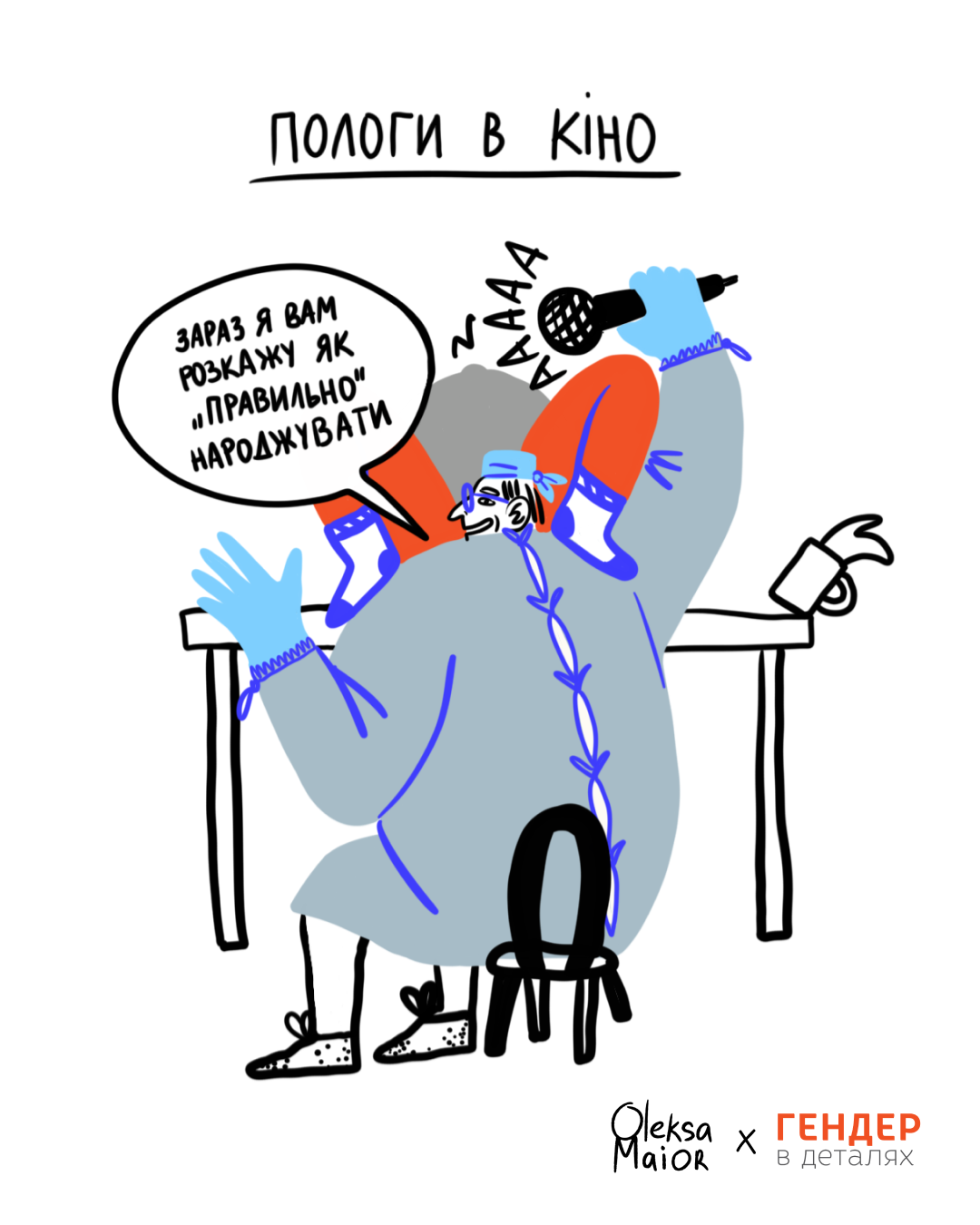
Myth one: the waters have broken, labor will begin now
The breaking of the waters is the first sign that “it has begun.” This was the case with Rachel Green and Phoebe Buffay — the characters who formed the supporting structures of my teenage identity.
But in reality, which is supposedly depicted in mass culture, the waters do break in the first stage of labor, which lasts (in primiparous women) up to eighteen hours. Oops! Sometime during this period it will happen. Or not. Or a week passes between the breaking of the waters and the delivery — this also happens, although not often. Just as infrequently as the epic breaking of the waters popular in the movies.
For most women, labor begins with (drum roll) the realization that labor has begun. The woman feels contractions, and she needs to understand whether these are another training or “combat” contractions.
And contractions don’t look epic in the movie: my friends, my pregnancy podcast listeners, and I, while going through contractions, walked in parks, picked up packages from the post office, or routinely conducted live broadcasts. And you know what we didn’t do? We didn’t grab our bellies, bending over sharply and shouting: “I’m giving birth! Help! Hurry up!” The beginning of labor is mostly boring.
Myth Two: Childbirth is a quick process
The influence of movies and TV shows on my expectations of my own childbirth was so strong that I knew for sure: ten minutes would pass between the start of contractions and “I see the head,” just like in the movies. Scientific information and the chorus of doctors didn’t sound as convincing as scenes from my favorite TV shows. Danielle from “Desperate Housewives” barely had time to get home from the house next door before she heard the cry of a newborn. Am I worse?
After three hours of painless contractions, I banged on the door of the maternity ward as defiantly as if they were illegally holding the baby inside me. But the truth is that both the medical records and the statistics were true. Childbirth for most people is not only boring, but also long.
Here’s a story about war-life balance and birth timing. My friends are preparing for a twin birth. She’s in Kyiv, and he’s in the Ukrainian Armed Forces 400 kilometers away. When she realizes that labor has begun, he has to come to the hospital immediately. This plan is realistic, because 400 kilometers is five hours of travel. Most first births don’t fit into this timing.
This, of course, breaks a lot of scenarios. From the latest, “Train on December 31”, where a pregnant woman during an eight-hour journey from Kyiv to Lviv manages not only to spend time without any signs of labor activity, but also to give birth and rest after giving birth in a dining car.
Myth three: giving birth is lying on her back and following the doctor’s commands
This is how childbirth is in the movie “Annette”.
The “gold standard” of mass-culture childbirth is lying on her back and screaming. Some, like Rachel Green or the pregnant woman from the movie “Train on December 31”, lie down even during contractions and attempts. There is much more harm in this stereotype than it might seem at first glance.
At least because this position is the most painful for a woman. And so, when you give birth, it can be more painful and less painful. To do this, you need to move and find what is best for you at each stage. This is not my opinion – this is the advice of modern medical protocols. And my practice.
For millennia, women gave birth in positions that were most comfortable for them. This began to change in the 18th century, when births began to take place in hospitals, and male doctors gradually replaced traditional midwives. Women were not allowed to attend medical schools. It was believed that a man without a penis could not understand childbirth. Of course, where would he get one!
Men declared themselves the main ones in matters of birth: medical interventions (such as the use of forceps) became a priority, and the natural course of childbirth was often ignored.
A woman was transformed into an object from which doctors extracted a child. These are unexpected “achievements” that, among other things, were brought to us by the development of medicine. It was only in the 20th century that women began to receive medical education, and with it the right to subjectivity in their own childbirth.
Modern medicine advises doctors to encourage women to move during labor. We could learn this from movies, but the male cult is still guided by the 18th century standard: a confused and frightened woman on her shoulder blades and a hero-savior who “gives birth” to her.
That’s exactly what happened in “The Train on December 31,” where the woman in labor was placed on her shoulder blades on the table of a dining car. Imagine yourself on your back on a table in a dining car with your legs spread. Comfortable? Now add the movement of the train and the effort. Incredible, right?
The only thing worse is that the woman is heroically saved by a man who calls three other men. Of course, no one asks women who have children about childbirth.
Continuing the thought experiment, I will assume that childbirth on a train could go like this: the girl would stay in her compartment, a person would come there to help her, and the woman in labor would hardly climb onto the table if there was a bed.
Why is it important to show the subjectivity of a woman during childbirth And not just intimidate with fear and pain, from which women are heroically saved.
Let’s start from the opposite: for what purpose should we intimidate women? To show how a person instantly loses all control, hoping that someone will tell her how to save herself. For what? Fear is adrenaline, it slows down labor activity. Isn’t it better when a woman, crossing the threshold of the hospital, is not intimidated, does not expect horror, but has the opportunity to think: should/can I be comfortable during childbirth? How? Do I have the right to move, drink, eat (labor can last 20 hours, after all)? Whose needs during childbirth are the main ones – mine or the doctors’?
The answer to the last question is key: if the main ones are the doctors (or those who take the birth), then I may have to obey them, even if they commit violence against me (shout, interfere with the birth without my conscious consent, press on my stomach, forbid me to move, determine the way in which the birth will take place against my will). This is all obstetric violence, a violation of the rights of the woman in labor, unacceptable behavior of medical personnel. And it is also important to know about this “beforehand”.
I believe and know that the woman is the main one in childbirth, because, after all, she is the only person without whom the birth will not take place. Everyone else is present only to facilitate her experience, support, help. And save in those rare situations when it is really necessary.
Such childbirth, by the way, is also shown in TV series.
For example, This Is Us. Due to force majeure, the heroine Beth gives birth at home. She finds a comfortable position (miraculously, not on her back on the dining table, unlike Piper Halliwell, for example). And no one heroically saves her, she is supported by another woman and her husband.
What to do. Consulting for the film industry and beyond Mascult must recognize its influence on the formation of women’s ideas about childbirth and stop exploiting emergency births and outdated practices. This will allow us to understand that the stereotypes about a helpless woman who needs rescuers-doctors only reinforce the culture of fear and increase the tolerance of obstetric violence.
Screenwriters and directors should research the topic before writing and filming childbirth scenes. There are consultants in forensics, medicine, and martial arts in cinema, so why is childbirth still “drawn” from a TV series template? Take advice from midwives, doctors, doulas, watch documentaries about the medicalization of childbirth, and ask ChatGPT which stereotypes about childbirth are not true.
Viewers also have a voice. We can share our own childbirth stories. It seems like a drop in the ocean, but each story can become a brick from which another woman can build her confidence. We can comment on and analyze childbirth scenes in films and TV series, ask why the heroine is screaming in pain and is not offered pain relief, why doctors act as if she has no voice. Demand creates supply.
Mascult doesn’t just reproduce reality — it constructs it. So if we don’t want to see intimidated women ready for violence in maternity wards, then maybe we should show more than just the horrors of childbirth? Fear blocks childbirth. But it helps restore a sense of security, one’s own strength, and peace. Good words to describe childbirth, dear creators of mass content.
In June-July 2025, “Gender in Details” within the framework of the Human Rights Academy 2.0 by Gender Stream project, with the support of the Center for Disaster Philanthropy, implemented the project “We Were. We Are. We Will Be” – a campaign to support LGBT+ people and provide visibility to their achievements and daily challenges. We united a number of Ukrainian businesses around the idea of end-to-end support. This was an attempt to show: Pride is not just a march or a one-time action, it is everyday life, and LGBT+ people exist, create, fight, love in this everyday life, without having basic rights like other people.
Why this idea? The name and, accordingly, the slogan “We Were. We Are. We Will Be” became the basis of the campaign, because it speaks of continuity. LGBT+ people have always been a part of Ukrainian culture, history and art. They are also creating Ukrainian history today – on the front lines, in business, in volunteering, next to everyone. They will be in the future that we are building together.
In times of war, when part of society is being pushed out or marginalized, it is important to remember: visibility and support are not luxuries, they are a matter of dignity and the right to life.
How did businesses get involved? Several Ukrainian businesses joined the campaign — and it was more than just a partnership. At a time when open support for LGBT+ people in Ukraine still requires courage, each of these companies took an important step: they told their customers “you are not alone.”
For example, together with the publishing house “Laboratory”, we talked about books that create space for research, including yourself. The publishing house “Laboratory” consistently supports the idea of equal rights both in Ukrainian-language publications and in translations, so their selection of books has become extremely diverse. Among others, we can mention the cooperation with the project “Agents of Blood”, because “Blood is not about gender, blood is about life”, and together with them on Donor Day we will analyze stereotypes and prohibitions on donation for transgender people.
All these posts, collections of information, and even laconic symbolic publications together became signs of safety and support for LGBT+ people who are looking for a space where they can breathe freely every day.
What did we get?
This campaign became not just a few posts or collections – it became a symbolic sign of the times. “We were. We are. We will be” resonated with both those who belong to LGBT+ people and those who simply want to see Ukraine open and strong. People recognized familiar brands and logos, and this gave them a sense of security: if even a business dares to say it out loud, it means we are moving forward.
On social networks, the campaign received many warm words – comments, messages, reactions. For some, it was the first reminder that Pride Month exists even during war. For some, it was an unexpected moment of support from a favorite company. For the businesses themselves, this was an important experience: to publicly declare solidarity, despite the risks and possible hateful comments.
Such steps are not always measured by reach figures or thematic sales statistics. Their real result is in changing the atmosphere and attitude, in the feeling that LGBT+ people are visible and welcome in the public space. And this is the greatest value: the campaign opened the door to a conversation that seemed too risky yesterday.
The conversation continues We created practical tools that remain after the campaign ends:
A brand book with visual recommendations that helps businesses talk about Pride and LGBT+ support in a modern, stylish language, without clichés and banalities, and also allows companies to unite in joint communication. All our joint posts were prepared in this style. You can read the recommendations at the link. A text brandbook that provides ready-made step-by-step recommendations on how to write about LGBT+ people respectfully and correctly, avoiding stereotypes and offensive formulations, as well as demonstrating end-to-end support. This is not just a set of tips, but a kind of tone map that allows businesses to join the conversation confidently and without fear of making a mistake. You can read the recommendations at the link. A general map of friendly businesses in Ukraine, where those who have already openly declared today: “We are with you” are gathered. This map is more than a list of addresses of bookstores or other stores. It is a network of safe spaces that form a new geography of solidarity. You can view friendly businesses nearby at the link. Thus, “We were. We are. We will be” became a project that went beyond Pride Month. It gave people the feeling that change is possible, that even a few brave businesses can launch a public discussion. We are not stopping there: the brandbook, texts and map remain tools that will continue to work and are available for constant use in the coming years, because Pride is not a date on the calendar, but a value that we embody every day.
The project “We were. We are. We will be” was created as part of the Human Rights Academy 2.0 project by Gender Stream with the support of the Center For Disaster Philanthropy. The content does not necessarily reflect the views of these organizations.
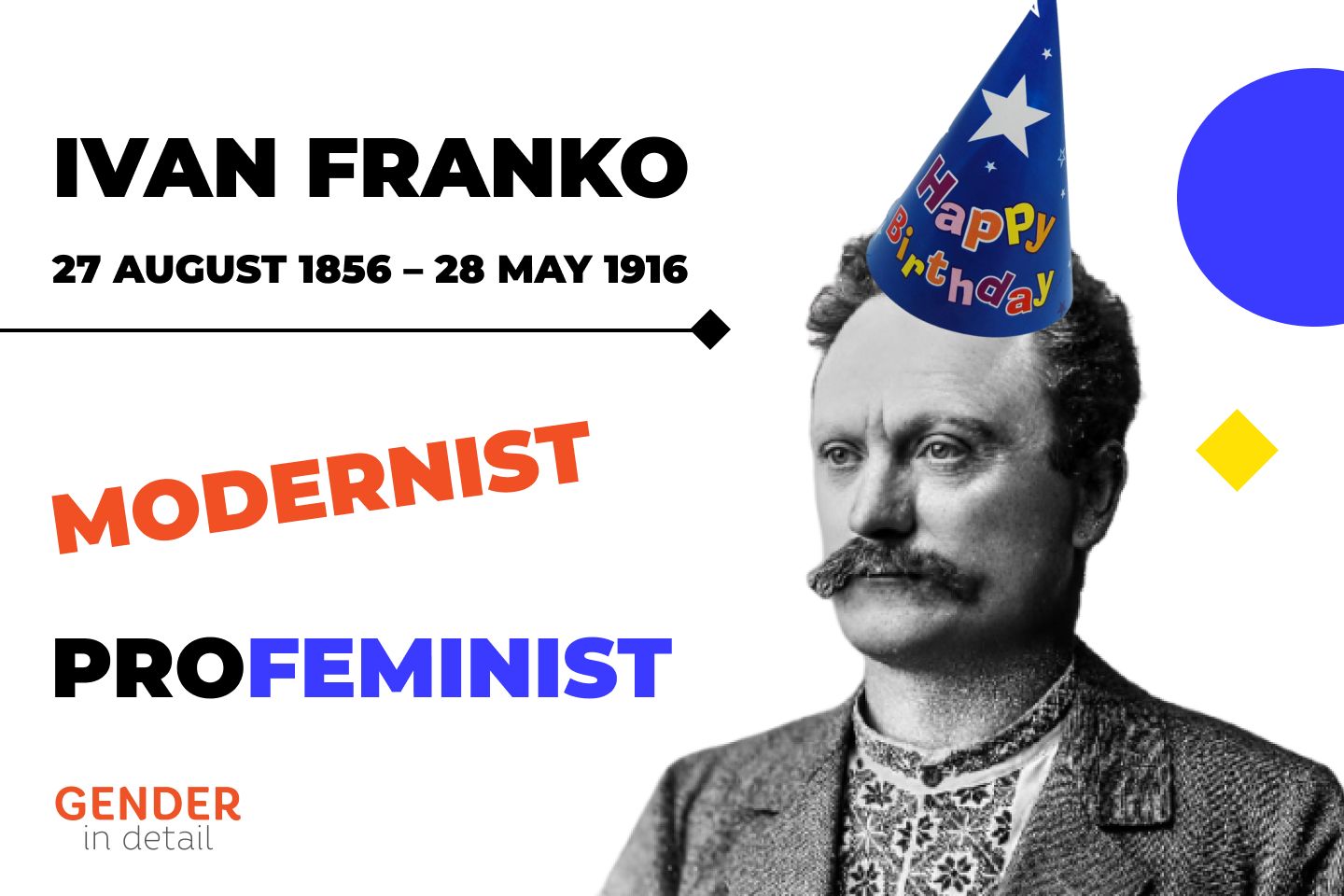
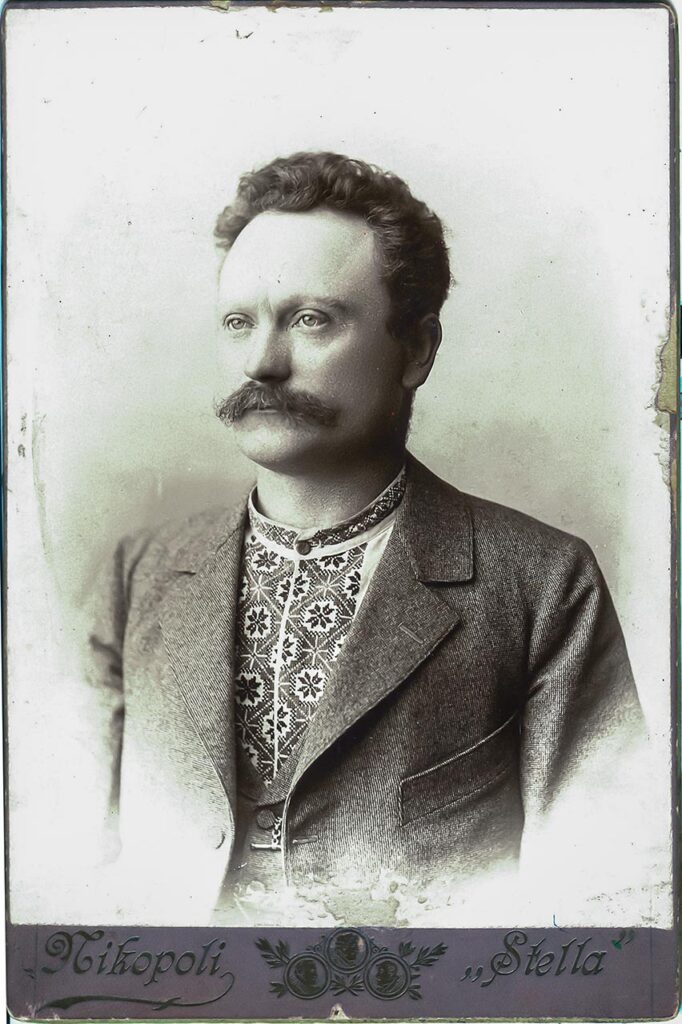
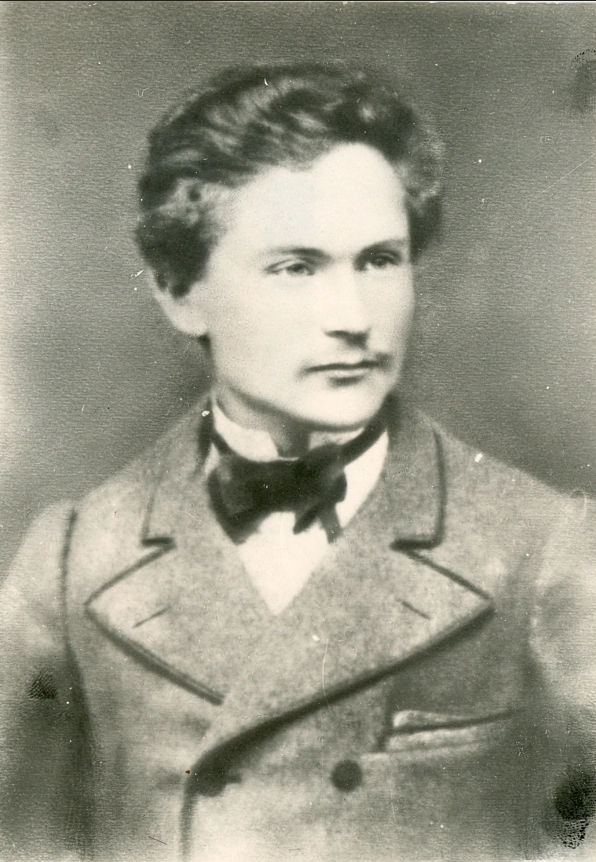
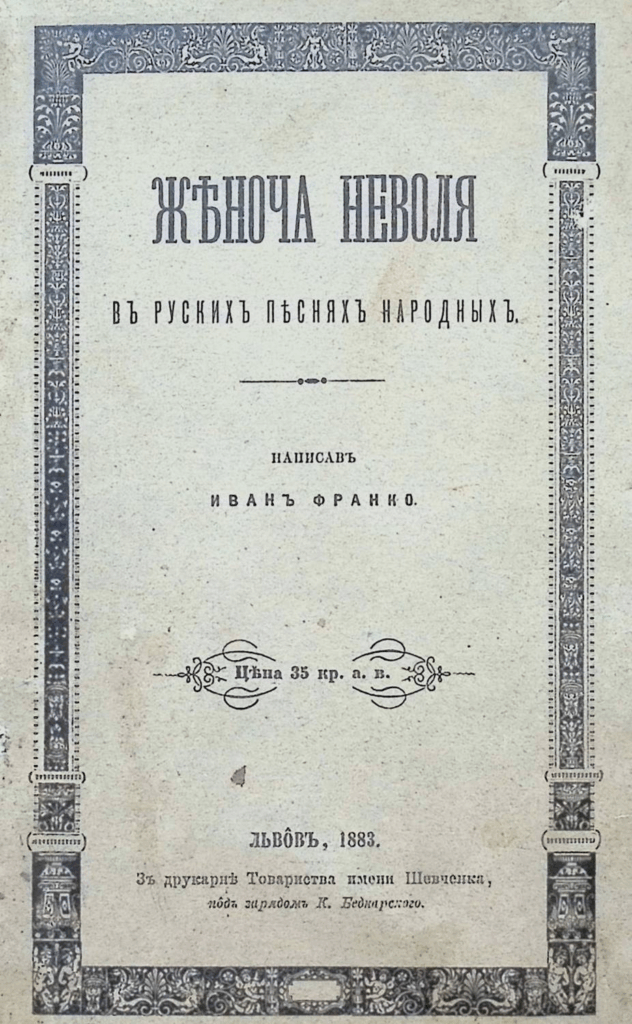
When reviewing the historical development of the Ukrainian women’s movement, attention usually centers on its notable female founders such as Nataliya Kobrynska, Olena Pchilka, Sofiya Rusova, Ulyana Kravchenko, and others. Yet, behind these early struggles stood significant male antecedents and the active support of respected advocates of women’s issues—including Ivan Franko, alongside Mykola Hankevych, Mykhailo Drahomanov, Mykhailo Pavlyk, Vasyl Polyansky, and Volodymyr Shukhevych. However, this male reception of the women’s movement was sometimes ideologically marked by socialist slogans and lacked conceptual consistency within society. Even among supporters, there was no consensus regarding the nature and methods for addressing women’s issues.
A telling sign lies in Franko’s correspondence with Mykhailo Pavlyk (circa October 10, 1879), where Franko warned against singling out the women’s question apart from other social issues: “Neither does the women’s question stand out particularly sharply from among other issues…on the contrary, it recedes into the background (public economy, schools, etc.), and talking about it last year possibly did more harm than good.” He further expresses the view that influencing women’s progress in worldview is better done through sciences than through depictions of everyday women’s lives.
Franko’s Position: Pro-Feminist but Not a Movement Member
Despite cautious descriptions of Franko as a “pro-feminist”—someone who shares feminist ideas without formal affiliation—there is ample evidence in his work and public life of a genuine commitment to women’s emancipation. Franko was ahead of his time in advocating for women’s education, equality, economic independence, supporting and mentoring emerging women writers, and engaging with noted feminists in correspondence, journalism, and literary works. Interestingly, Franko did not use the term ’feminism’ directly, instead employing related terms such as “women’s question,” “women’s cause,” “emancipation,” “equal position,” and “equal rights.”
Early Engagement and Influence
Franko’s interest in women’s emancipation began in the mid-1870s while still a student—the period of his socialist inclinations. He discussed the “women’s question” with his close friend and fellow supporter of equality, Mykhailo Pavlyk, and together they even planned to translate John Stuart Mill’s influential manifesto “The Subjection of Women.” In their letters, they reveal concerns about women remaining passive and the necessity for women to assert their own voices and identities.
Franko’s respectful attitude towards women was formed from childhood and regarded as a feature of the national mentality. In his literary memoirs, he noted the “spiritual superiority over men” of women in artisan families, who, by managing household economy, raising children, and guiding their husbands, “acquired the traits of household leaders.” He recalled: “I had the impression that women in these families, if not ruling, then at least shared an equal position with men, distinguished by intelligence and energy, and above all by a sharp and tireless tongue.”
Engagement Through Literature and Activism
Franko’s relationships with numerous women writers—including mentoring, correspondence, editorial support, and critical engagement—were crucial in the genesis of Ukrainian women’s literature and the feminist movement. He played a decisive role in the founding of literary and advocacy societies, the editing of women’s almanacs, and supporting women’s public organization, while also sometimes offering strong editorial critique.
Modern Perspective
Franko occupies a unique position in the history of Ukrainian feminist discourse. His analytical approach, public activity, and creative work contributed significantly to gender sensitivity in national literature and social thought. While he did not explicitly call himself a feminist, his outlook and actions align closely with modern understandings of feminism—particularly in his vision of women as full participants in society, advocates of their own rights, and creators of their destinies.
Summary: Ivan Franko is widely recognized not as a card-carrying feminist by today’s definitions, but as a profound supporter and enabler of feminist ideas in Ukraine. His progressive stance included advocacy for women’s rights, education, and equality, as well as mentorship for the emerging generation of women writers and activists. Franko’s work and collaborations placed him among Ukraine’s most important early male allies to the women’s movement, leaving a multifaceted legacy still discussed in feminist and literary scholarship today.
Around the time when public torture and executions in the West were gradually losing their popularity (not among the common people, of course, but among those in power who set the tone) and giving way to closed trials and imprisonment, a new Ukrainian literature was emerging. Declaredly oriented toward the mass reader and popular format, it serves as an encyclopedia of social moods and customs. With one important caveat: sometimes these moods and customs are products of the populist imagination of the intelligentsia — invented first, and only then offered to the reader.
Literature in the Service of Ideology
Frankly, this remains true to this day — the only difference being that the position of that part of the cultural sphere which “strays from the path” and strives to create primarily “art for art’s sake,” and only secondarily to influence the value system of ordinary citizens, has been gaining strength.
However, aesthetic progressiveness in literature does not automatically translate into the promotion of democratic values and the principles of gender equality and tolerance. Even the classics sometimes contain things that are appalling by today’s standards. And our contemporaries also often cross the line of established norms of ethics and democracy. The boundary between public accountability and censorship is, in fact, quite thin. We may raise our voices around the most outrageous cases — but we should not aggressively overuse this approach. Neurotic self-censorship among the most vulnerable artists is hardly the goal of feminist critique.
A civilized discussion of what, from the standpoint of basic values, requires a new approach — and the marking of gross violations of equality, human rights, and freedoms — appears to be the most effective tool in the long run.
There is much to work on. For instance, Ukrainian literature of the past two centuries abounds with violence of all kinds and scales. We are used to thinking of our culture as patriarchal, yet it is simultaneously filled with images of flower-like girls, gentle and unhappy maids, and courageous, noble — though often equally unfortunate — men. Serfdom was abolished long ago, which means the path to happiness for the heroine of Ukrainian classics seems shorter now: all she has to do is escape the village stove, get an education, find paid work, and secure “a room of her own” — and, ideally, avoid drowning herself in despair over unrequited love or an unwanted pregnancy.
If you think that’s all there is to it, you’re underestimating Ukrainian literature — and its role. In a literature-centered culture, the influence of popular texts is enormous. Those in power — both the deeply concerned moral majority of the community or nation, which guards ethical values, and those who shape domestic policy — know this and seek to keep it under control.
The Male Gaze: Alleged Sympathy
Traditionally, the origins of modern Ukrainian literature are traced back to Eneida by Ivan Kotliarevsky. Such a cheerful poem — where could there possibly be violence? Here, for instance, Aeneas begins an affair with the queen Dido, starved for male affection: joy, adventure, eroticism — everyone’s happy. But as soon as the “brisk young man” sets off toward his destined goal, the widow immediately commits self-immolation.
Flames blazed all around her, The dead woman was no longer seen, Smoke and fumes rose from her pyre! — So deeply did Dido love Aeneas That she burned herself alive And sent her soul straight to hell.
Thus, she herself becomes the object of condemnation — and, being the source of power in her own kingdom, she also becomes the one who punishes herself for violating the unwritten law of adultery: she betrayed the memory of her dead husband and surrendered to a foreign prince. The worst part is not even that she will be condemned — it’s that she will be ridiculed. The moral violence of public judgment still lies ahead, but the queen chooses not to live to face it. Or rather, the author chooses to tell us the story this way — for he would like widows who have found comfort to end just so.
And what about Aeneas?
Though he hurried to sail away from Dido, He wept bitterly, inconsolably. And when he heard she’d burned in the fire, He said: “May she have eternal glory, And may I have long-lasting power, And soon find another widow too!”
“Aeneid”, illustrated by Anatoly Bazylevich, 1968
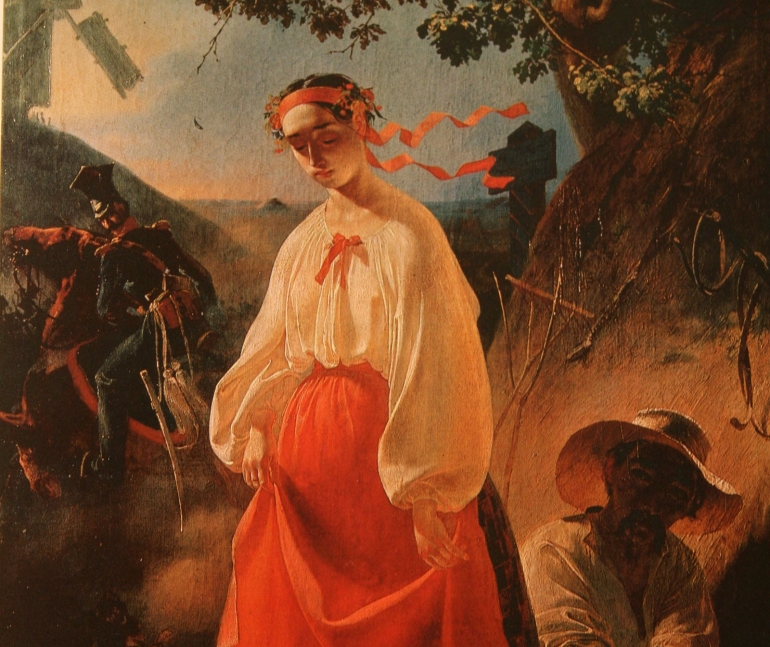
But the “fallen woman” Kateryna — the most famous heroine of Taras Shevchenko — actually lived to see public condemnation. And she must have regretted it a thousand times: when her parents cast her out of the house (“Had I known, I would’ve drowned myself before sunrise,” her mother says in farewell, advising her to look for a mother-in-law in Moscow), when she wandered with her child, begging for food. Eventually, Kateryna meets her unfaithful lover again, but he wants neither her nor their son. The heroine drowns herself in grief, and the child, growing up as a beggar, later becomes a blind minstrel’s guide.
Shevchenko writes about Kateryna with compassion and tenderness — he truly pities her. The poem remains wildly popular even today: countless readers and listeners have wept over it in every Ukrainian home; now it is recited at cultural centers during commemorative events. Yet no one ever defends the girl’s right to raise an illegitimate child. It is worth noting that in reality, not all “fallen women” shared Kateryna’s tragic fate — yet classical literature has cemented precisely this image as typical.
In schools, the traditional reading of this sentimental story is still used for moral instruction: Kateryna is condemned for her recklessness and naivety, while her tragic end evokes sympathy. The seducer is a clearly negative figure — that point is never debated. But the parents’ actions remain unquestioned: as captives of harsh folk morality, they simply “couldn’t do otherwise.” A lesson on Kateryna could become an opportunity for an open conversation between teachers and students about the evolution of moral and ethical norms and sanctions — after all, two centuries have passed since Shevchenko’s time!
And of course, Kateryna is a Ukrainian girl — one of “our own.” But non-Ukrainian women fare even worse: they become objects of revenge, forced to atone through suffering for the sins of all oppressors of the Ukrainian people — and their children, too. The scene of infanticide in the poem Haidamaky is shocking: Honta publicly slaughters his own sons because they are Catholics, like their mother. National identity comes second, as do paternal feelings. The children stammer, “We are not Poles.” Later, under cover of night, Honta buries them according to Cossack custom — yet he must remain loyal to his oath and kill the little “Catholics” with a consecrated knife.
A Woman’s Cruelty Toward Another Woman
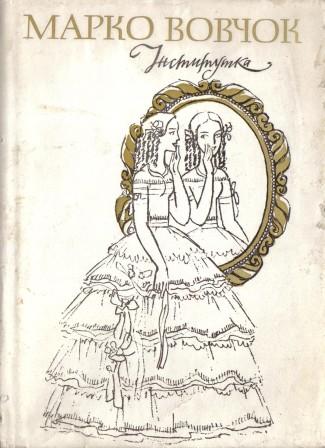
No one describes a woman’s cruelty toward another woman as truthfully as a woman herself. Mariia Vilinska — an emancipated writer who told stories of young women leaving their parents’ homes, earning their own living instead of perishing, and later marrying for love by their own choice — began her literary career with Ukrainian-language Folk Tales under the pen name Marko Vovchok. There she outshone everyone in depicting the brutal life of female serfs. Sadistic masters and mistresses prick their maids with needles, crush their hopes for love and marriage, scold, and beat them.
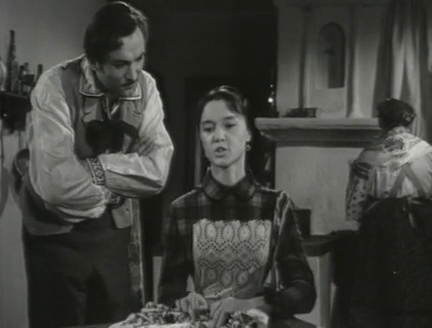
From the school curriculum, we remember Horpyna: a serf mother so overworked that she doses her baby with poppy extract to keep it quiet — and the child dies. The mother has no right to rest, no medical help, no shred of compassion from her enslavers. The culmination of this period in the writer’s work is undoubtedly The Boarding School Girl (Instytutka).
Violence inflicted by a woman upon another woman — or upon a man, or her subordinates — appears unnatural and tragic, more repulsive even than that committed by men. The educated young lady in The Boarding School Girl ostensibly pursues a noble goal — to reform and “optimize” the management of her estate:
“…she found hard work and bitter misery for everyone. The crippled and the children, even the tiniest ones, were not spared. The children swept the gardens, herded turkeys; the cripples sat in the vegetable patch, scaring away sparrows and other birds.”
She has also learned well that the serfs are her property, her enslaved labor force — and that she not only can but must train and beat them:
“At first she would only pinch or push lightly… and then blush like fire, ashamed of herself. But once she got used to it, settled in — that’s when we truly learned where in this world evil lives.”
The cruelty reaches its climax:
“I looked at her — she had become so terrifying my legs gave way. She grabbed me by the neck with both hands! Her hands were cold as snakes. I tried to scream, but the breath was knocked out of me — I fell by the apple tree and came to only after being splashed with cold water.”
The writer leads the reader to the conclusion that the problem lies not in the inhumanity of one individual, but in a social order that itself requires reform.
The drama of society is best illustrated through the example of the family. Ivan Nechui-Levytsky’s The Kaidash Family — seemingly comic — is, on closer inspection, deeply tragic: it depicts a struggle among several women for power within a single household. The men try to stay out of these domestic quarrels and instead divide the world into female and male spheres. The house belongs to the women, who literally divide the shared space — sweeping their respective halves of the entryway in turns. The distaff becomes a symbol of domination: both the mother-in-law and the daughter-in-law need it, and rather than obtaining another, they fight over it, ending in a physical scuffle.
Nechui-Levytsky loved to converse with ordinary women “from the people,” observing their speech and behavior. In his depictions of the Kaidash family, as well as of old women like Baba Paraska and Baba Palazhka, we see the fruits of these observations — vivid sketches “from life.”
It is evident that under different circumstances, an intelligent, strong-willed, and passionate woman could have achieved far more than victory over her mother-in-law. Even the marriage of two equally strong personalities — Karpo and Motria — could have been a partnership of potential rather than conflict. Yet, confined within the domestic space, the family, and the village, these women gossip, scheme, reproach their husbands, and draw them into their local battles.
The Feminism of the Champions of Human Equality
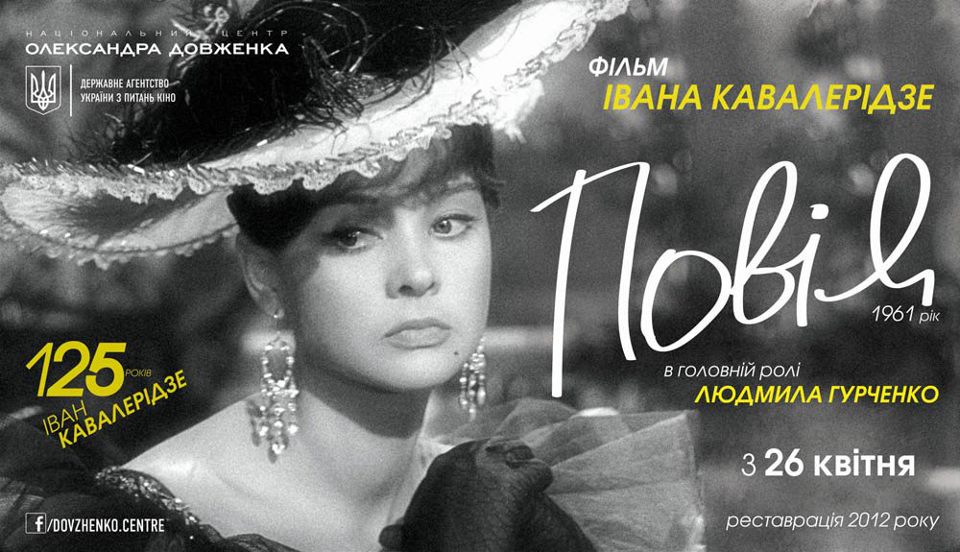
A few decades after Shevchenko’s Kateryna, male moralizing resurfaces in Panas Myrny’s The Loose Woman (Повія). This Ukrainian “sister of Carrie” (written several years before Dreiser’s Sister Carrie) reveals the author’s clear intent to punish a woman who dared defy social morality. Khrystya Prytyka escapes her village for the city, first becoming a maid, then the mistress of a wealthy man. After her lover’s death, she is forced into prostitution, ending in humiliation, disease, and death. The scene in which Khrystya’s nose falls off deserves a place among the most horrifying moments in Ukrainian literature.
The stories of Khrystya’s friends are no less shocking. For instance, Mar’ya recounts how a landowner raped her, kept her chained for resisting him, and how, after escaping, she lived with another gentleman who blackmailed the first for money in exchange for silence — only to keep most of it for himself. When Mar’ya became pregnant, he neither wanted the child nor marriage:
“…the next day he came home from work with a little bottle. Something yellow, almost red, inside. ‘Here,’ he said, ‘drink it — it’s just wine.’ I didn’t know anything, of course, so I drank it. At first — nothing; I even had lunch. Then I started to tidy up, and suddenly the pain struck — sharp, unbearable. My eyes went dark. I fell and remembered nothing. When I woke up, I was lying in a pool of blood… such a puddle! My heart hurt so much… I wished I’d died right there. But he stood over me: ‘Clean it up,’ he said, ‘and bury it in the garden.’ I couldn’t bear it — ‘Clean it yourself, if you caused it!’ Then he stomped his feet: ‘I’ll throw you out on the street! I’ll show you!’ So I gathered it all in a broken bowl, waited for evening, and buried it in the garden.”
Later, the girl was imprisoned and sent to a convent — punishment for her “crime.”
Panas Myrny does not condemn his heroines or their thinking — he condemns the social order that gives peasant girls, many born into serfdom, so few options. Was Myrny a proto-feminist? Undoubtedly yes — as is every author who sympathizes with the oppressed. In his other works, he shows the same empathy toward men: for him, the root of human tragedy lies in class position, poverty, limited opportunities, and low social mobility — the real sources of suffering.
The consciousness of these unfortunate heroines is quite simple: they are uneducated, accept suffering as fate, believe it impossible to resist, are unaware of their rights, and their dreams of the future are limited in imagination. It is Panas Myrny who understands that beating and rape are wrong; his ill-fated heroines — Khrystia, Mar’ya, Maryna — like those of Marko Vovchok and Taras Shevchenko, can only hope that in the next episode, luck might finally favor them.
It would be difficult to accuse Ivan Franko of violating women’s rights. Yet his feminism is but a natural extension of his socialist worldview — and nothing more. Recall his backhanded compliment to young Lesia Ukrainka: “This sickly, frail girl is perhaps the only real man in all of modern Ukraine.” Torn from context, this phrase has followed the writer ever since — even after her death.
Lesia Ukrainka’s works often depict the suffering of those who differ from the dominant majority. In The Forest Song, for instance, both Lukash’s mother and his brisk, red-cheeked peasant wife Kylyna — a woman made for fieldwork and housework — torment the fragile Mavka, who is “not of this world” and capable of something far beyond reaping rye. Instead of finding her a fitting domestic task or simply leaving her in peace, the village women mock the girl for her otherness. The fact that their beloved Lukash loves Mavka is no reason, in their eyes, to accept her into their community.
A similar pattern appears in Boyarynia (The Noblewoman). Thrust into a foreign society with entirely different customs, the Ukrainian Oksana finds herself unable to survive there: she is far too emancipated for Muscovy. She is shocked to learn of the local tradition — marriages arranged through matchmakers, without courtship or affection. The ritual itself horrifies her:
“You will bring them a tray of honey,” says her mother, “the lady will arrange it all as required — you bow, and the boyar will kiss you on the lips…”
At first, Oksana refuses to take part, but her husband Stepan insists:
“You only need to greet them and return to the women’s quarters.”
He reasons pragmatically:
“I never told you there’s freedom here. But if we didn’t bow our backs here, the Muscovite voivodes would have bent our family thrice over back in Ukraine. You faint from disgust that some old man may touch your lips — but when I must call myself ‘Stepka the serf’ and kiss their hands like a slave, is that not worse?”
Oksana has no choice but to suppress her pride and play along — for the sake of the family’s survival.
In the end, she dies — crushed by the unbearable weight of social pressure. The domestic comfort of home, even her husband’s support, cannot save her from the suffocating atmosphere around her. (Similarly, Princess Yevpraksiya, the heroine of Pavlo Zahrebelnyi’s novel of the same name, perishes after being married off to a foreign land. We see again how a woman — especially a foreigner, young and inexperienced — remains powerless in a patriarchal world, where noble birth offers only illusory protection.)
In The Stone Host, Lesia Ukrainka’s drama about Don Juan, the enamored Dolores sacrifices herself to atone for his sins, while the widow Donna Anna must remain faithful to the husband Don Juan has slain. Yet the Commander’s statue punishes the seducer, not the “unfaithful” woman: woman here remains an object, a possession. Slaves are punished only when they begin to think for themselves — when they cease to be slaves.
War, Revolution, and the Woman
When it comes to war, violence reveals itself most starkly.
Woman is, traditionally, the unprotected being. And if there is an opportunity to access her body without consequence — it is usually taken. Does Valerian Pidmohylny condemn the rapist in his story The Third Revolution? After yet another anarchist raid, “in a corner of the bourgeois house, Ksyana lay sprawled, her head thrown back, her knees bent — a grotesque heap of violated flesh.” Earlier that day, she had planned to surrender herself willingly to Makhno himself. Pidmohylny’s disgust is evident.
But does he condemn his protagonist Stepan Radchenko, when Stepan rapes Nadiyka? The answer is less clear. Stepan is intelligent, strong, ambitious — a charismatic scoundrel. His brilliance and promise seem to eclipse his crime. Readers — and even critics — often forgive him in silence, focusing instead on his rise in The City, as if the assault were a minor footnote on his path to success.
If Pidmohylny, Khvylovy, and Yanovskyi treat violence in the Civil War with moral anguish — feeling it as both personal and collective trauma — then later, in canonical works about World War II, the tone changes. Soviet authors, though ostensibly humanist, always know exactly how things “should” happen and how readers should feel about them.
Oleksandr Dovzhenko’s Ukraine in Flames is a prime example of male fantasy disguised as patriotic tragedy. Olesia gives herself to the first passing soldier — to ensure that she is deflowered by a Ukrainian, not a German — and then remains eternally faithful to Vasyl Kravchyna, whom she may never see again. Her friend Khrystia, however, makes no such gesture (perhaps the idea simply never occurs to her?). She becomes the lover of an occupier — though an Italian, not a German — and perhaps for that reason, the author ultimately forgives her, but only after forcing her to repent with the same intensity as Shevchenko’s Kateryna.
And indeed, portraying a woman as an object of violation is a perfect tool of propaganda meant to stir aggression in the humiliated male who is convinced that this woman, left on occupied territory, belongs to him.
Yet things are no better for women at the front. In Oles Honchar’s “The Standard-Bearers,” Shura Yasnohorska is the darling of the entire regiment—so much so that when her fiancé is killed and she later falls in love with another man, the brotherhood at the front must approve her choice (recall Dido and Donna Anna!).
Later, Oles Honchar would write “The Cathedral,” where Yelka, raped by a village brigade leader, is tormented by the loss of her “honor.” It then becomes clear that the problem exists only in Yelka’s own mind. She need not repent, nor keep silent; rather, she should not fear publicly naming the unworthy act of another woman’s husband.
Marusia Churai: a woman, a killer, an artist
It is difficult to name a male Ukrainian writer who has portrayed a woman-killer as a sympathetic heroine—not merely attractive or charismatic, but genuinely positive.
Such is Marusia Churai in Lina Kostenko’s eponymous poem: strong, proud, talented, she did not kill out of baseness. And in any case, she poisoned—she did not stab. A classic, typically feminine method. Yet men judge her without allowances for her sex, and the verdict of the public court is stern and “just,” as expected—public execution. In the end, she is pardoned by a special hetman’s decree, but the broken poet is no longer fit either for creativity or for love.
Marusia is loved and respected for her “artistic merits”—at the time, typically masculine ones, hence the authorities’ keen attention to her case. What kills the artist in her—society’s attempts at censure, however tinged with sincere sympathy, or her own convictions about a single love for life and a notion of femininity incompatible with killing her beloved with her own hands? Marusia places first the dream of family life with a specific man, and when that dream shatters, all other possible options—from marrying someone else to focusing on her art—prove unacceptable.
Violence and erotica in the struggle against Sovietness
The anti-official literature of the last thirty years became a space for experiment and innovation. The performative masculinity of Andrukhovych’s characters, the demonstrative eroticism of Pokalchuk’s and Vynnychuk’s prose, the feminist essays of Yevhenia Kononenko… Descriptions of violence—physical and moral—are scattered generously throughout these texts.
Authors often resort to this deliberately: such details more easily hook or move the reader—or catch them with “juicy bits,” if we are speaking of mass literature. In men’s prose, erotic scenes became one of the standard devices for creating mass-market fiction (amid the oft-declared shortage of contemporary Ukrainian popular reading) and/or an outrageous means of shattering the prudery of Soviet literary norms.
Which of these books have become classics? First and foremost, Oksana Zabuzhko’s “Fieldwork in Ukrainian Sex.” Violence here is dissected and meticulously described. Bad sex? It’s there. An attempted rape? Of course. Need a character with a damaged psyche? The father, the lover, the heroine herself, people in her milieu… indeed, everyone. Want something larger in scope? The drama of violence against an entire nation unfolds before you, and the love story of a writer and an artist turns out to be only a pretext.
Yevhenia Kononenko’s “Without a Man” is a classic of Ukrainian feminist essay writing. The narrator recounts her private biography—from a mother’s and grandmother’s admonitions about the image of a “decent woman” to several romances and matrimonial attempts of various kinds. One man turned out to be impotent; with another, premarital sex was marvelous, but marital sex less so, because “for most men, getting married means buying a live mattress on the cheap”; yet another was fine in everyday life but did not understand the writer’s literary ambitions.
And then the heroine sighs ironically:
“A feminist must be married, and happily married. (Happily not in the patriarchal sense—i.e., well provided for—but happily in the sense of established partnership with a beloved man.) This is necessary less in the interest of the feminist herself than of feminism as such. Because the people still perceive feminism as the cry of an under-satisfied female. The people cannot decide which is worse: under-satisfied or over-satisfied.”
Against this backdrop, Andrukhovych’s earlier alcoholic epic, in which Otto von F. engages in “an unlawful sexual act with a citizen of the Malagasy Republic, Tatnaketea. The poor girl still believes she was visited by Ananmaalhoa—the spirit of fertility, horticulture, and procreation,” and breaks the heart of Halyna K., seems to belong to a different category: too much irony, too little authorial tragedy.
By contrast, Maria Matios’s prose—beginning with the novella “Yuriana and Dovhopol”—is an expressionist portrayal of Ukrainian (more precisely, Bukovynian) history through the prism of suffering and violence. The culmination so far appears to be “Moskalytsia”—a novel about the daughter of a Bukovynian peasant woman and a Russian soldier who came to the village during World War I; her origins fatally determine the heroine’s fate.
Violence as revenge: a return
The first swallows of the newest “war literature” are not particularly encouraging. There are no new Khvylovyi or Pidmohylny yet. Instead, third-rate authors under the brand of combatants… well, no, they still do not enter contemporary Ukrainian literature proper, but their editions are present on bookstore shelves and at major book fairs.
For example, the poetic fantasy about “winning a Muscovite woman” on a White Sea shore (Borys Humeniuk) has already become a classic example of an inappropriate patriotic call. And the story about a veteran hero who asks a prostitute to sing the anthem of the Russian Federation—and their sexual act becomes more intense because of it (Vasylisa Trofimovych)—is striking in its realism. We are not discussing artistic merit here, so the questions are for publishers and editors, who could have noted such points in the manuscript stage and set their own limits of the permissible.
The collection “Against Violence” as a conscious gesture
In light of all this, the collective project “Against Violence” stands out—where a group of Ukrainian writers deliberately undertakes educational work with the broadest audience and provides their texts, which in one way or another address domestic violence, for publication. If previously violence in literature was analyzed by critics (mostly feminists), now we have an anthology in which short stories by well-known Ukrainian authors are dissected by professional psychologists. The appendices include annotated legal provisions, and templates for properly drafted petitions for divorce and child support.
It is unprecedented that writers have voluntarily agreed to have their texts accompanied by commentary—not literary scholarship, but analysis that examines characters and actions through the lens of human psychology, moral-ethical norms, and current law. In fact, this is the very approach long resisted, since a short story is an artistic work and ought to be discussed aesthetically rather than ethically.
The commentators, of course, do not intend to condemn the authors; they focus on the events described and the characters’ motivations. But here lies an obvious danger: will an unprepared reader who needs clarification of her rights in a relationship with a man grasp this fine, still-unpassed boundary? Will it affect her perception of contemporary literature and her attitude toward individual writers? The claim that ordinary readers do not influence the literary process much is irrelevant.
It is precisely ordinary people who write letters to newspapers, purchase most of the print runs, and become tools in the hands of the organizers of pogroms. Although the choice of authors—Yurii and Sofiia Andrukhovych rather than the headliners of women’s pop-prose, Liuko Dashvar and Iren Rozdobudko—targets philology graduates more than most residents of bedroom suburbs, philology graduates also become victims of violence and are left without child support no less often; this observation only adds value to the project.
Using the anthology “Against Violence” as an example, we see how skillfully and knowledgeably contemporary Ukrainian writers depict hurts, traumas, and blows. If the continuity of the Ukrainian literary tradition has survived anywhere, it is precisely here: the developed language of prose and the richness of expressive means are realized to the fullest when the task is to turn one’s soul inside out—one’s own and another’s. For example, Marianna Kiyanovska’s story “She Who Is Dying” about an eight-year-old girl who works as a model and dreams of getting cancer so she can rest. Or Serhii Osoka’s “The Bitter Smell of Father”: the boy’s father is replaced by his mother’s new husband, who tries to raise a “real man” through military-style violence and drill; in the end, the broken teenager provokes the hated stepfather into a particularly brutal beating, and the mother divorces him—no one in this story inspires sympathy.
Conclusion. Two Ukrainian literatures
“…the impression is that there are two Ukrainian literatures. The first is represented in textbooks and monographs, by both Western and Ukrainian scholars, in literary histories. The second exists in real texts that seem entirely unread. And these are not marginal works, but canonical ones,” wrote Solomiia Pavlychko in a proposed study of the discourse of violence in Ukrainian literature. She explained this by noting that for centuries Ukrainian literature was a literature of revenge—and this, precisely, was its political pathos. Beyond revenge against invaders, colonizers, foreigners, and those of other faiths, there is also much seemingly causeless violence, especially against women, along with the hysterical self-hatred of those who wield it (“Violence as Metaphor,” in Solomiia Pavlychko’s collected works “Theory of Literature,” p. 591).
Violence against members of a given sex begins to be recognized and marked from the modernist era onward; whereas nearly a century of literature before that mirrored stereotypes and brandished sabers in all directions: the divisions among Poles, Russians, Jews, and Ukrainians, between masters and serfs, mattered more.
In the newest period — counting either from 1985 or from 1991 — the situation is complicated by the disappearance of the single common enemy who could unite even the most irreconcilable dissenters. Everyone chooses their own object of hatred (most often descending into opportunism or banal domestic squabbles). A few years ago the common enemy returned, almost in the same guise, and it turned out that writers of middling rank have advanced little beyond fantasies about “winning a Muscovite woman.” And men insufficiently affirmed on the field of real struggle try to do so in the family (or on paper—each to his capacity).
The line of what is permissible — this is not about shock value or experiment, but about propriety and the promotion of certain values in artistic works, about rules of good taste and moral-ethical standards in daily life — still stretches farther than it ought in our progressive era, when human rights and freedoms are declared and ought not to be contested.
Psychoanalytic psychotherapist and journalist. Scientific interests include feminist psychoanalysis, sexuality, psychoanalysis of motherhood, and gender aspects in psychotherapy.
Terms used in daily speech often get devalued, like fabric fading from multiple washes. Betrayal, victory, depression—the list goes on. Trauma, as a psychological term, is no exception. The literal translation of “trauma” from Greek is “wound.” While the medical meaning is clear, what mental trauma is, how it differs from stress, and why its consequences can haunt us lifelong, preventing full living—this is not obvious to everyone.
Mental trauma can be caused by an object (e.g., a person inflicting psychological or physical violence) or an event (war, catastrophe, death of a loved one). As early as 1895, Freud wrote in Studies on Hysteria that “any event causing painful feelings of fear, shame, or mental suffering can have a traumatic effect”]. The intensity required to cause trauma is subjective. Like illness, trauma can be acute or chronic.
Unlike trauma, stress is a response to less dramatic personal events, usually resulting in two known reactions—fight-or-flight or freeze. Trauma occurs when emotional or affective processes are so overwhelming that none of these strategies work. Stress is an inevitable life part; trauma threatens functioning. Simply put, stress is a dent in a flexible surface that later straightens, trauma—a dent in metal.
Freud, investigating trauma practically, concluded that its roots lie in early childhood, where so-called primitive survival strategies form. Primitive because children have fewer flexible response options. Childhood traumas cement these mechanisms for life; thus, adults often resort to primitive defenses.
Repression
Psychoanalysis, unlike other therapies, recognizes the unconscious as part of the psyche. Attention is on defense mechanisms operating unconsciously, protecting the Ego (or consciousness) from “the uncomfortable external world, creating a rendition in which one can act fearlessly”]. Psychological defenses thus have two sides: protecting consciousness from unbearable feelings triggered by unconscious impulses or external interactions, but also distorting reality, blocking contact with it and access to one’s feelings. “If reality causes discomfort, truth is sacrificed”]. Facing trauma, the psyche distorts reality or uses “I don’t remember, so it didn’t happen.”
Repression is a core defense removing unbearable feelings into the unconscious. Nancy McWilliams stressed] repression differs from simple forgetting—it only covers experiences dangerous to psyche stability, acting as a safeguard when tension threatens mental stability. Similarly, dissociation detaches painful feelings—fear, shame, anger—and the feeling of detachment from the event. Many disaster or violence survivors say they saw themselves from aside during trauma, feeling no emotion.
One might think repression protects and life goes on; however, repressed trauma continues influencing. Mental self-preservation meant to protect from further trauma also becomes resistance to spontaneous self-expression in interaction with the world]. Freud said trauma “acts like a foreign body that stays active long after penetration”].
Why is overcoming trauma so hard?
Often, retraumatization stems from the impossible cessation of the trauma source, especially for women in toxic relationships. External factors (the abuser) and internal psychological defenses both play a role. The concept of “consent to dissatisfaction”] by Sandor Ferenczi describes how the psyche, confronted with trauma, compromises by masking dissatisfaction as normalcy to avoid associated feelings, pretending the abusive relationship is normal.
Ferenczi also described identification with the aggressor, akin to “Stockholm syndrome,” named after a 1973 Stockholm bank hostage case when hostages sided with captors. Trauma induces psychological regression, pushing the psyche to primitive defenses formed in childhood. The unbearable fear of abuse forces the psyche to erase the aggressor from reality and merge with them. The fight becomes internal; the child mimics the abuser to predict and meet their wishes, assuming guilt to preserve some control. This mechanism explains why women find it hard to leave abusive relationships shaped by family violence and systemic patriarchal oppression, fuelling self-blame and identification with the abuser. This also partly explains why some women reject feminist perspectives on domestic violence and inequality.
Confronted with rejection of feelings, a child may blame their own “defect,” carrying this false belief for life, substituting subjective reality with an alien one. Like identification with the aggressor, this preserves connection, e.g., with an emotionally unavailable partner.
Object relations theorists propose that significant childhood figures internalize as psyche components. Abuse places these figures as “attackers” inside, like an inner critic. The trauma environment causes confusion about acceptable treatment. Thus, defense mechanisms maintain psychic homeostasis but trap trauma in a vicious cycle.
Learned helplessness
The term was coined by psychologist Martin Seligman studying depression causes and coping. In 1967, using shock experiments with dogs, he showed animals that couldn’t control shocks became passive, unlike those who could avoid them. Similar human studies showed a “explanatory style” where victims blamed themselves, harming motivation and emotion. Seligman proposed “learned optimism,” achievable by teaching alternative reactions. Unlike psychoanalysis, this approach emphasizes cognitive-behavioral strategies over unconscious work, explaining why trauma recovery is hard based only on experience and feelings.
Influence of gender socialization on trauma experience
Mental health is closely linked to gender socialization affecting personal realization, security, and socio-economic status. WHO data] show psychiatric disorder prevalence is similar for men and women, but women suffer nearly twice the depression rate worldwide. Risk is three to four times higher for women exposed to gender-based violence in childhood or adulthood. For instance, almost one-third of rape survivors develop PTSD.
Understanding women’s trauma responses requires recognizing social antecedents. Psychoanalysis was long critiqued for excessive internal focus, ignoring external factors. Feminist and interdisciplinary approaches balanced objective realities—material dependence, oppression, unequal resource access, culture, norms—and subjective mental realities. Heidegger argued there is no subject apart from the world].
Traditional gender roles assigned women to family/private/emotional and men to profession/public/rational, shaping psychological response expectations. Outdated theories like “wandering womb” justified female psychological inferiority. Psychiatry served to control rebellious women. Such stereotypes framed women’s trauma disorders as sex-determined illnesses. Meanwhile, men’s trauma was stigmatized and silenced, blocking help-seeking.
Feminist therapy foregrounds systemic discrimination as trauma genesis in women. Miriam Greenspan highlighted internalized self-directed anger]. Patriarchal culture sanctions male aggression and suppresses female aggression, which converts to auto-aggression through identification with the aggressor. Quoting Joseph Heller: “Girls under 25 are agreeable and sweet. After 25, still agreeable but sad, which is not so sweet”].
Patronizing paternalism infantilizes women, stifling autonomy. Economic dependence replicates female minority akin to earlier eras when women’s external contact needed male guardians. Psychoanalyst Alice Miller noted psychodynamic strategies build client understanding of frustration and suppressed anger causes, important in trauma therapy].
Learning to express aggression without guilt is vital in all trauma work, including disaster or loss. Feminism does not make women aggressive but equalizes emotional expression rights.
Healing environment
Trauma shatters safety illusions, triggering core anxieties—fear of death, loss, sudden destruction. This difference from others’ worlds causes isolation and loneliness. Psychotherapy builds belief in being heard and identifies with others who overcome trauma. For women, support groups play a similar role.
Louise Russell criticized traditional therapy ignoring women’s social experience]. She praised female support groups’ emotional aid, mutual care, activism, and refusal to let men define them. She stressed knowing violence experience is common helps healing.
Sisterly support and group identification create new internal objects and resolve internal wars with painful ghosts.
Why talk about it?
Psychodynamic therapists aim to recreate trauma vividly to bring it to status nascendi (birth) and verbalize it]. Therapy supports expression and confronts trauma as abnormal. Feminist flashmob #IAmNotAfraidToSpeak does similar public naming. Freud said, “An insult answered at least in words is remembered differently than suffered silently”[].
Though painful, this process changes women from abuse objects to agents[], restoring control and fostering flexible defenses and openness.
Collective trauma
Public discussion of historic trauma or systemic discrimination transforms unconscious collective trauma to conscious, lightening burden on groups or individuals.
Feminism has publicly addressed this for 150+ years, exposing sexual and reproductive violence, wage gaps, motherhood expectations, objectification, and exploitation. Change is slow where discrimination is cultural norm and women’s voices scarce.
Recent Moroccan protests show courage to reject abuse-normalizing laws, but stigma and trauma internalization persist worldwide. Misogyny and inferiority complexes perpetuate trauma generationally.
Psychotherapy helps people author their lives, but cannot shield from state abuse and societal trauma alone. Solidarity with activist movements is key to more humane, just society.
This translation preserves the meaning and nuance of the original text with appropriate technical and cultural terms for an English-speaking audience. Citations correspond to the original Ukrainian sources as footnotes. The translation follows the intended goal of clearly conveying the academic and activist discourse of trauma and feminism.
The scandal surrounding Kostiantyn Temliak: a brief timeline of events
On August 9, photographer Anastasiia Soloviova (Chornobai) publicly accused her ex-boyfriend, actor Kostiantyn Temliak, of years of domestic abuse and humiliation. She described numerous incidents of physical and psychological violence. According to her, Temliak hit her, pulled her by the hair, twisted her arms, pushed her, controlled her life, and forbade her from communicating with friends or wearing revealing clothes.
Anastasiia shared photos showing bruises on her body, videos of the actor’s aggressive behavior, and screenshots of abusive messages as evidence. Following her statement, musician Moonmanita claimed that Temliak had sent her inappropriate messages when she was 15 years old. Temliak publicly admitted to using physical force against Soloviova during their relationship, though he has not commented on other allegations — including the alleged sexual correspondence with a minor.
After lawyers from the Miller Law Firm became Anastasiia’s legal representatives, she was officially recognized as a victim in the criminal case. With the firm’s involvement, she underwent the initial investigative procedures. The legal team collected and submitted evidence to the police, indicating not only violence against Soloviova but also other possible cases of abuse against women, and even the alleged corruption of a minor.
The situation resurfaced in the media just before the 2025 Golden Dzyga National Film Awards ceremony.
Divided reactions within the film community
The decision to present Temliak with an award sparked public outrage. Opinions in the film industry were sharply divided: some argued that the Ukrainian Film Academy should have at least postponed honoring the actor until the investigation was completed, while others stressed that such a prestigious award should reflect not only artistic talent but also moral integrity.
Actress and Academy member Olesia Zhurakivska joined the critics, sharply condemning the decision in a public post. She wrote that those responsible for awarding Temliak were “mocking victims and undermining the foundations of a civilized society.” Zhurakivska reminded readers that similar cases had occurred before — such as director Andrii Bilous, who was granted an academic title despite allegations of sexual harassment.
Temliak’s decision to return the award
Temliak ultimately responded to public demands by voluntarily returning his award the day after the ceremony. In his official statement, the actor said he was giving up the prize because the situation around his name required personal and legal resolution. He considered it inappropriate to keep an award that symbolizes public recognition amid such controversy and expressed a desire to focus on his work and cooperate honestly with investigators.
“Returning the award is, for me, a sign of respect for the film community, the audience, and the award itself,” Temliak explained.
The statement was generally welcomed online — many commentators noted that the actor had shown greater accountability than the award organizers, who had failed this reputational test.
Ukrainian Film Academy’s response
Following the backlash, the Ukrainian Film Academy announced plans to review its award regulations. Executive Director Hanna Machukh explained that at the time of the voting and award ceremony, there were no mechanisms to revoke a prize once it had been granted. The Academy has now begun polling its members about the possibility of annulling Temliak’s award and intends to amend its regulations next year to allow such reviews in similar situations.
The Academy also clarified that the voting for Temliak’s nomination took place before the public accusations and criminal proceedings were initiated and that Temliak himself is not a member of the Academy. At the same time, it pledged to communicate its stance and actions more transparently in future cases of this nature.
Why the Academy Failed the Reputation Test — and What It Should Have Done
First of all, there was more than enough time.
From August 9 — when the first evidence of abuse was made public — to the September 13 awards ceremony, 35 days passed. That’s more than a month — ample time for the Academy’s board or general assembly to convene and make a decision: at the very least, to suspend or revoke the award. For comparison, Hollywood institutions have taken decisive action within days.
After the allegations against Harvey Weinstein, both the Academy of Motion Picture Arts and Sciences and BAFTA expelled him within a week. Netflix and the International Academy of Television Arts & Sciences ended their cooperation with Kevin Spacey within days of the accusations. BAFTA revoked Noel Clarke’s award immediately after The Guardian’s investigation was published. In all these cases, the decisions were swift and principled — no court rulings, no bureaucratic excuses.
Secondly, the Academy is a private organizationч
The Ukrainian Film Academy is registered as a non-governmental organization (NGO). By law, NGOs are private associations created by individuals, not the state. They are not government bodies, and thus not bound by the principle “only what is explicitly allowed by law is permitted.” In private law, the reverse applies: “everything that is not forbidden is allowed.” This means that even without a special procedure in its bylaws, the Academy had every right to act — to make a reputational decision based on ethics and values.
All statements like “we don’t have such a mechanism in the regulations” or “changes will come next year” are manipulations. No law prevented the Academy from convening urgently and making an extraordinary decision. Western institutions have done so repeatedly — cancelling awards, cutting ties, or expelling members without pre-defined “procedures” — simply because the situation demanded it.
Thirdly, the Academy demonstrated reputational impotence
Instead of taking responsibility, the Academy hid behind talk of legal formalities, the absence of a court verdict, and promises of “discussion” and “future reform.” That is not defending values — it is abandoning them.
Reputational responsibility is independent from legal responsibility. It’s not about punishment through law, but about public trust. When the prestige of the country’s main film award is at stake, taking a principled stance should have been unconditional. Otherwise, the award’s credibility — and the Academy’s — collapses.
The proper course of action was clear
Emergency board meeting or general assembly.
A public statement: the award is suspended or revoked.
Protecting institutional integrity and expressing solidarity with survivors of violence.
This is standard global practice, and precisely what Ukrainian society expected. Instead, the Academy chose bureaucratic inaction — and lost the chance to prove that values, not formalities, guide the film community.
Legal vs Reputational Responsibility
The Temliak case exposed a fundamental misunderstanding: the difference between legal and reputational responsibility.
Legal responsibility operates within the legal system — it begins only when guilt is proven in court or confirmed by official authorities. It requires evidence, due process, and adherence to the presumption of innocence. This is a lengthy process involving investigation, trial, and a final verdict. Only then does the state impose punishment — such as imprisonment or fines.
Reputational responsibility, however, is entirely different. It’s not about courts or police — it’s about the community’s response to unethical or harmful behavior. It comes into play when a person faces professional and social consequences — loss of trust, career setbacks, or exclusion — even without a court ruling. It’s a “social sanction” imposed by peers and institutions that refuse to associate with someone whose behavior contradicts shared values.
In the film industry, reputational consequences almost always precede legal ones. After multiple #MeToo allegations, studios and institutions routinely terminated contracts or rescinded awards — regardless of pending legal proceedings.
The key point: reputational responsibility does not replace legal responsibility — but it also does not depend on it. One does not need to wait for a court ruling to make a morally right decision. When it comes to awards, public honors, or trust, organizations and peers have both the right and the duty to act on credible allegations.
The presumption of innocence governs criminal law; in professional and creative communities, another principle applies — the presumption of a safe environment. The priority must be the well-being and dignity of the community’s members — especially in creative settings built on trust and mutual respect.
Reputational Responsibility in Global Cinema
In the global film industry, swift reaction to misconduct has become the norm — especially since the #MeToo movement. According to Axios, since 2017, hundreds of influential men have faced allegations of sexual harassment or violence; at least 201 lost their jobs or high-ranking positions, while only a handful faced formal convictions.
Some of the most well-known examples:
Harvey Weinstein (USA): In 2017, after dozens of women accused the producer of sexual assault and harassment, he was immediately dismissed from his own company, and the Academy of Motion Picture Arts and Sciences unanimously expelled him. At the time, no charges had yet been filed — but the film community refused to wait.
Kevin Spacey (USA): After several men accused him of sexual misconduct in October 2017, Netflix halted all projects involving him, removed House of Cards from production, and reshot entire scenes of All the Money in the World with another actor. No court decision was needed — reputational risk alone justified the action.
Brett Ratner (USA): When six women accused the director of harassment in November 2017, Warner Bros. immediately terminated its partnership and cancelled upcoming projects. Although there were no convictions, Ratner has effectively been barred from the industry ever since.
These examples show that reputation carries real accountability — and that institutions maintaining public trust cannot afford to remain silent.
Why Reputational Responsibility Matters
Global experience shows that reputational mechanisms are a way for society to self-regulate, especially where formal law acts too slowly or fails to respond effectively. When an industry takes responsibility to remove individuals whose behavior violates basic norms, it thereby:
Protects potential victims. Reputational sanctions help prevent further abuse. For example, suspending a teacher accused of misconduct immediately after the first complaint can protect students even during an ongoing investigation. In Temliak’s case, his former partner admitted she had remained silent for years out of fear and shame. A system of reputational accountability creates an environment where survivors see the community’s response and feel supported — it becomes easier to speak up, knowing they will be heard and protected.
Upholds declared values. If organizations publicly claim that “violence has no place in the industry,” the logical step is to avoid supporting those accused of violent behavior. Otherwise, words and actions lose alignment.
Safeguards the reputation of the community and the award itself. The prestige of an award like the Golden Dzyga — or any other — declines if it is given to someone with a questionable moral reputation. Such recognition should represent not only artistic excellence but also integrity. Reputational oversight protects the credibility of the brand and the audience’s trust: ignoring a scandal can undermine the legitimacy of the entire award.
Drives social change. When a well-known actor or producer faces reputational consequences, it sends a clear message: such behavior is unacceptable, and consequences are inevitable. This acts as a prevention for potential offenders and as validation for survivors. The success of the #MeToo movement lies precisely in this — public exposure was followed by swift repercussions, gradually transforming cultural norms.
In summary, the situation with Kostiantyn Temliak became a kind of test for the Ukrainian film community. Initially, this test was not passed properly — excuses prevailed over moral imperatives.
The key lesson: “Innocent until proven guilty” does not mean worthy of awards or trust until proven guilty. Legal responsibility will take time and deliver a verdict, but reputational responsibility already defines a clear boundary: violence and abuse will find no justification within the creative community, and protecting its values should not require a court seal.
Gender in Detail was founded in 2016 as a niche media outlet publishing expert articles on gender issues. Over time, the project has grown into a public organisation combining a research centre, consulting, media, advocacy and community work.
The website is supported by the Heinrich Böll Foundation, Kyiv – Ukraine.