Category: Identities

  • Defend the Motherland without discrimination: LGBT+ people in the armies of the world and Ukraine

    Workplace diversity policies are not a whim but a way to help employees realize their professional potential to the best of their ability. This principle is especially true for the Armed Forces of Ukraine, which is engaged in active combat operations and does not have the luxury of “throwing away” human resources because of individual characteristics that are not directly related to performing duties.

    According to research, at least 3% of people in the United States identify as LGBT+, and 8-11% report homosexual behavior or awareness of homosexual attraction.[1] There is no such research available for Ukraine. Still, one can assume that the percentage of people with non-heterosexual orientation is not country-specific, so the proportion in Ukraine should be around the same.

    In Ukraine, homosexuality or bisexuality is not a condition for removal from service, and same-sex romantic or sexual relationships are not prosecuted and do not breach military law. Therefore, it can be assumed that homosexual and bisexual persons enlist in the Ukrainian army evenly in accordance with their percentage of the population. This means that at least 3% of the personnel of the Armed Forces of Ukraine (more than 9,000 people as of the beginning of 2022, before mass mobilization to counter the Russia’s full-scale invasion, and much more after it began) are homosexual or bisexual. Thus, they all are the target audience of potential anti-discrimination policies.

    The rights of LGBT+ military personnel in the EU and the U.S

    Since 2018, LGBT+ people have been free to serve in the military in all EU countries. NATO policy prohibits discrimination based on sexual orientation, and since 2002, it has extended benefits for military families to same-sex military families. Since 2019, NATO has had a Diversity and Inclusion Action Plan until 2023, focusing primarily on gender equality and nationality equality within the organization. The organization introduced the official International Day Against Homophobia, Transphobia, and Biphobia (May 17) in 2020.

    In 2021, NATO headquarters hosted the first internal conference on LGBTQ+ perspectives in the workplace.[2] Secretary General Jens Stoltenberg delivered a speech in which he noted that “every member of the LGBTQ+ community at NATO is a valued member of our staff and family.”[3]

    This inclusion was preceded by a struggle, first of all, for the recognition of the LGBT+ community as such. In this text, I will briefly focus on examples from the United States and Germany.

    American society was quite conservative after World War II, and media products that openly targeted homosexual men could not be disseminated. Therefore, health and fitness magazines targeted the audience by publishing visual materials depicting male bodies. In 1956, the Finnish artist Touko Valio Laaksonen submitted his drawings to Physique Pictorial magazine and signed them “Tom.” In 1957, they were first published under the pseudonym “Tom of Finland”, invented by the editor. Since then, Tom’s work has become iconic and greatly influenced queer culture in general and erotic art. Tom painted erotica with men of his liking: tall, strong, engaged in physical labor, in a police uniform, or the outfit of a sailor or a soldier. His works influenced the self-awareness and imagery of the homosexual community, previously dominated by male femininity. They also probably indirectly contributed to the inclusion of the LGBT+ community in power structures.
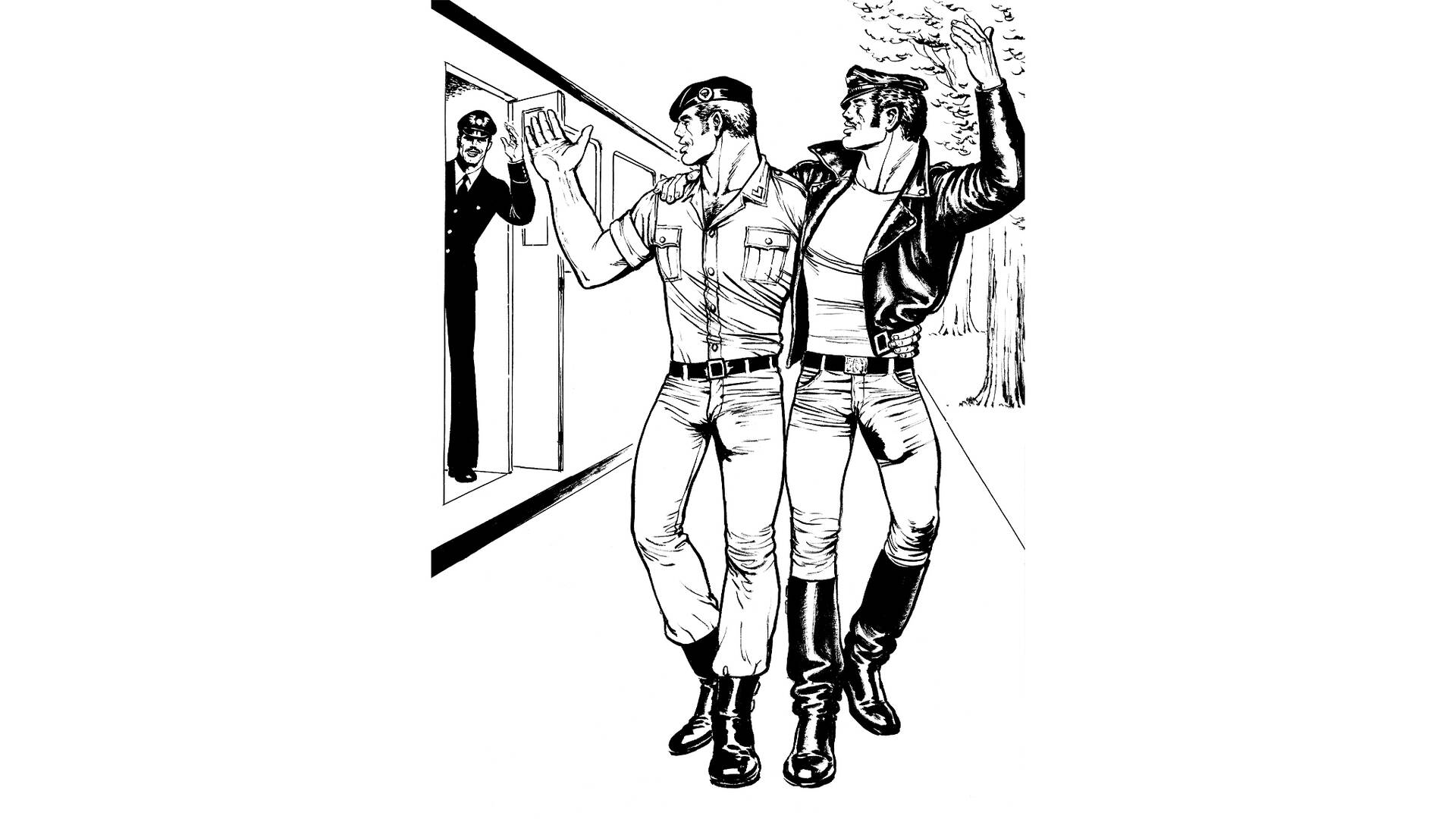

    Tom of Finland. Untitled. 1974

    Simultaneously, as part of the human rights “track”, Vietnam War veteran Leonard Matlovich became the second openly gay person to come out after Harvey Milk. Being white, Matlovich started with anti-racist activism and later realized the similarities between racial and sexual orientation discrimination. He came out in 1975, first to his superiors and then to the media, making the front page of The New York Times and the cover of Time.

    At the same time, he had to defend in court his right to remain in the army. Initially, he was offered to stay on the condition that he would never practice homosexuality again, which Matlovich did not agree to. The trial lasted until 1980, and Matlovich eventually won – he was reinstated and even promoted. In return, the army offered him to resign with financial compensation. Given the risks of being discharged again for another arbitrary reason and a possible appeal to the conservative Supreme Court, Matlovich chose to accept the money. During his military retirement, he went into business and continued to engage in activism, including fighting for the rights of HIV-positive people, which he was himself since 1986.

    In 1993, the anti-homosexual personnel policy was somewhat eased by introducing the compromise principle of “Don’t ask, don’t tell.” It was assumed that closeted homosexual and bisexual men could serve if they remained closeted, and their superiors could not question or provoke them to come out. This policy was repealed only in 2011, and only then did homosexual and bisexual people gain the opportunity to be open during their military service.
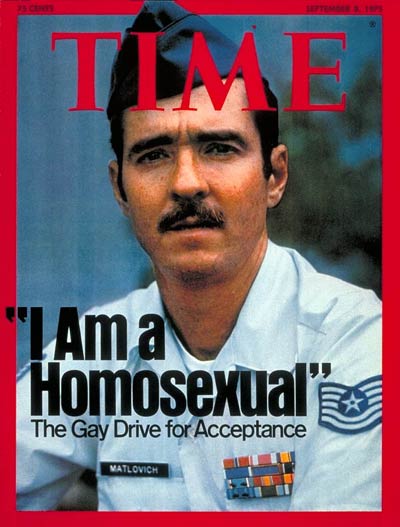

    The cover of Time magazine with Leonard Matlovich. 1975

    In Germany, the LGBT community’s struggle for recognition, particularly in the military, also has a long history, burdened by 12 years of Nazi dictatorship. The biopolitics of the Third Reich were not limited to anti-Semitism and racism; they included strict health and family reproductive behavior requirements. In general, even before the 1930s, “immorality” and conspiracy were often equated in society, and gays were described in the same negative terms as Jews. Section 175 of the 1871 Criminal Code, which explicitly criminalized sexual acts between two men, was amended in 1935 to cover all homosexual behavior, including dating and flirting. Often, SS officers disguised themselves as gay to catch real ones. Between 1933 and 1945, more than 100,000 people were arrested under the new edict of Section 175. After the fall of the Third Reich and the release of people from concentration camps, the conservative Adenauer government came to power, which did not seek fundamental changes, so people from this group were repeatedly sentenced to prison. In the GDR, homosexuality was decriminalized in 1968; Germany abandoned the Nazi version of Section 175 in 1969, but it was wholly repealed only in 1994. A long struggle for the recognition of rights preceded the repeal.

    Society’s conservatism influenced the official policy of the Bundeswehr. It was believed gays in leadership negatively affected morality and posed a security threat. In 1984, General Gunther Kissling was forced to resign because of suspicions of homosexuality. Discrimination at lower levels was much more widespread and less publicized.
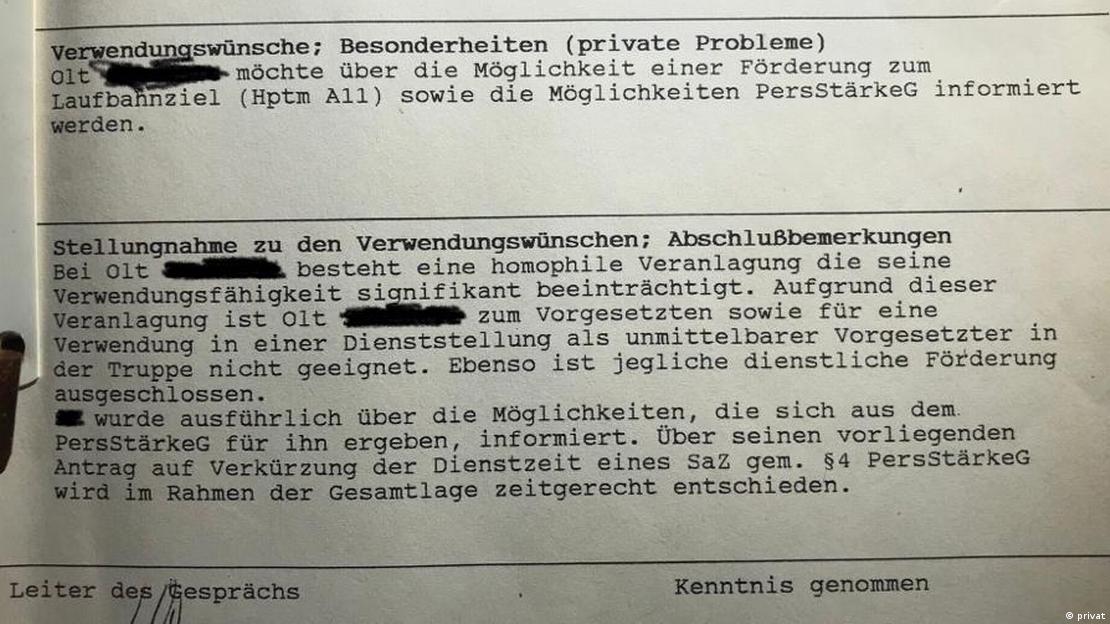

    Extract from a forced medical examination, which indicates a ‘ban on promotion’. 1987

    Nevertheless, the community’s struggle for its rights continued, including in court. In the late 1990s, at least two German soldiers, Winfried Stecher and Werner Buzan, tried to defend in court their right to serve.[4]

    It was only in 2000 that the Bundeswehr allowed women to serve (earlier, they could only serve in medical corps) and openly gay people to hold leadership positions. In 2002, the unofficial group Queer BW was founded to demand an official apology and rehabilitation for those affected by this discriminatory policy. They had to wait 18 years for an apology, until 2020.[5] At present, service members who experienced harassment during their military service can seek compensation for the harm they endured.
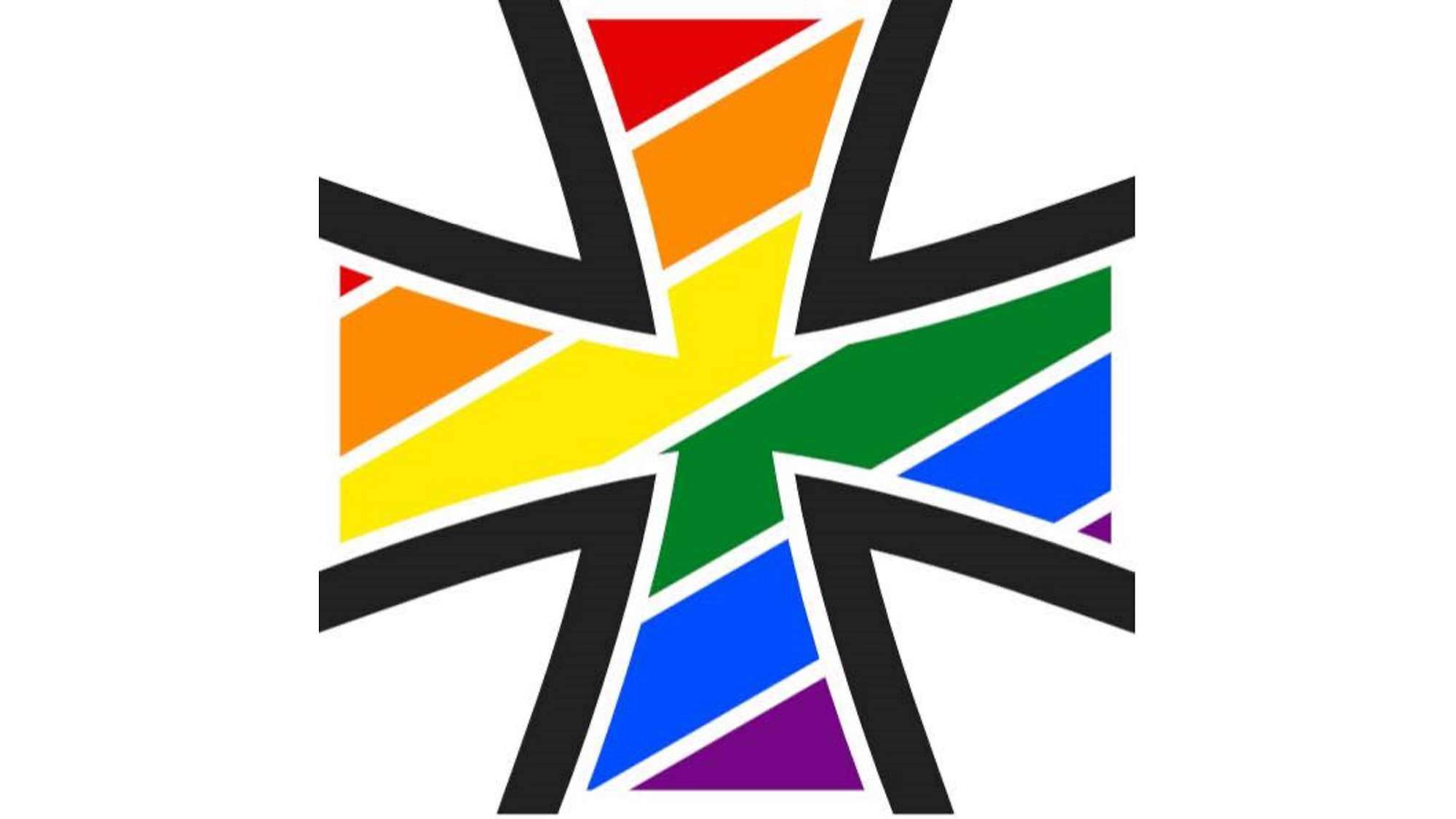

    The logo of the Queer BW initiative

    LGBT+ military personnel in the world’s armies

    Latin American countries have not yet reached the top of inclusivity indexes, but they have been making rapid progress in recent years in the rights of the LGBT+ community. Pride in São Paulo, Brazil, is considered the largest in the world, and the marriage rights of same-sex couples in the military are ensured.[6] However, Brazilian military law prohibits sex in the service, as such. In Mexico, homosexuality has been decriminalized since the second half of the 19th century, and homosexuals have been allowed to serve in the army since 2012. However, domestic homophobia in these countries is still a significant problem. On the other hand, Argentina is a champion of LGBT+ rights in the region, which lifted the ban on homosexuals serving in the military in 2009.

    China’s policy of inclusiveness concerning LGBT+ in the military is unclear, and information on this topic is partially limited.[7] However, it is known that the Chinese army’s personnel policy seeks to attract as many citizens as possible to serve, and it is likely that closeted homosexuals are fully employed, while open homosexuals risk dismissal.

    Conservative and homophobic countries in Asia and Africa cannot tout inclusion in the military: in Uganda, homosexuals are potentially subject to the death penalty; in Iran, homosexual behavior often entails forced transition to the female gender.

    LGBT+ military in the USSR and in Ukraine

    After the fall of the tsarist regime, the new Soviet government discarded all imperial criminal law, particularly prosecuting homosexual behavior, following the German model. At the same time, the attitude towards LGBT+ people in the Russian Empire was conditionally tolerant for those times, without high-profile criminal trials (recall the Oscar Wilde trial in the UK). For public and/or influential people, public intolerance was limited at best to rumors and at worst to administrative measures (dismissal from office, expulsion from the capital). Criminal trials concerned only ordinary people and were initiated mainly based on third-party complaints.

    The new Bolshevik government moved beyond this moderate intolerance: through the direct abolition of imperial legislation, the decline of the church’s influence, and a general attitude of emancipation and liberalization in gender and sexual issues. The proclaimed gender equality and affirmative action of “women’s departments,” the legalization of abortion, the “glass of water theory” that separated sex from love, and the development of a system of “children’s hearths” (extended-stay kindergartens) were naturally accompanied by a more tolerant attitude toward homosexuality.

    Over time, the emancipatory program of the first years of Soviet rule began to wind down gradually, and in 1933, the USSR criminalized homosexuality again. The article of the criminal codes of the Soviet republics entitled “Sodomy” provided for punishment for sexual relations between men. At the same time, the prison world developed practices of establishing hierarchy through sexual domination and ritual impurity attributed to victims of such domination and to the objects of prison life they touched. These firmly entrenched negative associations with homosexuality. Following a series of camp uprisings in the early 1950s and the relative liberalization of Soviet policy after Stalin’s death in the second half of the 1950s, the Gulag system was gradually dismantled, with large numbers of prisoners released and reintegrated into society. The homophobia they brought with them from the prison environment quickly spread further.

    The Soviet army did not explicitly ban homosexual men from service. However, those convicted under the relevant criminal article were not drafted into the military, and confessions of homosexuality to a medical commission could in practice be qualified as a psychiatric disorder and exempted from service. Nevertheless, closeted homosexuals apparently joined the army on a general basis. Little research has been done specifically on this topic because of its great taboo, but it is logical to assume that in combination with hazing (a practice of bullying in the army that is extremely common everywhere), the slightest hint of homosexuality was likely to be punished at least informally.

    In independent Ukraine, criminal penalties for “sodomy” were abolished in 1991. The legal framework of the Armed Forces of Ukraine, as the successor to the Soviet one, also does not contain explicit prohibitions to serve. In 2016, Ilovaisk veteran Oleh Kopko was the first person to come out in the Armed Forces of Ukraine. At that time, everything was limited to an article in the media as part of the “Tolerance Journalism” project.[8] The coming out went unnoticed by the public. The second coming out in the Armed Forces of Ukraine in 2018 got better coverage. Viktor Pylypenko, a veteran of the Donbas Special Forces Battalion of the National Guard of Ukraine, did it. During Anton Shebetko’s photo exhibition “We Were Here”, dedicated to LGBT+ combatants, Viktor gave a video interview in which he talked about himself.[9] The same year, the Union of the LGBT military was formed. The following year, a column of LGBT+ military personnel and their supporters participated in the Equality March in Kyiv.[10]


    Oleh Kopko
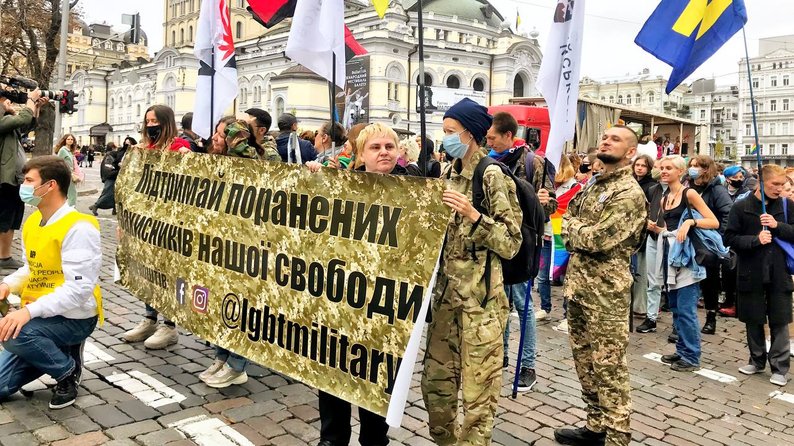

    A column of LGBT military personnel at the 2019 Pride

    The union makes more than a dozen different demands, including legal recognition of same-sex partnerships and inclusiveness of the LGBT+ community in army regulations and statutes. The need to regulate the rights of the partner in the event of a servicemember’s death has become more urgent during the full-scale war. In 2022, a petition to the President of Ukraine received 25,000 votes and was considered.

    Article 51 of the Constitution of Ukraine explicitly defines marriage as “based on the free consent of a woman and a man,” and it is impossible to amend the Constitution during martial law, so marriage equality will have to wait at least until the end of martial law.

    Despite that, there are no obstacles to introducing registered civil partnerships, a close analog of marriage. The relevant draft law, No. 9103, was registered in the Verkhovna Rada and is under consideration. However, the Ministry of Defense of Ukraine does not support it, citing Article 51 of the Constitution of Ukraine and the Internal Service Statute of the Armed Forces of Ukraine, which do not prescribe commanders to register a couple where one or both partners are military personnel. The ministry did not specify the barriers to improving the statute. The ministry also stated that there is no data on the number of servicemembers who cannot officially formalize a same-sex partnership.[11]

    At the time of the study, there was a de facto ban on transgender people serving in the military. According to the 10th version of the International Classification of Diseases (ICD-10), which is in force in Ukraine, transgenderism is classified as a personality and emotional disorder (item F64 – “gender identity disorder”). According to Article 18 of Annex 1 to the Regulation on Military Medical Examination in the Armed Forces of Ukraine, personality and emotional disorders F50-F69 are grounds for declaring a person unfit or partially fit for service.[12] However, a transgender person may still serve in the military before they begin their transgender transition and receive the diagnosis. Starting January 1, 2022, the World Health Organization recommends switching to the new ICD-11 classification, where transgenderism is moved from the group of mental disorders to the sexual health conditions called “gender nonconformity.”

    In Ukraine, transition to the new classification at the time of this text has not happened yet, and the relevant changes to the regulations have not been made. Partial fitness for service in wartime allows transgender people to serve in the army. As far as the author knows, there are such cases.

    People diagnosed with HIV are officially recognized as unfit or partially fit for service under Article 5 of Annex 1 to the Regulation on Military Medical Examination in the Armed Forces of Ukraine.[13]

    The problem of homophobia, biphobia, or transphobia in the Armed Forces of Ukraine is being recognized gradually and slowly. Back in the early 2000s, for example, the official response of the Ministry of Defense to an information request from NGO Nash Svit stated, “There are currently no psychological support programs for gay and lesbian servicemembers in the Armed Forces of Ukraine due to the absence of this problem […] As for positions related to personnel training and promotion, homosexuality can be considered as a limitation in conjunction with other moral and business qualities of a serviceman.”

    However, the response to later requests was profoundly different, in particular in 2017 of the Main Department of Moral and Psychological Support of the Armed Forces of Ukraine: “As part of legal training of the personnel of the Armed Forces of Ukraine, issues are mandatory related to observing the rights and freedoms of servicemembers, the procedure of military service, as well as the mechanism for ensuring social and legal guarantees for these categories of Ukrainian citizens. It should also be noted that the State Program for the Development of the Armed Forces of Ukraine until 2020, approved by the Presidential Decree No. 73/2017 dated 22.03.2017, provides for the necessary conditions for a gradual change in the mentality of the military personnel of the Armed Forces of Ukraine based on European values. In order to implement the above, it is planned to amend the legislation of Ukraine to eliminate any form of discrimination in the military service.”[14]

    Research on the LGBT+ situation in Ukraine’s military service

    In early 2022, I conducted a mini-study of the situation for LGBT+ military personnel in Ukraine. It was the first study in Ukraine to focus on this issue, as the movement of LGBT+ servicemembers only recently emerged. However, the topic of unlawful treatment of colleagues due to homophobia or transphobia was raised by respondents of the study “Invisible Battalion 3.0. Sexual Harassment in the Military Sphere in Ukraine”, which involved one homosexual man and one transgender woman who ended their military service before transition. Back then, the respondents named problems, among others, such as harassment and prejudice against servicemembers by colleagues based on their sexual orientation and gender identity, in particular, a noticeable deterioration in attitudes toward a non-heterosexual person after coming out without any other reason for the deterioration, demonstratively unaddressed threats, and homophobic attitudes toward people suspected of homosexuality due to a lack of visible sexual attention to women.[15]

    As part of the 2022 study, I conducted 10 interviews with 7 men and 3 women who belonged to the LGBT+ community and were active military personnel.[16] The respondents reported that they had personally experienced homophobia and had heard of such cases. The research methodology did not allow us to establish the actual prevalence of such cases. Still, subjectively, the respondents noted them as common, as a general norm of attitudes towards LGBT+ people. The high level of homophobia, low understanding of what homosexual orientation is, and low level of general culture create at least some discomfort in the service.

    And then you go to the canteen at lunchtime. Everyone looks at you and says, ‘Oh, it’s him, it’s that one.’ And every single day, I eat and they point at me, and they say something about me, and I hear it. Then, in the smoking room, they ask such slippery questions as ‘and what?’, ‘and who?’, like trying to surface some kind of truth, but it’s my personal business whether I want to share it or not. But I’m generally irritated that they exposed me.” (Respondent 1)

    They said ‘this is how you discredit the Army, you demonstrate to others that everyone here is like that.’” (Respondent 6)

    Otherwise, a person may face dismissal, physical violence, and even incitement to suicide. The lower a soldier’s rank, the harder it is for him to be open about his orientation. Respondents do not recommend conscripts and other lower-ranking soldiers disclose their orientation at all, advising them to delete personal data from their phones, etc. Respondents now perceive homophobic problems as almost unavoidable after coming out. The military personnel responsible for moral and psychological support are currently unable to systematically provide qualified assistance to LGBT+ people due to their low general qualifications, overload with paperwork, and lack of knowledge about the specifics of the LGBT+ community, even if they want to help.

    “And if it happens that everyone is against it, well, I’m putting it mildly, if the unit commanders don’t approve it, the department and so on, it is very difficult. It will be very, very hard, and no one will help you with this issue.” (Respondent 3)

    “But I will say this, if there was direct harassment, well, I probably wouldn’t have lasted long. I would have started to break down.” (Respondent 4)

    “What exactly will happen: he can be beaten, he can be humiliated, he can be humiliated in front of the whole platoon, he will simply not be able to live here, he will be verbally insulted. I don’t know… I just haven’t encountered it directly, but, in principle, I understand from what other guys say about what they would do to a gay man – it’s just horrible.” (Female Respondent 7)

    Inclusivity for LGBT+ people in the military workplace

    The Hague Center for Strategic Studies defines inclusion as a guiding principle that maximizes the benefits and minimizes the risks of diversity.[17] It is the best option among other guiding principles compared to acceptance, tolerance, exclusion, and persecution. The Center identifies the following types of inclusive policies:

    • Leadership, training, code of conduct. The top-down approach works best in the army because of its hierarchical nature. Policy coming from the leader counteracts the risks of harassment. Mutual respect should be explicitly stated in the statutory documents.
    • Support networks and mentoring. Associations that provide support to their members can be a resource. Such associations may even be funded from the state budget in some places.
    • Combating discrimination. The prohibition of discrimination based on sexual orientation and gender identity should be explicitly stated and enshrined in law.
    • Recognition of relationships. The state should recognize same-sex relationships through the institution of marriage and/or registered partnerships. This point is especially relevant for today’s Ukraine, where active hostilities are taking place.
    • Recognition of gender. Transgender individuals may wish to have their gender officially recognized by the state and other institutions, including the army. Procedural issues related to changing documents, access to hormone replacement therapy, and surgical sex reassignment procedures should be consistent with the regulatory framework and internal logic of military service.

    The Center notes that these practices are currently being implemented in different armies around the world in an unsystematic manner and are not tested for effectiveness, so it is difficult to identify any countries whose best practices are worth emulating. In contrast, the center’s research team formulated three strategies to provide a more focused vision.

    • Mainstreaming – developing new inclusion policies and increasing the inclusiveness of old policies
    • Managing – dedicated effort and an accountability approach
    • Measurement – tracking and evaluating progress

    In 2014, the Hague Center for Strategic Studies ranked the armies of 103 countries in terms of inclusiveness towards the LGBT+ community. Ukraine was ranked 52nd in this index (the study was conducted one time, so the index has not been updated). New Zealand ranked first, followed by the Netherlands, the United Kingdom, Sweden, and Australia. According to the study, including LGBT+ people in the military correlates with the degree of human development and indicators of democracy and, of course, with the general public acceptance of the LGBT+ community. In some countries, such as Croatia, Israel, or South Africa, LGBT+ people are better accepted in the military than in society at large.

    Illustrations: Tom of Finland, Time, Deutsche Welle, Queer BW, Radio Liberty, Suspilne, Hromadske.

    This publication was prepared by the expert resource Gender in Detail with the financial support of the European Union. Its contents are the sole responsibility of the author and do not necessarily reflect the views of the European Union.

    The Resilience Program is a 30-month project funded by the European Union and implemented by ERIM in partnership with the Black Sea Trust, the Eastern Europe Foundation, the Human Rights House Foundation and the Human Rights House in Tbilisi. The project aims to strengthen the resilience and effectiveness of war-affected CSOs and civil society actors affected by the war in Ukraine, including independent media and human rights defenders.


  • Narratives in Ukrainian politics about the LGBT+ community

    Intro

    The institutional provision of equal opportunities for exercising human rights and freedoms by representatives of all social groups is an essential value of any democratic state. The fundamental principle of non-discrimination is underlying Ukrainian legislation and secures equal opportunities.

    This principle prohibits any discrimination against individuals or groups in a wide range of social relations. It also ensures equality of rights, freedoms, and opportunities; equality before the law; and respect for the dignity of every person. Accordingly, these provisions apply to and should be enshrined in national legislation and all regulations.

    More details about the legal (non-)recognition of homosexual relationships and some legislative restrictions on human rights related to sexual orientation have already been discussed in our previous materials.

    This text aims to analyze the narratives about the LGBT+ community in the external communication of national public figures, state institutions, and political parties. In addition, we analyze the legislative activities of members of the most prominent political factions represented in the Verkhovna Rada, their positions on certain bills aimed at improving the situation for or protecting the LGBT+ community, and homophobic statements and bills they initiated or supported.

    Why is this important? First, the messages and actions of the individuals holding such positions do not reflect their own values or positions but their positions as people’s representatives. Accordingly, to a certain extent, they broadcast public sentiments and “voices” of their constituents. Second, official communication and activities of national public figures not only represent but also, to a great degree, “set the tone” and influence public opinion. Their narrative about LGBT couples impacts the visibility of the whole community, its appearance in the media, and public attitudes toward it. Therefore, there is no doubt that the official communication of public figures, state institutions, and political parties is inextricably linked to public sentiment.

    This article analyzes the political narratives of 2019-2023.

    Position on the LGBT+ community in the parties’ electoral programs

    An analysis of the official position of political parties that are part the 9th Verkhovna Rada of Ukraine about the LGBT+ community should begin with the content and narratives of their electoral programs as the primary source of the declaration of their positions and ideological beliefs.

    Thus, the Servant of the People party’s program,  consisting of 16 sections and priorities as bullet-point statements in each, does not mention protection of LGBT+ rights. One of the paragraphs in the “National Identity and Civil Harmony” section states: “We will protect human rights and fundamental freedoms, ensure equal rights and opportunities for men and women in Ukrainian society.” The presence of such an item is better than the absence of any. However, a more specific item and the recognition of the problem of discrimination against LGBT+ people would be much better and increase its visibility.

    The electoral program of the Holos party includes 23 subsections and also does not contain specific references to ensuring equal rights and opportunities or providing adequate legal protection for LGBT+ people. However, in the first subsection, “What does Ukraine sound like?”, they repeatedly emphasize that their goal is to “return the person to the center of the state,” regardless of their ideological beliefs or other characteristics. However, the party’s program does not provide a specific mechanism for achieving this goal.

    The program of the European Solidarity party, like the above-mentioned parties, refers to equal opportunities for women and men and does not clearly mention protection of LGBT+ rights.

    The program of the Batkivshchyna party does not mention equal rights and opportunities for different social groups and the implementation of the principle of non-discrimination.

    Although as of September 2023, the program of the now defunct OPFL faction is not publicly available, the attitude towards the LGBT+ community that they had when they entered the Verkhovna Rada can be assumed from the words of former party member Yurii Boyko. In an interview, he clearly outlined the party’s position: “As for same-sex marriage, it is not even being discussed. This is such stupidity that is unacceptable for our Christian society.”[1]

    Thus, an analysis of the election programs of the political parties that won the majority of seats in parliament in the 2019 elections showed that advocacy for the LGBT+ community was neither a priority nor a separate area of work for any of the parties. It is worth noting that we found no overtly homophobic statements or positions in the programs analyzed. Some referred to implementing the principle of social justice and equality of all social groups in Ukraine. However, these ideas were presented as value guidelines rather than priority work areas with a specific mechanism of action.

    The existence of such references, albeit only at the ideological level, is undoubtedly better than the absence of any. However, it would be much better to specify the problem of discrimination against the LGBT+ community and actualize the issue of proper protection as a separate item in the program.

    It is quite clear why naming the problem of discrimination is necessary: as long as the problem is not stated and “highlighted,” it remains invisible to the majority of society. As long as the challenges posed by no legal recognition of homosexual couples as families are not being discussed, most of society does not even notice them. Accordingly, problems that are not verbalized and actualized cannot be solved.

    Membership of Ukrainian political parties in international liberal democratic associations

    The affiliation of a political party with international political associations, alliances, or organizations is one way, but definitely not the only way, to assess its ideological and value orientation. It is an indicator allowing us to evaluate whether a party is friendly towards the LGBT+ community, at least declaratively. One such association is the Alliance of Liberals and Democrats for Europe (ALDE), a European transnational political party that adheres to liberal democratic values and unites parties that share them.

    The Ukrainian political party Holos joined ALDE in 2020, the first parliamentary party of this Verkhovna Rada convocation to do so. According to Holos, to become a member of this association, a party must prove that it shares the values of liberal democracy, rule of law, tolerance, human rights protection, and the principles of a market economy. For its part, membership in ALDE provides access to networking with European parties with similar values and a European political elite.

    The Servant of the People (SP) party was the second Ukrainian political party to join the Alliance, in 2022. According to Olena Shulyak, the party’s chairperson, this decision was not spontaneous: “Joining the ‘political family’ of the ALDE party as a full member is one of the key priorities for the Servant of the People in international politics.” The issue of accession became especially relevant after Russia’s full-scale invasion. In addition to being an indicator of shared values and beliefs, membership in the association is now seen as an important political step that promotes better integration into the European political community.

    In addition to the fact that the ALDE’s unequivocal support for Ukraine’s sovereignty and integrity strengthens our country’s position in the international arena, the membership of two Ukrainian parties in ALDE also impacts decisions made within the Ukrainian political arena. For example, on May 28, 2023, ALDE adopted a resolution supporting the legislative initiative of Holos and SP MPs to submit a draft law on civil partnerships. This was the first international statement of this level calling for support for the draft law.

    Although this resolution does not de jure impose any obligations on Ukraine and is only advisory, de facto, it could influence the adoption of the draft law. The European community’s call to support registered partnerships for same-sex and different-sex couples demonstrates the importance of this issue for the Alliance and the European political community, which observes liberal democratic values. This Alliance position also legalizes the significance and relevance of this issue in Ukrainian society. For Ukraine, which is fighting for its place in this community, adopting the draft law is a logical and expected step for implementing European legislation into Ukrainian national legislation.

    Homophobic statements and legislative initiatives of individual party representatives

    Despite the fact that the programs of the above-mentioned political parties do not contain overtly homophobic positions, and some of the parties belong to liberal democratic associations, the positions of individual party representatives sometimes contrast. This is manifested in their homophobic statements, legislative initiatives, or unwillingness to support bills aimed at improving the situation of the LGBT+ community.

    Two draft laws submitted by SP MPs Heorhiy Mazurashu and Olena Lys on July 22, 2020, are vivid examples of how the positions of the party and its representatives diverge sharply. The first draft law proposes amending certain legislative acts on protecting the family, childhood, maternity, and paternity. In the draft, the authors define “homosexuality, pornography, sexual products, transgenderism” and introduce the concept of “propaganda of homosexuality or transgenderism,” although they do not yet define it. In addition, the authors propose replacing the word “gender” with “equality of rights and opportunities for women and men” throughout. In the explanatory note, the authors justify their proposal with the “danger” that “gender ideology” allegedly poses.

    The second draft law proposes amendments to the Code of Ukraine on Administrative Offenses regarding liability for propaganda about homosexuality and transgenderism. In the explanatory note to the draft law, the authors express concern about “aggressive propaganda of homosexuality and transgenderism aimed at destroying the family institution” as one of the “immoral threats of our time” as a justification for its adoption. In the note, they also misinterpret the concepts of gender and gender equality and view them as inherently “explicit or implicit propaganda of homosexuality and transgenderism.”

    At the same time, in his comments to Suspilne, co-author of the draft law Heorhiy Mazurashu notes that, generally, he is “far from thinking that they [transgender people and the LGBT+ community] should be treated in any way biased, or subjected to any discriminatory actions.”[2] Commenting on the draft law to Radio Liberty, he reiterates his “calm and civilized attitude towards people with different sexual orientations and gender identities.”[3] Mazurashu explains that he is concerned about the risks of “propaganda of homosexuality or transgenderism.” Therefore, he and his colleague propose introducing a fine of 1,000 tax-free minimum incomes (UAH 17,000) for individuals and 3,000 tax-free minimum incomes (UAH 51,000) for legal entities.

    Another draft law initiated Heorhiy Mazurashu proposes amendments to the Budget Code of Ukraine to prevent spending budget funds on promoting pedophilia, homosexuality, and transgenderism. In addition to Mazurashu, the group of initiators of the bill includes other members of the SP party Anatoliy Drabovsky, Serhiy Kuzminykh, Artem Kultenko; and non-partisan MP Viktor Myalyk.In the explanatory note to this draft law, the authors appeal to the government’s obligation to develop and protect the family institution. Other arguments are that “propaganda of homosexuality and transgenderism poses a threat to public 

    health,” leads to “violation of the right to freedom of scientific research,” and “violation of the right to freedom of expression and freedom of religion.” In conclusion, the authors argue that “homosexuality, transgenderism, and pedophilia destroy public morality.” As a solution, the MPs propose a draft law that would potentially strengthen protection of family, childhood, maternity and paternity and prevent budget expenditures promoting “pedophilia, homosexuality, and transgenderism.”

    In the comparative table to this draft law, the authors define what they mean by “pedophilia, propaganda of pedophilia, homosexuality, propaganda of homosexuality, transgenderism, propaganda of transgenderism.” They consider the production, distribution, and/or public use of products containing LGBT symbols to be a kind of “propaganda of homosexuality.”

    All of these draft laws were withdrawn from consideration. Human rights defenders note that their content is very similar to the narrative from Russian legislation, which considers “propaganda of non-traditional sexual relations” a crime and introduces a fine for it.[4] In particular, the human rights NGO Our World commented on the above-mentioned legislative initiative as “support to Russian policy” and a willingness to “stand under the banner of the Russian-led movement for traditional values.” Although they believe that the real chances of passing this law, even at the time of its submission, were close to zero, the very existence of such legislative initiatives poses certain risks. These narratives are inconsistent with the ideological guidelines declared by the party in its election program and with the basic principle of non-discrimination enshrined in national law. Such initiatives go against the European integration process and Ukraine’s international obligations to ensure equality of rights and freedoms and combat xenophobia and intolerance.

    In addition to the human rights community, some national public figures and institutions criticized the draft law. In particular, the office of the Ukrainian Parliament Commissioner for Human Rights commented that the initiative of the draft law on fines for “propaganda of homosexuality and transgenderism” contradicts constitutional norms and international legal standards and “aims to discriminate against members of the LGBTI community and violate their right to respect for honor and dignity.”[5]

    In response to this draft law, MP Inna Sovsun submitted an alternative one that proposes including in Ukrainian legislation a ban on funding programs and activities that contain signs of direct or indirect discrimination or intolerance against individuals and their groups, depending on the characteristics that such individuals or groups possess. In justifying the need to adopt the draft law, the author also mentions that her colleague’s draft law contains outdated, incorrect terms and promotes stigmatization and discrimination against people based on their sexual orientation and gender identity. However, this draft law was withdrawn from consideration like the previous ones.

    (Non)support for the draft law on civil partnerships

    Another way to check whether the actions and positions of party members are consistent with the party’s official position is to analyze their (non)support for draft laws aimed at protecting the rights of the LGBT+ community. The latest and probably one of the most visible draft laws in the field LGBT+ rights protection is the draft law on registered civil partnerships. Our previous publications have already discussed the importance of adopting this draft law and the opportunities the LGBT+ community may gain (Zavhorodnia’s first text for ERIM). In this article, we will consider in more detail Ukrainian politicians’ reaction to the draft.

    After a petition demanding to “legalize same-sex marriage” on the website of the President of Ukraine gained 25,000 signatures, MP Inna Sovsun of the Holos party registered a draft law on civil partnerships for same-sex and different-sex couples. The list of initiators includes 18 MPs: 7 from Holos and 11 from SP, including Oleksandra Ustinova, head of the Holos parliamentary faction, and Olena Shulyak, head of the SP party. At the time the draft law was registered, its author, assessing the chances, noted that “given the support of the two factions, adoption of the draft law is quite realistic.”[6] She also expressed special gratitude to Dmytro Gurin, a Servant of the People party member, who helped collect signatures from his faction’s MPs. The petition in support of the bill quickly gained 25,000 signatures.

    After considering the draft law at a Youth and Sports Committee meeting on March 7, 2023, the majority of committee members decided to support the draft law. The committee considered creating a new institution of civil partnerships as an important step towards European integration, so it recommended that the Verkhovna Rada adopt the draft law. A report by the Our World Human Rights Center notes that it was entirely unexpected that the committee chair, Andriy Kozhemiakin, a member of the Batkivshchyna faction, would support the draft law.[7] The report states that at the committee meeting, the MP said that although he supports Christian values, he perceives this draft law as an opportunity to “do something to move away from Russian bonds” and therefore supported this decision.

    The Committee on Ukraine’s Integration into the EU was the second to consider the draft law at a meeting and unanimously supported it. Among the MPs who voted for it were representatives of different political factions: Mezentseva (SP), Halaychuk (SP), Vintoniak (SP), Nalyvaichenko (Batkivshchyna), Klympush-Tsintsadze (European Solidarity), and Liubota (SP).

    The Committee on Digital Transformation was the next to support the draft law. In its expert conclusion, the Committee provided several recommendations for finalizing the draft and improvements for its implementation. The draft’s author, Inna Sovsun, expressed willingness to participate in further discussions on this issue.

    The Committee on Social Policy and Veterans’ Rights also supported the draft law. Among those present at the committee meeting who voted in favor were Tsyba (SP), Nikorak (European Solidarit), Strunevych (SP), Arseniuk (SP), and Babenko (Bila Tserkva Razom). In contrast, First Deputy Chair of the Committee Tsymbaliuk (Batkivshchyna), committee member Tymoshenko (Batkivshchyna), and subcommittee chair Ostapenko (European Solidarity) abstained.

    Position on Pride parade

    Another “litmus test” for better understanding whether the value of equal rights and opportunities is only declared in the party’s statutory documents or they are backed by actions is an analysis of the parties’ response to the Pride month that took place in Ukraine in May-June 2023. Among the largest political factions represented in the Verkhovna Rada, only Holos temporarily customized its logo to reflect the symbols of Pride, thus expressing support for the LGBT+ community. Other political factions did not react to Pride month.

    Political allies of the LGBT+ community

    In the fall of 2021, the Allies in Action Coalition recognized opinion leaders, activists, and politicians who publicly support diversity and inclusion. One of the seven nominations was “The Friendliest Politician,” which was awarded to Inna Sovsun, a member of the Holos party. The friendliest civil servant was former Ukrainian Parliament Commissioner for Human Rights Lyudmyla Denisova. In response to this, Sovsun said that she was pleased to receive such an award, but it also means that “the competition in this nomination is very weak.”[8]

    As of September 2023, the situation has not changed dramatically. On the webpage of the Civil Partnership Advocacy project created by the NGO Fulcrum, the list of public figures who support the draft law on civil partnerships includes only Inna Sovsun (Holos) and Dmytro Hurin (SP) from among all MPs.

    Conclusions and recommendations

    Thus, having analyzed the official positions of the largest political factions in the current convocation of the Verkhovna Rada, we conclude that promoting LGBT+ rights is still not a priority for any of the factions. In general, parties declare the equality of citizens as one of their values in electoral programs, but for the most part, it is an ideological guideline rather than a clear direction of work with a defined set actions to achieve specific results. That is, parties are declaratively tolerant towards the LGBT+ community but are not ready to take active steps to support it, promote its interests, and improve its situation.

    In addition, some party members fail to follow even this position, which is demonstrated by their homophobic legislative activities. The most striking examples cited in the article are the draft laws on “propaganda of homosexuality and transgenderism.”

    The draft law on registered partnerships, registered in 2023, has become a vivid litmus test for determining the values of MPs and the consistency of their actions with the party’s declared ideological beliefs. The positive results of the draft law’s consideration in four committees suggest its adoption is possible. Nevertheless, it is still awaiting consideration by the main committee.

    One more observation is the clear association of homophobia with Russian political culture after the full-scale invasion. It has become clear that the narratives of “homosexual propaganda and gender ideology” are rooted in Russia and are completely alien to the European community. Therefore, homophobia in Ukrainian politics is even more obviously perceived as a threatening rapprochement with the aggressor, while tolerance and protection of the LGBT+ community are one of the necessary steps towards European integration. Accordingly, we hope that the logical choice for MPs when considering the draft law on civil partnerships will be approximating our legal standards to international ones.

    This publication has been produced by Gender in Detail with the financial support of the European Union. Its contents are the sole responsibility of the author and do not necessarily reflect the views of the European Union.

    The Resilience Programme is a 30-month project funded by the European Union and implemented by ERIM in partnership with the Black Sea Trust, the Eastern Europe Foundation, the Human Rights House Foundation and the Human Rights House Tbilisi. The project aims to strengthen the resilience and effectiveness of war-affected CSOs and civil society actors affected by the war in Ukraine, including independent media and human rights defenders.


    [1] Being an ally. Who supports diversity in Ukraine and why. Focus, 30.11.2021.

    [2] We did it! My draft law on civil partnerships for same-sex and different-sex couples is already registered in the parliament and is designated number 9103. MP’s notes | Sovsun, 13.03.2023.

    [3] Situation of LGBTQ in Ukraine in 2023. Our World LGBT human rights center.

    [4] “Servant of the People” followed the footsteps of russian colleagues and intended to ban “propaganda of homosexuality and transgenderism.” Hromadske, 22.07.2020.

    [5]July 22 Verkhovna Rada of Ukraine registered the draft law “On amending the Code of Ukraine on Administrative Offenses regarding liability for propaganda of homosexuality and transgenderism” № 3917. Ukrainian Parliament Commissioner for Human Rights, 27.07.2020.

    [6] “Natures mistakes”. Why the draft law against LGBT propaganda was registered in the parliament and how human rights defenders comment? Suspline:news, 23.07.2020.

    [7] MP Mazurashu explained why he initiated “penalties for propaganda of homosexuality and transgenderism.” Radio Svoboda, 22.07.2020.

    [8] Razumkov, Boyko, and Poroshenko – on marijuana and gay marriages. NV, 12.07.2019.

  • Transgender People in Ukraine during the Full-Scale War

    Transgender people in Ukraine, like everyone else, risk every day being killed by Russian weapons. Unlike cisgender citizens, they face additional challenges, such as specific medical needs; transphobia in society, the media, and among loved ones; complications related to military service; etc. Trans people who were forced to become temporary migrants in other countries face a striking difference between the trans transition system in Ukraine and abroad, transphobia and misunderstanding in shelters, and lack of resources for survival. Yet they fight, volunteer, work, engage in art, go to rallies and marches in other countries, and continue helping Ukraine in any way they can.

    Like in any other group, among trans people there are also those who do not want to invest in winning. However, since this group is traditionally marginalized in any society, that is, alienated, transgender people often receive much more criticism for the actions of its specific representatives than happens in other cases. Non-binary and gender non-conforming people generally go unnoticed; on the one hand, this is good as they are thus less subjected to general hatred, but on the other hand, restrictions on their rights and opportunities are even higher than those of trans men and trans women.

    The Ukrainian trans community, of course, primarily seeks victory over Russia. In addition to the common desire of all Ukrainians to stop the rabid colonizer neighbor, trans people have a doubly negative attitude towards Russia. “The Russian World” uses transgenderism as one of the major factors of fear. The president of Russia often intimidated Russians with the image of transgender people (“transformers” in his words) to turn them against Ukraine and the so-called “collective West.”

    In July 2023, Russia passed a law completely banning any medical procedures for trans transition, for transgender people to adopt, change the gender marker in documents, etc. Similar laws have been passed in some U.S. states and in some African and Asian countries, and digging a little clearly reveals the Russian traces in that. Attempts to submit anti-LGBTQI+ and anti-trans draft laws were also made in Ukraine (Zavhorodnia’s article on politics 2023), but, fortunately, none of them made it to a vote.

    A Brief Chronology of Trans Issue in Independent Ukraine

    The first document regulating transgender transition in Ukraine was Order #57 in 1996. It allowed taking any transgender transition steps only from the age of 25 and provided for mandatory sterilization, a stay in a psychiatric clinic, and a medical board review. Without genital surgery and a humiliating public analysis by a group of doctors, it was impossible to get permission to change the gender marker in documents. The situation was complicated by the fact that there was only one commission in the country and people had to spend additional money on a trip to the capital to pass it.

    In 2011, the new Order #60 entered into force. In fact, it involved few changes. Transgender people also had to spend 30-45 days in a psychiatric hospital to receive a preliminary diagnosis, which was then confirmed or denied by a medical board. Based on commission results, a person gained the opportunity to perform surgical operations. A denial could be challenged in court.

    Usually, the commission considered vaginoplasty for transwomen and mastectomy and hysterectomy for transmen to be a sufficient number of operations. After the operations, the person went before the commission again and only then received permission to change their documents. In addition, there were a number of contraindications, in particular “sexual disorders,” which included homosexuality.

    Only in 2016, thanks to the active work of trans activists and the support of the Minister of Health Ulyana Suprun, a new trans transition protocol was approved based on orders #972 and #1041. This protocol mandated some medical intervention (usually hormone replacement therapy) and a psychiatric diagnosis, but a stay in the hospital is not required, and any family doctor can issue a certificate to a trans person to change their documents — there is no longer a single commission. Besides, now, with certain restrictions, transgender transition is also available for teenagers from the age of 14.

    Yes, the protocol is still far from perfect and there is still much work to do, in particular regarding recognizing non-binary people and implementing the 11th edition of the International Classification of Diseases (ICD). However, Ukraine abandoned forced sterilization earlier than some EU countries, and thanks to the inclusion of family doctors in the transition protocol, trans people can receive the necessary treatment quite quickly, without queues and months or years of waiting.

    Social Needs and Problems Facing Transgender People in 2022-2023

    During Russia’s full-scale invasion, the main issues facing transgender people have become very acute. In February-March 2022, trans people forced to leave Ukraine often faced discrimination and misunderstanding by the border services. Some border guards had never seen people whose appearance differs from the photo in their documents and does not correspond to the gender marker specified. Transwomen who did not have time to change their documents could be recorded as men fleeing mobilization, while many people heard for the first time of the existence of transmen. Victims of discrimination turned to LGBTQI+ organizations.

    The organization Gender Stream carried out a great deal of related work. Its activists advised border guards, helped people pass border control who had the legal grounds for doing so, and supported transwomen who had not yet changed their documents but were in the process and in communications with military enlistment commissions.

    Unfortunately, there were also cases of illegal border crossing by transwomen. The singer Zi Famelu illegally left for Germany and gave numerous media interviews about the terrible transphobia in Ukraine. She did not ask for help from any of the Ukrainian organizations that could solve her problems regarding documents, while her stories for the Western press involve numerous inaccuracies and exaggerations. Of course, transphobia does exist in Ukraine, but not at such a staggering scale as Zi describes.

    In total, non-governmental organization (NGO) Nash Svit (“Our World”) recorded 77 hate crimes based on sexual orientation and gender identity in 2022, of which six cases were described as transphobic. Mostly, this included violence by parents against transgender teenagers or young people, and cases of sexual violence against transgender women, physical attacks, and transphobic insults were also recorded. These were only the cases that victims reported to the organization’s monitors.

    Often, victims of transphobic violence do not know that crimes must be recorded or are so used to transphobia and abuse that they do not consider what happened to them to be a crime. In 2023, one of the largest cases was an attack on transgender soldier Helen Mark in Lviv on August 15. Ombudsman Dmytro Lubinets and LGBTQI+ organizations KyivPride and Gender Stream joined the case.

    At the same time, transgender journalist and military volunteer Sarah Ashton-Cirillo was appointed as the English-speaking spokesperson for the Territorial Defense Forces of the Ukrainian Armed Forces. This caused a huge wave of transphobic reactions on social media, in particular from Right Sector activists and less-known far-right groups. However, this appointment demonstrates that Ukraine, albeit slowly, is moving towards the supremacy of human rights and non-discrimination.

    In addition to right-wing radicals and some radical feminists always react to the visibility of transgender people. “Gender-critical” or trans-exclusive radical feminists (TERFs) hold the same transphobic views as conservatives and, sometimes, consciously or unconsciously support their views. For example, Maria Dmitrieva, leader of the largest radfem Facebook community Feminism UA (14,000 members), supported the content of military blogger Yevhen Karas, who is known for not only his homophobic and transphobic statements, but also his hatred of feminists, sexism, and organizing massive online attacks on female activists.

    In Ukrainian TERF circles, the concept of “trans docs” is popular, which is how participants call activism for transgender people’s rights, informing about transgenderism, or news related to it. Fortunately, they do not have as much influence on the country’s political situation and public opinion as, for example, in the USA, UK, and European countries. Most often, their activities do not go beyond social media, especially during the full-scale invasion.

    On the officially conservative side, several new players have appeared over the past year and a half. In addition to Karas, who is also a regular contributor to Censor.Net and Vsi Razom (“All Together”), transphobic rhetoric was promoted by the Freikorps volunteer unit on its YouTube channel, blogger Neautorka, Catharsis channel, the Association of Sexologists and Sex Therapists of Ukraine (did you expect to see a name like that on this list?), Aleksey Arestovich, Iryna Fedyshyn, and others. Some posts addressed the entire LGBTQI+ community, but many focused specifically on transgender people.

    Interestingly, all these resources mainly responded to news from abroad, for instance, many posts touched on American trans people and the U.S. laws that limit their rights. Also, Ukrainian conservatives were outraged by advertising campaigns involving transgender people in other countries, European prides and beauty contests, transgender characters in Western media, etc. During the full-scale invasion, Ukrainian LGBTQI+ organizations are engaged in humanitarian work, do not organize public events, and have become less visible; hence, conservative movements pay less attention to them.

    Meanwhile, attacks on activists mainly take place online. Demonized images of Edward Rees, Marharyta Kovalova, Michelle Karas, and others appear in the campaign materials of Ukrainian anti-trans movement figures. The main accusations look like the renewed rhetoric of American conservatives: transgender people are pedophiles who want to seduce and convert children into transgenderism and take away women’s rights. There are unique Ukrainian narratives as well: merging the LGBTQI+ movement with communism and claims that trans people work for Russia and seek the defeat of the Ukrainian army. The statements, of course, lack evidence. However, as I have already mentioned, when stories about transgender military personnel appear in the media, conservative bloggers start actively looking for ways to denigrate them and devalue their service.

    Trans* Ukrainians and the Army: How Trans* Status Affects the Issue of Conscription. Transgender Soldiers

    The number of transgender and non-binary personnel in the Armed Forces of Ukraine, as well as the number of LGBTQI+ military personnel in general, is unknown. Stories have recently appeared in the media of non-binary mortar person Antonina Romanova, transwoman Oksana Surchok serving in an assault unit, non-binary military member Kafa from the 93rd Mechanized Brigade Kholodnyi Yar, and others. Being openly trans in the military is hard for many reasons, and potential transphobia from colleagues is far from the most important ones. During service, it is not easy to continue hormone replacement therapy (HRT) and military personnel often take a forced break from treatment, which can have a very negative effect on physical and mental health. In addition, a transgender person may face problems when enlisting.

    In February 2023, Human Rights Center Nash Svit published the report “The Battle for Freedom. LGBTQ Situation in Ukraine in 2022,” which, among other things, mentioned the diagnosis F64.0 “Transsexualism” as a condition that exempts a person from military service. With “severe” gender dysphoria, a person is considered completely unfit. On the other hand, this diagnosis can mean unfitness in peacetime and limited fitness in wartime if these conditions are “moderately expressed with unstable compensation or compensated.”

    The “severity of expression” and “compensation” of these conditions should be determined by a special medical commission, for instance, at a regional psychiatric hospital. The next step is confirmation of the conclusion by a military enlistment commission. In practice, few hospitals have staff capable of conducting such an examination, and even more so, one should not expect expertise from the military enlistment commission. Before the start of the full-scale invasion, psychiatric departments in Kyiv and Odesa, which had a lot of experience working with transgender people, did not specify the severity of transgender expression in their medical reports.

    This report, published by numerous media outlets, caused a negative reaction, primarily from radical opponents. After all, the material was presented as if all transgender people were eager to leave the country and were using their diagnosis for this, whereas transwomen, transmen, and non-binary people fight and often face misunderstanding and discrimination during voluntary mobilization if their appearance does not match the gender marker in their passport.

    According to Nash Svit, there are trans people who fight while concealing their transgender status. They have already received documents with their preferred gender marker, are stealth (do not tell anyone that they have transitioned), and serve as a cisgender male or female. I am also aware of the story of a transgender man who volunteered for the army at the start of the war, and none of his comrades knew that he was a transgender person.

    Medical Needs and Issues of Transgender People

    Problems with medications are not limited to the military. Transgender people who stayed in Ukraine faced a shortage of hormonal drugs, especially at the beginning of the full-scale invasion. Most of the drugs disappeared from pharmacies as they are not produced in Ukraine and imports were limited. Currently, the situation has somewhat improved thanks to the established supply and support of international organizations such as Convictus and ILGA or Ukrainian LGBTQI+ organizations and initiatives bringing hormones to Ukraine on their own. This is a huge and complicated job since transgender diagnoses are not included in any state protection programs like care for HIV patients or people with disabilities. In addition, the Ukrainian transit protocol does not specify the names of drugs that should be prescribed to patients; hence, it is almost impossible to organize mass supplies of medicines to Ukraine at the international level.

    Many transgender people had to postpone officially transitioning and changing documents for several years because psychiatric hospitals did not accept patients during the COVID-19 lockdowns. This also led to the issues described previously, such as transgender women already being on HRT for some time still had male documents and could not evacuate. Another complication was added during the full-scale invasion: many friendly family doctors, psychiatrists, and endocrinologists who were both documenting the transition and consultations on HRT and preparing for operations left to go abroad – of course, not all of them, but many. Besides, already in 2022-2023, public organizations were conducting training in trans*specific medical work, but there is a lack of specialists. The cost of healthcare and medicines has significantly increased compared to 2021, making life very difficult for transgender people who lost their homes and jobs due to the war.

    Implementing ICD-11: Current Status

    In the 11th edition of the International Classification of Diseases, the diagnosis “Gender Dysphoria” or “Gender Nonconformity” was removed from the psychiatric disorders section and moved to the sexual health section. In essence, this is the depathologization of transgenderism, which can later lead to the adoption of laws on self-identification, that is, greatly simplifying the process of trans transition. Many countries in Europe and the world have begun working according to ICD-11 principles even before its introduction and gave transgender people the opportunity to change their gender marker in documents without a psychiatric examination. In Ukraine, ICD-11 implementation was supposed to start in 2022. It officially entered into force on January 1, 2022, but it does not work in practice yet. The Ukrainian medical system is to adapt to the new ICD by 2027.

    According to trans activist Inna Iryskina, “implementation of the 11th edition of the International Classification of Diseases does not require the mandatory update of clinical protocols to its diagnostic codes. These are two separate processes.” Iryskina, who works with the NGO Insight on processes to implement ICD-11, insists on developing a new protocol, although this is not mentioned in official documents.

    “Hypothetically, a situation is possible when the diagnosis of trans people will take place according to the 2016 protocol with a psychiatric examination and ICD-10 codes (with the same F64.0 ‘Transsexualism’), while in statistical reporting it will go under ICD-11 codes (‘Gender Nonconformity’).”

    Currently, according to Inna, the first draft of translating ICD-11 into Ukrainian is ready. In the future, various experts are planned to be involved in its finalization. Also, with experts’ participation, perspectives will be discussed and specific implementation plans developed. The Insight team joined these processes, which, however, will definitely not be fast, in particular because of the war. Still, the activist considers implementing ICD-11 as inevitable in Ukraine for Ukraine’s accession to the EU and NATO.

    Transgender Ukrainians Abroad

    Transgender people who left Ukraine after the start of the full-scale invasion face specific challenges that are different from the lives of trans people in Ukraine and from the situation facing cisgender refugees. Many of them return to Ukraine because they cannot overcome these problems. Even if people have lost their homes in Ukraine due to the war, they seek refuge in LGBTQI+ shelters in Kyiv and other cities as they do not find opportunities to comfortably exist abroad.

    In European countries, there is no centralized program to help LGBTQI+ refugees from Ukraine. Sometimes, they can get support from local organizations, such as a place in a friendly shelter or in an apartment with local LGBTQI+ people, but usually transgender people live with other refugees in shelters and hostels. In these conditions, they often encounter transphobia and violence, which is difficult to avoid since there may be no other place and local authorities are not always sensitive to transgenderism.

    Trans people under 18 or those forced to leave with their relatives for other reasons often have to live in the transphobic environment of their loved ones with no choice or possibility to escape. Refugee families share rooms or small apartments, and if parents have previously resorted to violence, the risk of abuse increases in such conditions. In the KyivPride community, I have observed several stories like this. Before the full-scale invasion, teenagers managed to enroll in universities and leave their abusive parents for another city, starting a transgender transition there. But in 2022, already having visible signs of hormonal changes, they again found themselves in the same room with their relatives.

    According to a Gender Stream study published in August 2023, there is a lack of understanding of intersectionality principles in the placement and care of Ukrainian refugees in Europe. In refugee camps, Ukrainians face transphobia both from their own people and from representatives of other nationalities forced to seek refuge.

    In addition, the European medical system significantly differs from the Ukrainian one, in particular with regard to transgender health. Local doctors do not always accept Ukrainian F64.0 certificates, and patients cannot get drugs for hormone therapy. For example, I had to stop hormone therapy three months after starting it when I ended up in Denmark as a temporary migrant. The Danish medical system is unfriendly to trans people, although the principle of self-identification for changing documents has long been officially introduced there. Still, in order to get therapy, both HRT and surgery, you need to wait for several months to several years: first, for an appointment with a psychotherapist, then for permission for surgical intervention and a place in a clinic. At the first appointment, a trans person can simply be denied continued treatment for gender dysphoria if they are considered “not transgender enough” or if they have mental disorders. This situation is true for other countries as well, in particular ones where right-wing parties and trans-exclusive radical feminists have influence in the parliament and government. The impossibility of continuing trans transition is often the reason why transgender people return to Ukraine, as well.

    Will Transgender People Come Back to Ukraine after Victory?

    As I said in the previous section, many transgender people have already come back home. Others come to Ukraine from time to time to, for example, visit their endocrinologists, get or buy hormonal drugs, or complete the process of changing documents. There are also people who do not plan to return under any circumstances because they have found more acceptable conditions for themselves abroad. For instance, trans women who crossed the border illegally at the start of the full-scale invasion will have no way to return, even if they wanted to. These trans people’s stories end with an application for asylum in host countries involving the prospect of later obtaining full citizenship.

    Conclusions and Consulting

    What is needed for more people to return and have the desire to live in Ukraine after victory?

    First, ICD-11 must still be fully integrated into our health care system. This will not only facilitate the transition process, but also help transgender people with accompanying problems to improve their quality of life. In the new classification of diseases, the attitude to mental health has also been modernized.

    Second, draft law #5488 should be adopted, which introduces the concepts of “hate speech” and “crimes based on intolerance” into Ukrainian legislation and is one of the conditions for Ukraine’s accession to the European Union. Transgender people around the world are one of the groups most vulnerable to such crimes, and Ukraine is no exception. If cases of transphobic attacks are investigated properly, aggression will decrease and transgender people will feel safer.

    Third, we need more friendly doctors who know how and are willing to work with transgender people. Unlike many European countries, where transgender health is cared for only in specialized gender clinics, any specialists can do that in Ukraine. But to do so, they need to receive special additional education, in particular, learning the principles of non-discrimination of transgender and non-binary people. This training is occasionally conducted by LGBTQI+ organizations, but there is no specialization at the state level. This is especially felt when it comes to psychiatric and surgical treatment. Therefore, I see the major direction of work with the Ministry of Health here: inclusion of trans issues in medical university programs and creating full-fledged professional development courses for doctors in cooperation with experts from trans organizations.

    Literature:

    Звіт про злочини на ґрунті ненависти за ознаками СОҐІ в Україні 2022 року (для щорічного звіту БДІПЛ / ОБСЄ). Правозахисний центр «Наш світ». 23 квітня 2023 року.

    Дослідження[A1]  становища ЛГБТІК+ біженців і біженок за кордоном. Gender Stream. 24 березня 2023 року. Research of the Situation of LGBTQI+ Refugees Abroad. Gender Stream. March 24, 2023.

    Битва[A2]  за волю. Становище ЛГБТК в Україні 2022 року. Правозахисний центр «Наш світ». 9 лютого 2023 року. The Battle for Freedom. LGBTQ Situation in Ukraine in 2022. Nash Svit Center. February 12, 2023.