Category: Personal as political

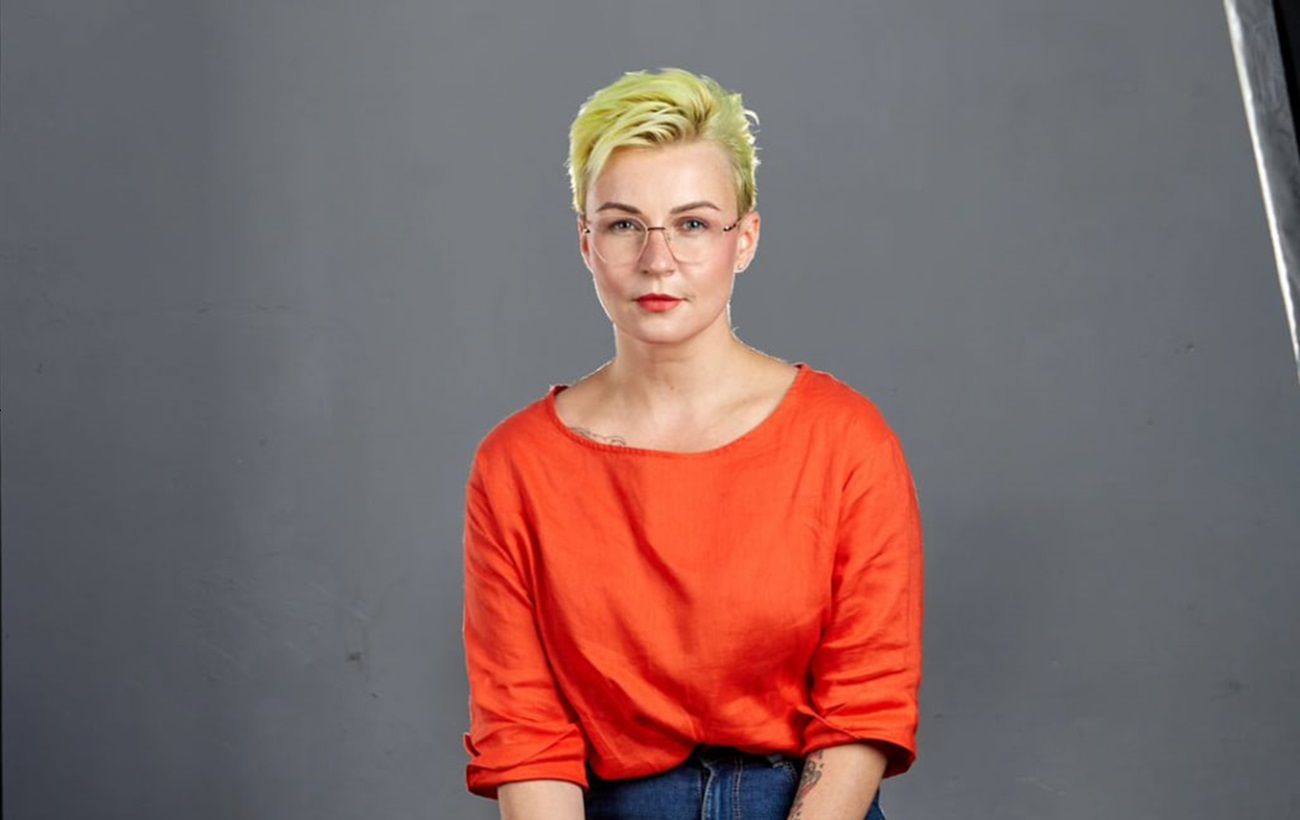
  • Come on, tell me what women’s jokes are not funny!

    Come on, tell me what women’s jokes are not funny!

    Why aren’t women funny?

    Well, let’s finally find out.

    “…for some reason I don’t laugh at women’s jokes, they seem naive or primitive! Men have more arrogant humor)” – writes a viewer under one of my videos (punctuation and spelling preserved). Before that, he half-jokingly asks “can women joke?” and adds that “Humor is for girls, boys aren’t funny!!!”

    Despite the fact that there are people who simply generalize thoughtlessly, but in the case of a specific comic they laugh at what they find funny, and are surprised that “a woman is funny!”, there are also those who really don’t find it funny at all when a woman is on stage. And not only with specifically female topics of jokes (childbirth, menstruation), but also with completely gender-neutral ones, but performed by women.

    A woman who jokes (or, as they define it, “tries to joke”) on stage or in life evokes a whole range of emotions: surprise, irritation, contempt, anger, even admiration (“whatever, she’s also joking”), but not laughter at all.

    This fact may not seem like a problem to some, but to me, as a stand-up comic, it is tangible and noticeable. Women in Ukrainian comedy have to make a lot of efforts to feel equal to men. So that we are not singled out as a separate subgenre of comedy, for example, or not declared superior “let’s support the girl”. I believe that the problem exists, and in fact not only for comedians, but also for all women who are regularly denied a say, whose jokes are not responded to, who mostly feel insecure, while men absolutely calmly make even extremely unfunny jokes.

    So why do some people find “female humor” unfunny?

    In short, it’s a completely social phenomenon and an indicator of deeply internalized and almost unconscious sexism. More on that later.

    Laughter is essential to social interaction. It’s a surprisingly rich and varied form of communication, occurring in over 95% of conversations, if you think about it. People laugh (and joke) for a variety of reasons. We laugh when we’re happy, to establish a hierarchy, to express agreement, to relieve tension in a group, to signal cooperation, to communicate a safe environment, and so on.[i]

    Laughter can be “dominant” or “subordinate” (it even sounds different). The higher a person’s status, the more likely they are to laugh dominantly, and the less likely they are to laugh submissively, conformingly, or reactively. To give an example: the one who teases someone laughs dominantly, while the one who is teased usually laughs as a subordinate[ii].

    Dominant laughter is casual and does not depend on the situation. The one who is joking at that moment feels relaxed and is the initiator of this laughter. Subordinate laughter is reactive, it is a response to the joke that was made. Subordinate laughter is very contextual. For example, a person may laugh when someone he considers to be higher in status makes a joke, and ignore someone he considers to be lower. Have you ever had a situation where no one reacts to a woman’s joke in the company, and then one of the men repeats it — and everyone laughs? That’s it.

    By the way, the very establishment of hierarchy is constantly happening in stand-up. The stand-up comedian has to prove to the audience that he is the boss here, at least for those 15 minutes, while the hecklers who shout from the audience challenge this status. And sometimes the audience can express its higher status with silence. It is precisely because the more famous you are, the easier it is for you to perform, the more willing the audience will laugh at any of your jokes. That is why stand-up comedians really need the “attributes of power”: a microphone, a stage, lights. That is why the same jokes can “fly in” in one hall and completely fail in the next.

    We are not talking about conditionally objective criteria for the quality of jokes now, especially since the hypothesis that women’s jokes are less funny than men’s is refuted by research. For example, in a study by Kim Edwards (University of Western Ontario), participants were asked to evaluate comedic captions to pictures (without specifying the names or gender of the authors) – jokes created by men and women were evaluated exactly the same.

    That is, the perception of a joke as funny or not is significantly influenced by the personality of the person telling the joke: their social status and rank in the group.

    Here we must note that in studies that examined people with different ranks, this rank was determined by involving guys from the same fraternity. And the more senior were the fraternities with “experience” of two years or more, and the lower-ranking were the newcomers.

    In the absence of a background in the group, the hierarchy is established on the spot. Of course, it all depends on the presentation of each person, on his or her status (for example, I just entered the auditorium, but I am a teacher – and this immediately gives me a higher rank), but also on certain stereotypical assessments. For example, older people often consider themselves more important, and younger people are often considered to be of lower rank. Do you already feel what I am leaning towards?

    It is precisely to the point that people who never laugh (have no desire to) at women’s jokes, regardless of what kind of jokes they are, almost certainly also default to perceiving women as inferior, regardless of objective fact. I assume (I think not without reason) that this is related to the blatant contempt for women in general. After all, feeling that a person is hierarchically inferior just because she is a woman is classic, textbook sexism.

    Women themselves resort to this, by the way, considering themselves low-ranking, but they only agree to show consent and laugh with men whom they perceive as dominant.

    And, of course, all this can also be extended to phrases: “all young comedians are not funny”, “men in stand-up always make stupid jokes”, “if there are swear words in the jokes – it’s bad humor” (here a feeling of superiority arises thanks to the white coat).

    And I have a separate remark for those who want to give me examples of stand-up comedians who are not funny to them (including myself). I will not say that all women are funny, I will only say that not all men are. I checked.

    [i]Bachorowski, J.-A. and Owren, M.J., 2001, Keltner, D., 2009, Grammer, 1990.

    [ii]https://www.sciencedirect.com/science/article/abs/pii/S0022103116302359

  • Sexual Violence During the War: What Do We Know About It and How Can We Counteract It?

    Translated from Ukrainian by Galyna Kotliuk.

    Sexual violence is an instrument of war used by the Russian Federation occupiers to harm the Ukrainian population, suppress resistance, and demotivate the army. Some incidences of rape have become known after the liberation of Ukrainian cities and towns, even more of them we will hear after the eastern regions of Ukraine are liberated. However, some women and men, even being trapped in the occupied territories and in the active combat zone, are looking for an opportunity to talk about the violence perpetrated by the Russian Federation’s military.

    It is important to understand that sexual violence is not just about rape. It is any act of a sexual nature committed without a person’s consent. This includes forced nudity, compulsion to watch an act of sexual abuse, sexual slavery, prostitution, genital mutilation, etc. All these actions are defined as war crimes – a violation of the laws and rules of war.

    Alyona Kryvulyak, director of the La Strada-Ukraine National Hotline, notes that many victims of sexual violence committed by the Russian Federation occupiers have been ignoring this traumatic experience. Thus far, they have needed to satisfy their basic needs or solve urgent problems: relocation, adaptation, humanitarian aid, employment, etc.

    What do we know about the crimes of the Russian Federation occupiers?

    The news about Russian soldiers raping women, men, and children began to emerge from the first days of the full-scale Russian invasion of Ukraine. Sexual violence in the occupied territories is widespread, but at the moment it is not possible to count the exact number of cases.

    Organizations such as the United Nations, Human Rights Watch, and La Strada-Ukraine are documenting sexual violence in Ukraine. “The cases we have documented are characterized by unspeakable, deliberate cruelty and violence against Ukrainian civilians. Rape, murder, and other violent acts against people in the Russian forces’ custody should be investigated as war crimes”,

    said Hugh Williamson, Europe and Central Asia director at Human Rights Watch.

    It is extremely difficult to document all allegations of violence and obtain new testimonies from survivors due to the ongoing fighting and occupation and isolation of many towns and villages. Reports of atrocities against civilians come from people who could leave the occupied territories or after the liberation of certain areas.

    In early March, the Minister for Foreign Affairs of Ukraine Dmytro Kuleba spoke about numerous cases of sexual violence in occupied cities. After that, Ukrainian Members of Parliament also began to report that Russian Federation soldiers deliberately and purposefully shot at women and children because Ukraine did not surrender. According to them, women of all ages – from the youngest to the oldest – have been gang-raped and sometimes killed.

    The cases reported in the media are strikingly cruel and inhumane: the occupiers killed men and raped their wives in the next room, forced people to watch acts of violence committed against their relatives, etc. Some women and girls became pregnant as a result of sexual violence perpetrated by the occupiers. The psychological help hotline reports rapes of children, both girls and boys. Children often die from their injuries, and violence is intentionally committed in front of their parents. It is important to note that Russians commit sexual violence against men and the elderly.

    Lyudmila Denisova, who served as Ukraine’s ombudsperson from March 2018 until May 2022, says that the Russian Federation uses rape and other forms of sexual violence as a warfare tactic – systematically, everywhere, and with tremendous brutality. Therefore, these cases cannot be explained as a vice of certain individuals. The occupiers also brag to their relatives and friends in Russia about atrocities committed, as has been proved by their conversations intercepted by the Security Service of Ukraine.

    Some the occupiers’ wives support and encourage them to commit atrocities. A conversation was recorded where a wife of a Russian military serviceman “allowed” him to rape Ukrainian women, provided that he will use condoms and will not tell her anything. Another occupier’s wife described to him in detail how she herself would like to join the abuse: she would mutilate women’s genitals and carve stars on their backs.

    Why do the military rape civilians?

    The International Protocol on the Documentation and Investigation of Sexual Violence in Conflict names the motives of the aggressor, including the achievement of military objectives. When sexual violence is perpetrated in a mass manner, it is considered part of a large-scale attack on civilians or is an act of genocide. Such crimes can be committed by direct or indirect command, as well as when commanders systematically “close their eyes” and ignore violations of the rules by their subordinates. Sexual violence can also be used to weaken and gain control of a community. It can be a kind of torture that the aggressors use to punish, humiliate, and intimidate their victims or force them to disclose information. Importantly, sexual violence against civilians can be a reward for soldiers. This method also makes soldiers become accomplices in crimes, tying them to a group.

    Dara Kay Cohen, author of Rape During Civil War, writes that sometimes in military conflicts, gang rape becomes a ritual to acclimate novice fighters to violence. This is especially relevant in patriarchal societies, where maturity and courage are associated with violence and domination. The researcher points out that rape as a form of forced socialization is often used in non-voluntary military formations, one that are formed through forced conscription. Rape as a warfare method is much less common among military personnel who become part of an army of their own accord.

    Among the personal factors is the constant stress soldiers face during combat, which they seek to relieve. They can be driven by hatred of their enemy, the desire to avenge their fallen comrades, or to exercise power over the weak, thus symbolically regaining control of their own lives.

    What do world statistics say?

    Soldiers committed rape during 20th century wars with different intensity and different motivations. It could have been as a result of the direct order of a commander (as a strategic tool of war to intimidate the civilian population and to demoralize enemy troops) or from combatants’ own desire. The extent and scale of this war crime is impressive. Here are just some of the most famous examples.

    • The so-called “Rape of Nanjing” in December 1937 – the siege of a Chinese city by the Japanese army, six weeks of killings and mass rapes. At least 20,000 women, children, and the elderly were raped during the occupation.

    • In 1945, the Soviet Red Army committed nearly 2,000,000 rapes in the conquered part of Germany, including more than 100,000 cases during the Battle of Berlin. The Soviet command ignored and concealed these facts.

    • According to Bob Lilly, a historian at Northern Kentucky University who gained access to the archives of U.S. military courts, American soldiers committed nearly 14,000 rapes in England, France, and Germany between 1942 and 1945. This resulted in a military discipline problem, which was actively counteracted.

    • Mass rapes took place during the Yugoslav wars in the 1990s, during the war in Liberia (1989-2003), and in many other countries. Rape has also been reported as a way of waging war during the Tigray War in Ethiopia (2020-2021).

    Rape as a typical instrument of war used by Russian Federation soldiers

    Sexual crimes committed by the Russian Federation military are systemic and intentional. Over the last 30 years, they were perpetrated in Chechnya, the Republic of Georgia, Syria, and other countries. The behaviour of Russian Federation soldiers is the same everywhere.

    Ichkeria. The rape of women during both wars for Ichkeria’s independence was massive and public. Russian Federation commanders watched these crimes and sometimes participated in the acts of violence. According to Human Rights Watch, detecting and documenting rapes of Chechen women was a very difficult process since sexual harassment is a taboo topic in Chechen society, and thus many survivors remained silent about the violence they had faced. However, some testimonies were documented. Women residents of the city of Aldi said that the Russian military first raped Chechen women and then killed them. It is also known that rapes had a repeated nature: women were taken from one household to another to be raped.

    According to the residents of Sernovodskoe village, the Russian Federation military raped several dozen men in an open field. Nothing like that had happened in Ichkeria before; only cases of sexual violence against men in prisons had been known about, but such kinds of mass and public crimes had not before been committed by the military. Information about the rapes was publicized much later, since this type of violence is considered one of the most severe in the Caucasus region.

    Journalists and human rights activists who were covering the events in Ichkeria reported that at the beginning of the Second Chechen War in 1999, large units of camp guards, officers, and privates were relocated to Ichkeria. They systematically committed rapes first in camps and then against civilians. This is the old Gulag method of destroying an individual. In the war against the Chechens, rape was used consciously and intentionally.

    Republic of Georgia. During the war in South Ossetia in 2008, the Russian Federation military kidnapped, raped, and killed young women and men. This has been documented in eyewitness testimonies. One Georgian woman, whose name has not been disclosed, appealed to the Court of Justice of the European Union. According to her, non-Georgian soldiers broke into her house located near the conflict zone during the Russian-Georgian war. They raped and robbed her.

    Syria. According to a UN report, in Syria, Russian Federation “peacekeepers” together with Syrian pro-government forces raped children, women, and men in order to punish communities that were opposing them. Civilians were first raped during property searches and ground warfare, and then at checkpoints and detention facilities. Boys and men were forced to have sex with each other and with other relatives. They were also raped with various objects.

    Why little is said about sexual violence

    In 2014-2015, residents of the eastern regions of Ukraine began to report the rape of women in the Anti-Terrorist Operation (ATO) Zone. There are still no official statistics on rapes committed during the eight years of fighting and occupation in the eastern regions of Ukraine. It is extremely difficult to record all the crimes as some of the victims have died and some who are now in safety are afraid or ashamed to talk about their experiences. Perpetrators who are located in the occupation zone or in the Russian Federation are extremely difficult to prosecute.

    According to La Strada-Ukraine director Alyona Kryvulyak, in the three months of the full-scale invasion, their hotline received 17 reports about sexual violence committed by the Russian Federation occupiers: 16 reports from women and one from a man. Until recently, sexual crimes committed by the occupiers were regularly reported about by the Commissioner for Human Rights Lyudmila Denisova.


    Alyona Kryvulyak

    However, these are not representative statistics: the published data do not correspond to the scale of the crimes, which is difficult to assess for several reasons. According to Alyona Kryvulyak, the first and foremost obstacle is the great fear of reporting such crimes. Many people who have suffered from sexual violence perpetrated by the Russian Federation soldiers are not ready to talk about it because they are uncertain about their safety and the general situation in the country. Even if the town where the crime took place has already been liberated, the citizens are still afraid that the Russians may return.

    The second reason is gender stereotypes, which are still prevalent during the war. People are afraid of condemnation and for their public reputation. Some survivors of sexual violence may have faced victim blaming, which is quite wide-spread in Ukrainian society.

    La Strada has been working with issues of sexual violence during the war since 2014, and the organization’s employees say that there were only a few appeals before and after the full-scale Russian Federation invasion. Although the state is now making a major contribution to record and document cases of violence, and the media are making every effort to raise awareness of the problem, the shame and fear of talking about it still remain.

    What does international and Ukrainian legislation say?

    The sexual violence perpetrated by the military is punishable. Punishment is imposed as a result of legal proceedings in the International Criminal Court in The Hague, started by Ukrainian tribunals or national courts. Therefore, it is important to record crimes and gather as much evidence as possible to bring the perpetrators to justice.

    Lilia Oliynyk, a lawyer and member of the JurFem: Support for Victims of Sexual Violence and All Forms of Gender Discrimination initiative, says that there are various international and national tools for regulating sexual crimes during war.

    For example, the Geneva Convention relative to the Treatment of Prisoners of War (1949) stipulates in Article 14 that prisoners of war are entitled in all circumstances to respect for their personality and their honour. It also states that “women shall be treated with all the regard due to their sex.”

    The Principles of the Geneva Convention relative to the Protection of Civilian Persons in Time of War (1949), namely Article 27, stipulate that “women shall be especially protected against any attack on their honour, in particular against rape, enforced prostitution, or any form of indecent assault.”

    Article 75 of the Protocol Additional to the Geneva Conventions of 12 August 1949, relating to the Protection of Victims of International Armed Conflicts (1977), prohibits “outrages upon personal dignity, in particular humiliating and degrading treatment, enforced prostitution and any form of indecent assault.” Article 76 also postulates direct protection of women from “rape, forced prostitution and any other form of indecent assault”, and Article 77 guarantees the protection of children “against any form of indecent assault.”

    According to Khrystyna Kit, head of the JurFem Association of Women Lawyers of Ukraine, it is important to realize that the responsibility for sexual violence committed during a conflict or war lies not only with the perpetrator, but also with the military command of the unit where a perpetrator served at the time of committing a crime. Article 28 of the Rome Statute of the International Criminal Court provides for a commander’s liability for war crimes, crimes of genocide, and crimes against humanity.
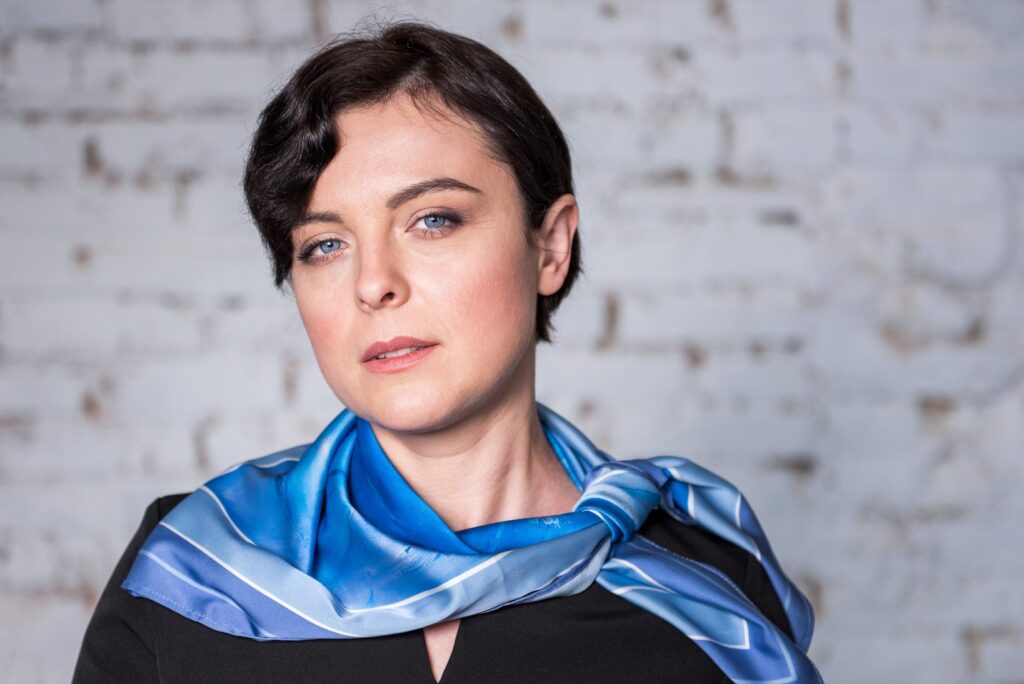

    Khrystyna Kit

    As for Ukraine’s national legislation, legal liability for violating the laws of war is articulated in the Criminal Code of Ukraine. According to Lilia Oliynyk, Article 438 guarantees punishment for the ill-treatment of prisoners of war or civilians, for using means of warfare prohibited by international law, and for other violations of the laws of war. Such actions are punishable by imprisonment of up to 8-12 years. If combined with intentional murder, the crimes are punishable by imprisonment for 10-15 years or life imprisonment.

    Article 442 of the Criminal Code also provides liability for the crime of genocide, which is defined as “an act intentionally committed with the intent to destroy, in whole or in part, of a national, ethnic, racial or religious group by killing the members of such group or causing them serious bodily harm, inflicting on the group conditions of life calculated to bring about its physical destruction in whole or in part, imposing measures intended to decrease or prevent births within the group, or forcibly transferring children of the group to another group.”

    Depending on the circumstances of the sexual violence committed by the military, it can also be classified as other war crimes, namely intentional murder, torture or inhuman treatment, intentional infliction of severe suffering, serious bodily injury or health damage, infliction on persons under the control of the opposing party physical injuries that cause death or seriously endanger health of such persons, or encroachment upon personal dignity, including abusive and degrading treatment.

    Lawyer Maria Zheltukha emphasizes that the president must sign the bill “On Amendments to Certain Legislative Acts of Ukraine on the Implementation of International Criminal and Humanitarian Law” № 2689 of December 27, 2019. This document will provide criminal prosecution for international crimes, such as war crimes, crimes against humanity, and genocide.


    Maria Zheltukha

    The expert notes that it is also necessary for Ukraine to ratify the Istanbul Convention [transl.: Ukraine ratified the Istanbul Convention on June 22, 2022]. This document will help prevent cases of gender-based violence and ensure the investigation of such crimes and the punishment of perpetrators. In addition, the convention will provide legal and psychological help and services to overcome psychological trauma for people who have been sexually abused, including those involved in conflict.

    How do Ukrainian officials fight sexual violence?

    Office of the Deputy Prime Minister for European and Euro-Atlantic Integration. Olha Stefanishyna is currently working on reorienting government resources to create centres of psychological, medical, and legal services to citizens who have suffered sexual violence committed by the Russian Federation occupiers. Stefanishyna is also facilitating expanding cooperation with the UN to prevent and effectively respond to sexual violence during the war.
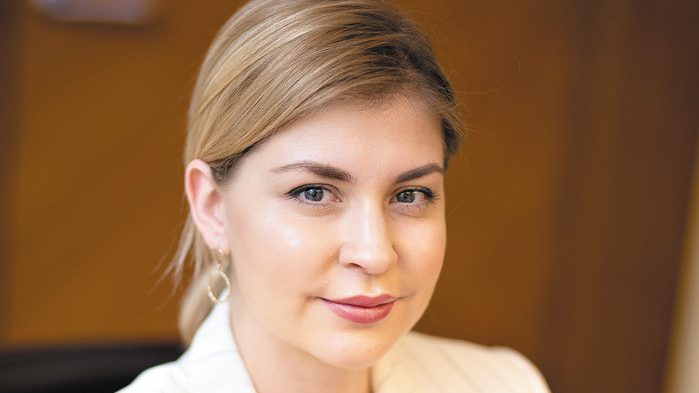

    Olha Stefanishyna

    Human Rights Commissioner. Lyudmila Denisova collects and records cases of sexual violence committed by the Russian Federation military in the temporarily occupied territories and in the war zone. In April, a special telephone hotline for psychological help was launched, where those in need can find help from five expert professionals. Importantly, in May 2022, Ukrainian media representatives signed an open appeal to Denisova demanding that she change her rhetoric when reporting sexual crimes during the war, which are published on her official pages, and to avoid excessive descriptions. [transl.: Parliament relieved Ms. Denisova of her duties as the Human Rights Commissioner on May 31, 2022]
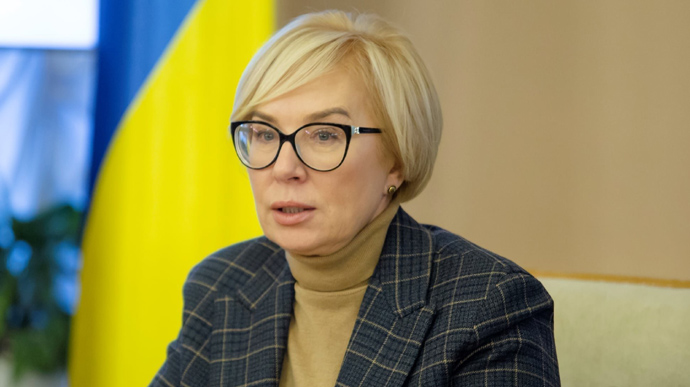

    Lyudmila Denisova

    Government Commissioner for Gender Policy. Kateryna Levchenko creates brochures and booklets that instruct what to do in case of witnessing rape or experiencing sexual violence. She is currently working on establishing an international platform that will help ensure decent treatment and respect for the human rights of survivors.
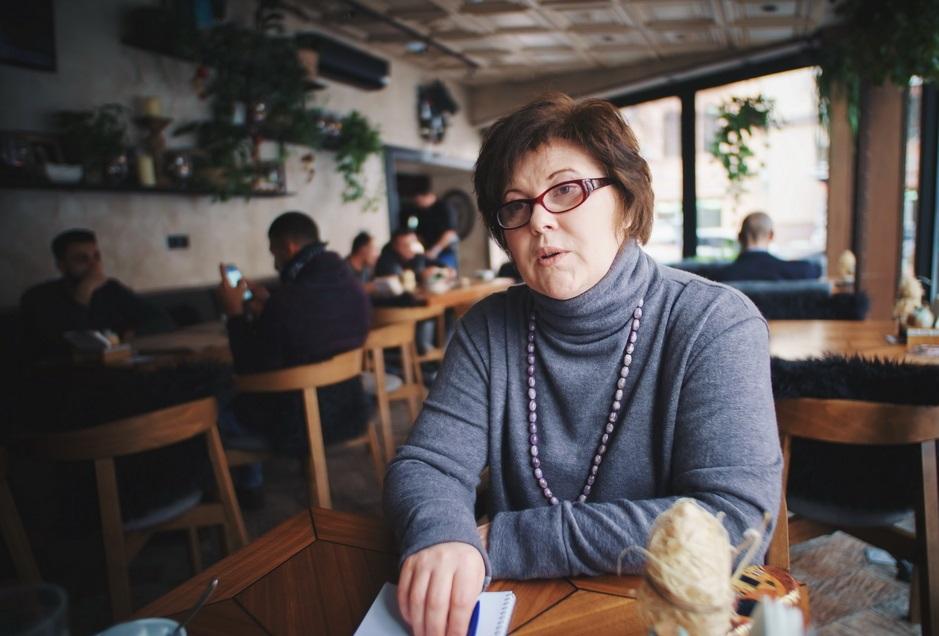

    Kateryna Levchenko

    Psychological advice: how to protect yourself, survive, and manage trauma

    Rapes in peacetime and during war have completely different aims, and thus the approaches to helping victims of violence need to be different, because common methods are no longer effective.

    A psychologist and volunteer who works with people who have experienced violence by the Russian Federation military suggests the following advice. It is important to mention that no advice guarantees safety and recovery. The human body can have different reactions to stress, but whatever the situation, a person should never blame themself.

    1. The currently available information proves that nothing can stop the occupiers from sexual violence. Age, gender, appearance, or the presence of children nearby are no restraints for them. In an occupied city, it is necessary to try not to attract the occupiers’ attention and, if possible, to stay in shelters.

    2. In a situation that threatens to escalate into violence, you should try to assess the power balance and the degree of threat. Resisting and fighting back against rapists can lead to injury or death. Life is the highest value and preserving it should be the highest priority.

    3. In critical stressful situations, activate a protective mechanism called dissociation, a feeling of detachment from reality, as if the brain exists separately from the body. This feeling can be used to enhance self-preservation mechanisms, and thus you should try to amplify it. Maximum emotional and physical detachment helps to survive traumatic events.

    4. Survivors of violence should leave the scene as soon as it possible. If there are trustworthy people nearby, ask for help.

    5. Take care of yourself in a safe place. If there is water available, take a shower, use wet wipes (but not alcohol-based), give yourself some basic medical care. You can lie in a fetal position in order to feel the ground and come to your senses.

    6. Help from people you trust is important. These can be relatives, friends, psychologists, or volunteers.

    7. If you have enough resources, try to save your clothes and all other things that can help in the investigation of the crime. After stabilizing your state of body and mind, you should apply to the police to record the crime and increase the chances of bringing perpetrators to justice. You should be especially careful and consider all the risks: if the occupiers find any evidence, a person might face other immediate dangers.

    8. If you know or see that a person you love or know has been abused, you should offer your help. This should be done as carefully as possible, asking about what is needed, not about what has happened. If nothing is needed, just be there for support.

    What should you do if it is not possible to see a doctor?

    The Euromaidan SOS initiative, Ukrainian Bar Association, and obstetrician-gynaecologist Natalia Lelyukh have developed recommendations for rape crime survivors in case medical care is unavailable.

    Treating genital injuries

    Use alcohol-free antiseptics, a baking soda solution (1 teaspoon per 0.5 litters of water), clean water, alcohol-free baby wet wipes, Triderm ointment, Levomecol ointment, Triacutan ointment, Bepanthen ointment, or use chlorhexidine once.

    Do not use alcohol-based antiseptics and wipes, hydrogen peroxide, panthenol, oil, or other oil solutions.

    If there are any vaginal antiseptic or antibacterial suppositories, apply them for 5-6 days. If there are injuries to the mucous membrane, bleeding, or hematomata, it is advised to start applying suppositories every other day.

    WARNING! The dosage for all these products is indicated for adults. Teenagers need to consult a doctor to adjust the dosage (if it is not possible to get a consultation, carefully read the product instructions).

    Preventing infectious diseases (gonorrhea, chlamydia, trichomoniasis). If possible, the following medications should be taken: metronidazole 500 mg – twice a day for 7 days; ceftriaxone 1 g – intramuscular injection once; azithromycin 2 g – one time. All of the medications can be used during pregnancy in any trimester.

    Preventing unwanted pregnancy. Take any hormonal contraceptive in the following dosage (the active ingredients are present in most brands of contraceptives): 0.1 mg ethinylestradiol + at least 0.5 mg levonorgestrel (drospirenone, dienogest). Take the same dose again in 12 hours. This contraception is most effective if the drug is used in the first 24-72 hours after unprotected contact.

    How to document evidence of sexual violence committed by the occupiers

    Usually, documenting crimes is difficult, especially sexual ones, in occupied territories and in active war zones.  Khrystyna Kit, head of JurFem, emphasizes that according to international practice, victims’ testimony may be sufficient evidence of sexual violence crime in the absence of any other additional evidence from other witnesses, documents, medical records, photographs, or any other potentially corroborating evidence.

    Lawyer Lilia Oliynyk says that, first of all, it is important to provide survivors with psychological and physical security, help them restore their equilibrium, and find strength to proceed in court.


    Lilia Oliynyk

    In peaceful times, it is sometimes difficult to document sexual crimes based on medical investigations and examinations. However, regarding sexual violence committed by the Russian Federation soldiers during the war, the standard of proof is different: biological or forensic examinations are not required.

    It is important to know that it is not always necessary to immediately contact police, since this can also pose a danger if the victim is in occupied territory. It is important to secure your personal safety, paying special attention to a personal physical and psychological condition.

    According to the expert, during the war, the focus shifts from the issue of a victim’s consent (the fact of consent or non-consent) to the fact of coercive circumstances. In other words, it is not required to confirm the use of force by a criminal to prove the absence of consent or the fact of resistance. Instead, what is important is to find sufficient evidence to prove the existence of coercive circumstances. For example, occupation is a circumstance that makes it impossible to give real consent.

    La Strada-Ukraine lawyers, the Ministry of Internal Affairs of Ukraine, and the Government Commissioner for Gender Policy prepared instructions on how to gather evidence of sexual violence during the war. Experts advise to document the crime if possible: take photos and videos, write down contacts of possible witnesses. Apart from that, it is important to remember or take notes of the following details: the crime scene, the date and approximate time, and details about the soldiers who committed the violence, such as their names or call signs, approximate age, appearance, rank and their conversations with each other.

    ATTENTION! It is very important to be especially careful and consider all the risks: if the occupiers find this evidence, the person will be in danger.

    The next step will be to apply to law enforcement agencies (police or prosecutor’s office, contacts are listed below). In this case, it is important to ensure that the report is registered and criminal proceedings have been opened. It may also be required to visit a health care facility in order to document the results of the violence. At the hospital, it is necessary to get a medical certificate and keep it. When seeking psychological help, it is also required to obtain conclusions of psychological expertise describing a person’s psychological state after the trauma.

    These materials will provide evidence for courts in Ukraine and The Hague so that the invaders will be punished and the survivors will receive adequate compensation.

    Where should you call to get help?

    If rape or sexual assault has occurred, seek medical help at 103.

    It is also necessary to report the crime to the National Police (102), the Prosecutor General’s Office (0 800 507 001), and the government hotline (1547).

    People who are located in the temporarily occupied territories and cannot seek help from the local authorities can report a crime to the Office of the Prosecutor General by calling 38-096-755-02-40 or by e-mail conflict2022.ua@gmail.com.

    Information for further investigation can be submitted on the website of the Office of the Prosecutor General or via Telegram bots @stop_russian_war_bot and @war_crime_bot.

    For legal aid, you can contact the Free Legal Aid System Contact Centre (0 800 213 103), Jurfem (38-068-145-55-90), or the human rights initiative Euromaidan SOS Telegram bot @ESOSdoc or by e-mail evromaidansos@gmail. com.

    For psychological and legal assistance, contact the National Hotline for the Prevention of Domestic Violence, Trafficking of Human Beings and Gender-Based Discrimination: 116, 123, or 0-800-500-335.

    The Aurora online platform provides special psycho-therapeutic support to people who have experienced violence, including sexual violence during the war. The platform provides expert support from psychotherapists to help overcome traumatic experiences, restore emotional balance, and psychological resources to rebuild life. You can also seek advice from medical professionals to address urgent health issues and ask for professional help from lawyers. Anyone can apply for free support, regardless of gender and age, by completing an anonymous form on the “Break the Circle” website.

    NGO Divchata [transl.: Girls] provides free psychological help to victims of sexual violence. Contact them by mail at helpgodivchata@gmail.com or by phone at 38-073-460-38-60.

    For psychological support from Masha Efrosinina’s project, send an e-mail to a.kariakina@mashafund.org. For psychological help from the “Tell me” organization, contact them via email at tellmecomua@gmail.com.

    Consultations with psychiatrists from the NGO Forpost [transl.: Outpost] can be provided by calling 38-096-839-76-17, or in Telegram at the same number or username @forpostcenter.

    The collective trauma of Ukrainian society

    Obstetrician-gynaecologist and researcher of sexual violence Halyna Maistruk believes that the Ukrainian health care system was not ready for what was happening in the territories temporarily occupied by the Russian Federation.

    “Only now is the Ministry of Health of Ukraine beginning to develop forms and questionnaires that doctors can use to describe and document cases of sexual violence. In peacetime, a doctor could only record and describe the fact of rape, which had to be followed by a forensic expert’s investigation, since the evidence base in court would not be sufficient without it. Now a doctor will not just record, but also will be able to confirm the fact of rape. The process is complicated by the fact that in peacetime, doctors rarely worked with gang rapes. And even if the perpetrators would never be identified, a doctor’s conclusion should be enough for sexual violence to be documented as war crimes,”

    the expert explains.

    Halyna Maistruk adds that, due to the ongoing war, it is extremely difficult to verify crimes committed by the Russian Federation military, and preparing statistics for lawsuits at international courts might take years. According to her, Ukrainian society will receive severe collective trauma, which might take a very long time to overcome.

    How should the media write about sexual violence?

    Many stories of people surviving sexual violence have become known due to media reports. However, not everyone risks disclosing and talking openly about the details of the occupiers’ crimes. Sometimes the media pursue clickbait headlines, trying to catch the audience’s attention at the expense of people who have experienced or witnessed rape.

    Hromadske Radio and Divoche.media have created a joint article to help Ukrainian media work with the topic of sexual violence in a more respectful and ethical way. The experts –

    human rights activist Larysa Denysenko, editor-in-chief of Hromadske Radio Tetyana Troshchynska and editor-in-chief of Divoche.media Oksana Pavlenko – give the following advice.

    1. Follow the “do no harm” principle, even if it seems that this is the minimal harm that will protect others from sexual crimes.
    2. Base your work on the principle of trust. Journalists should listen to the story of a person who has trusted them, but should not play the role of an investigator.
    3. When it comes to verifying a story, it is necessary to record it carefully, but not to arrange a journalistic investigation. According to international law, a survivor’s properly documented story of sexual violence needs no further confirmation.
    4. The media should not intentionally provoke tears, but if a person cries, you should be prepared for it and not be afraid.
    5. Do not try to find any errors in a person’s story. Even if the interviewee confuses some details of their story or forgets certain moments, it does not mean that the person is lying. Contradictory or unclear moments can and should be clarified, but in a delicate and respectful manner.
    6. It is important to remember about personal data protection: do not publish photos and videos that may reveal a person’s identity or place of residence, do not publish any links to a person’s social media, and do not take any photos of the interviewee’s family.
    7. Moreover, a journalist’s duty is to make sure that the person understands the consequences of their frankness.

    It is worth mentioning certain aspects noticed by the media representatives who asked the ombudsperson [Human Rights Commission Lyudmila Denisova – Ed.] to change her rhetoric in covering issues of violence. In particular, they ask for the following.

    1. Disclose only verified information. Check the facts before publishing.
    2. Check and think through every word to avoid creating sensational tabloid news kinds of messages.
    3. Avoid excessive detail in describing crimes.
    4. Use correct terminology and vocabulary: e.g., use the word “survivor” instead of “victim.”
    5. Ensure the confidentiality and safety of survivors, remembering that they can be easily identified if they live in small villages or towns.
    6. Remind about survivors’ support networks (e.g., human rights protection, professional psychological assistance).

    In her expert commentary for Gender in Detail, psychologist Halyna Hook, a volunteer in the mental health crisis service, identified seven principles for properly covering cases of sexual crimes.

    1. Prioritising the traumatised person’s interests above collective (public) interests. The needs of a person who has been abused – their security, privacy, autonomy, and personal freedom – are an absolute priority when disclosing socially significant information.
    2. Informed consent and the principle of its reversibility. Professionals who accompany an abused person have to obtain the person’s informed consent to disclose their story, and  consent can be revoked at any stage. Even if all the materials have been prepared and the work has been done, the person has the right to say “stop.”
    3. Competent intervention. To work with issues of violence, comment on or cover them in the media, one needs to have the necessary knowledge, skills, and relevant experience (the practice of “asking a psychologist for an opinion about …” is quite common today, but often violates this principle).
    4. Confidentiality and anonymity. Information materials on war crimes, crimes against humanity, and ill-treatment should protect the survivors’ rights to confidentiality, anonymity, and privacy.
    5. Necessary and sufficient information. Whenever it is possible, media professionals should avoid telling stories of people who have been abused, even if they have their informed consent. It is recommended to refer to official statistics already published, talk about common trends, and discuss the situation in general, not the experience of separate individuals.
    6. Impartial and non-discriminatory approach to coverage. A gender-sensitive approach should be applied when informing society about the Russian military’s ill-treatment of civilians, especially about crimes of sexual violence. Subjective judgments and comments about the degree of traumatic experience of people of different genders or ages should be avoided.
    7. Social significance of information. When disseminating information that deals with sensitive or traumatic topics, it is important to remember that sexual violence is not a residue of war, but a weapon used against the whole society. It is necessary to focus not on individual cases, but on educating the audience, explaining the causes and consequences of certain events, and giving generalized recommendations and useful sources of information as well as professional (and, if required, legal) support.

    Conclusions

    Sexual violence is used as a weapon of war. For the occupiers, this is an easy and effective way to achieve their main goal: to destroy the morale and patriotic spirit of Ukrainian society. When Russian soldiers rape civilians, it is not about sexual interest, but about feeling a sadistic “victory”, establishing control, and in some perverted sense, winning the war. Rape and sexual violence during a conflict are not about sex; they represent power, domination, and humiliation.

    Life is the greatest value, and preserving it must be a priority. The well-being of survivors is also an unconditional priority. Once the survival and well-being of citizens is ensured, the goal of society and government must be to achieve justice and punish perpetrators at the international level and to stop the shameful practice of sexual violence as a weapon of war worldwide, once and for all.

  • Gender misinformation and rape culture

    Media scholars view gendered disinformation as “a subset of misogynistic abuse and violence against women, as false or misleading gendered and sexualized narratives, often with an intent and coordination to prevent women from participating in the public sphere and harm their reputation.”[1]

    Gendered disinformation differs from general disinformation by violating women’s personal boundaries, promoting sexual and physical violence against women, etc. Therefore, gendered disinformation has multiple overlaps with rape culture, i.e., a culture in which sexual violence and other types of sexual abuse are normalized and embedded in a broader context. In such a culture, a woman’s sexual life and corporeality is either directly reduced to an object of male property or, through condemnation as immoral, is subject to attempts of social control, and thus also objectified.

    See more about rape culture in the article by Evhenia Dyshleva

    An example of gendered disinformation in Ukraine is the story of war correspondent Iryna Sampan. After she signed a statement by the NGO Women in Media against the Uncensored Calendar project (nude photography by Channel 5 journalists to raise funds for the army), Iryna was attacked by the right-wing radical group C14 and national russian pro-Kremlin media. The former tried to buy nude photos of her from her friends and sent negative messages about her to her husband, while the latter called her an “escort” and “Zaluzhny’s lover.”[2] In both cases, the mere existence of a woman’s sexual life was used to discredit her position and herself in order to intimidate and control her.

    Such stories are seen not only in Ukraine. In 2021, fake nude photos of Foreign Minister Annalena Baerbock appeared in the German Internet segment.[3] In both cases, the fight against gendered disinformation should go beyond merely refuting fakes – it should foster the understanding of why the body and sexual agency belong to a woman only, the acceptance of different forms of sexual behavior, and dismantling the stereotypes of “female” and “male.” It is also important to counteract online and offline harassment at all levels and provide victims with comprehensive support.

    However, gendered disinformation can also be viewed more broadly as the disinformation around feminism and related topics (LGBT+ rights), the instrumentalization of gendered narratives, or women themselves to advance political and other goals.

    An example of such disinformation is the story of Olena Zelenska’s photo shoot for Vogue magazine. American conservative commentators reacted to it by spreading the idea that this photo session was funded by U.S. taxpayers and that it was a misuse of their money, and therefore, aid to Ukraine should be cut. In fact, U.S. aid comes as armaments, and the photo shoot was in no way related to that. Another, less obvious example was some Western feminists’ criticism of this photo session as glamorous and objectifying, on the sole basis that the photo was published in a glossy magazine. Even though there were no signs of objectification or other misogynistic aspects in the photos, as the first lady was in a subject position, in closed and formal clothes, in the setting of the presidential administration. However, a person who has not seen her, but has only read Western feminist criticism, may get a stereotypical (and false) impression. This is yet another example of gendered disinformation, although not malicious, but rather stemming from a dogmatic worldview and conviction of one’s truth despite the facts of reality.

    Vogue cover with Olena Zelenska

    Gendered disinformation can appear not only in the media but in other forms of public life, also. In 2018, the NGO Dukhovnist submitted a draft decision to a Brovary City Council session, which voted to appeal to the Verkhovna Rada [Parliament of Ukraine], the National Security and Defense Council, and other state institutions to remove from legal acts in education and from textbooks the norms and principles of sex education aimed at “overcoming gender stereotypes.” The appeal also called for a ban on “propaganda of various types of deviant sexual behavior,” in particular in the form of “so-called ‘equality marches,’ ‘pride parades,’ ‘gay parades,’ ‘queer culture festivals,’” etc. The reason for the appeal and the decision was the sex education project of Daryna Mizina, a Gender in Detail journalist who also worked with the local Brovary city media. The city council session interpreted the project as “encouraging sexual experimentation” and “promoting masturbation and homosexuality.”[4] The local media editorial office started receiving complaints about Daryna.

    Gendered disinformation can target not only a certain woman, but also a group of women. russian (more often) and Ukrainian (less often) social media claim that since the beginning of the full-scale war, many Ukrainian women have moved abroad to engage in sex work, some brothels have opened with specifically Ukrainian women, this work is more desirable than other types of income, and Ukrainian women spread sexually transmitted diseases, but at the same time fill the state budget, which is not otherwise filled (“Zelensky sold Ukrainian women abroad”).[5]

    Manipulating gender issues and promoting inequality is a constant component of far-right propaganda, as the entire patriarchal ideology is often an integral part of the far-right one. Emancipatory movements, such as socialism, liberalism, feminism, and the movement for the emancipation of the LGBT+ community, have been and are considered hostile by various versions of far-right and hatemongering ideologies. The strengthening of rape culture is a consequence of the spread of such ideologies, and gendered disinformation is their tool.

    Far-right movements, patriarchy, male supremacy

    The Third Reich considered family to be a genuine “cell” of the state. Ludwig Leonhardt, an expert in racial theory, argued that the family is a biological inheritance, and biological inheritance is the reproduction of the race. He authored “Marriage and Racial Hygiene,” which was promoted as a guide for proper marriage.

    Another race theorist, Hermann Paul, believed that “free love” was detrimental to racial health. In general, the gender division in the culture of this era was extremely strong: the man held responsibility for all public affairs, and the woman, as the “keeper” of the family, was responsible for housework, raising children, and serving her husband’s needs.

    The Nazis also defined standards for a woman’s body in reproductive and physiological terms: they discouraged decorative cosmetics, required women to conform to the standards of the Aryan race, and encouraged physical education and hygiene as a guarantee of reproducing a healthy race. Modern dances (jazz, etc.) were banned as encouraging women to become promiscuous.[6]

    The famous far-right theorist of the first half of the 20th century, Julius Evola, considered men and women’s physical dimorphism to be a reflection of spiritual dimorphism. In his view, men and women had their own separate paths in life, and deviation from them was “a conflicting and unnatural way of being.” Manhood could be of two types: a warrior and an ascetic. Womanhood also had two types: a lover and a mother, and both of these types existed as subordinate to men (husbands and sons, respectively). Self-expression in these areas required a woman to forsake everything masculine in her personality, and a man, respectively, to forsake everything feminine. Evola linked all this to ancient traditional cultures, though indirectly, not in the ordinary sense of what should be borrowed from the traditional cultures for modernity, but rather in the spiritual and symbolic sense.[7]

    Our contemporary, the known russian far-right political philosopher and propagandist Alexander Dugin, also did not miss an opportunity to comment on feminism. It is much more difficult to analyze him than previous thinkers, because his philosophy spans from an eclectic mix of very different ideas to a set of words that are only grammatically connected. Nevertheless, it can be deduced that he roots in the legend of the Great Mother, who was allegedly subdued by men, and now women are gaining strength again, and therefore humanity is facing such horrors as atheism, materialism, and progress.[8]

    This is a vivid example of gendered disinformation and an unscientific approach, the promotion of a mythological worldview. On another occasion, Dugin generalized “LGBT+, perverted feral feminism, transgender people, wokeism, cancel culture, and the entire culture of the modern West” as “systematic demonization of the civilizational scale” and an illustration that “counter-initiation powers” have gained access to authority in Western Europe and the United States.[9] One should not look for any other meaning in this than incitement of hatred towards the West and all the mentioned groups and phenomena among all who know that demons are bad.

    Another contemporary conservative thinker is the famous Canadian psychologist and bestselling author Jordan Peterson. In 2016, he participated in a local debate about transgender people on the conservative side, refusing to address people by their preferred pronouns. Peterson was manipulatively comparing transgender people and their allies to left-wing radicals, left-wing radicals to Nazis, and criticized Marxists and postmodernists as just along for the ride. As in Dugin’s case, there is no need to analyze this intellectual mess in detail, because its main purpose is to vent supremacists’ frustration, who feel the loss of male privilege and consider themselves to be affected by the emancipatory tendencies of society in general and by allegedly manipulative women in particular.

    According to Peterson himself, 80% of his YouTube audience are young men.[10]

    Jordan Peterson

    In recent years, U.S. commentators have begun to distinguish male supremacy as a separate social phenomenon. Male supremacists advocate rigid gender roles and protest against feminism. While “ordinary” far-right movements have patriarchal views internal to their ideology, male supremacists focus specifically on the gender aspect.

    The word “incel” (involuntary celibate) did not originate out of the male supremacist community, but it quickly spread there. The incel subculture’ worldview is based on the assumption that women choose attractive men and leave unattractive ones behind, which is expressed in a sharply misogynistic and coarse way. The subculture reduces the image of women to a lustful beneficiary who manipulates men for sex or money. Although this conventionally stereotypical woman has no interest in incels, they still consider themselves better than she is. In their ideology, there is a hierarchy among men, and women are basically below all levels of the male hierarchy.

    This worldview paradigm fits neatly into the rape culture because it assumes that women’s attractiveness and sexual activity globally belong to men and are simply “unfairly” distributed among them, i.e., not in the way incels would like. Since women are not rushing to line up for the bearers of the misogynistic worldview, thus prolonging their celibacy, the view works like a self-fulfilling prophecy. This worldview also belongs to the conservative spectrum, because, according to incels, “before” (i.e., before the onset of feminism), the distribution of sexual “benefits” that women “bestowed” upon men was “fairer.” The incel ideology portrays its supporters as the “injured” party.[11]

    There are no separate statistics on whether incels commit sexual crimes, but some hate crimes are associated with them, which links incels to the “ordinary” far right. In 2020, there was a terrorist attack in the German city of Hanau: the attacker killed nine people in several bars overnight, then returned home and shot his mother and himself. On his personal website, the 43-year-old terrorist published a manifesto in which, among other extreme racist statements, he said that he had never been intimate with a woman.[12] In the United States and Canada, people associated with the incel subculture have also committed several terrorist attacks that killed up to 50 people.

    How russia is spreading conservative and violent narratives

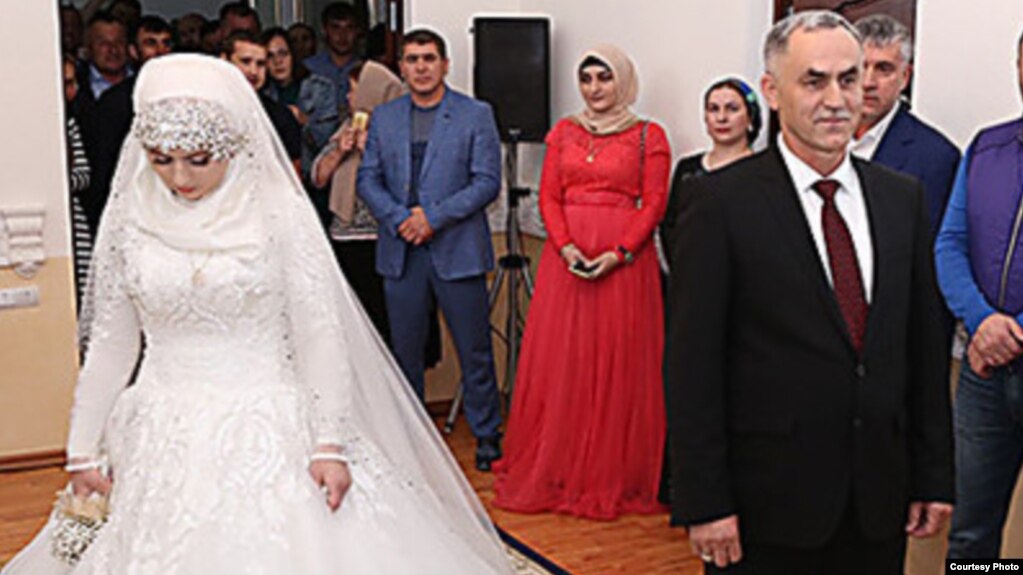
    The regime maintains the patriarchal attitudes of russian society at the level of both federal policy and local practices. A story in 2015 shocked russian feminists: in Chechnya, the head of the local police department forced a 17-year-old girl to marry him, even though he was three times her age and already had a wife. Ramzan Kadyrov himself attended the wedding, and the girl was led by his “right hand man” Magomed Daudov. Despite protests from feminists and the human rights community, the wedding took place, and nothing is known about the girl’s fate after. The Ombudsman for Children’s Rights verbally normalized this situation, in particular with the phrase “some women are wrinkled as early as 27,” which he later had to apologize for.[13] In Dagestan, such cruel misogynistic practices as female genital mutilation have spread in recent years, with more than a thousand girls undergoing this surgery every year.[14]

    Forced wedding in Chechnya

    In addition to reviving traditional patriarchal practices, there are new ones that are quite modern. The “male state” is a confirmed extremist movement, and it has been banned even in russia itself. This is a community of thousands of men, a vivid realization of rape culture, as it seeks to control women’s sexuality. These men publish photos of women without their consent to an audience of thousands, with mocking comments allegedly exposing “whores”, and private harassment, including threatening the women to send porn to their families. This movement is not only misogynistic, it also has a prominent racist focus: if a woman is suspected of having sex with a non-white man, and such suspicions are quite common for the movement, the extent of the abuse increases. For such women, they have coined a separate term: “inkwell.” The members of the “male state” call their ideology “national patriarchy.”[15]

    After the full-scale invasion of Ukraine, the level of everyday, domestic, and sexual violence increased in russia itself. However, the media and russian psychologists do not associate the war of aggression and the rape of Ukrainian women with patriarchy, instead attributing the increase in aggression to war-related PTSD, thus justifying the violence.[16] This means that the forces that should counteract rape culture are infected with it.

    russia’s patriarchal and conservative policies make it an attractive partner for far-right movements in other countries. Contrary to widespread perception, the Kremlin does not usually directly fund European far-right political parties. Rather, it is a win-win situation: for the world’s far-right, russia is a strong and influential country with a conservative regime. In turn, representatives of far-right forces act as “international experts” for domestic russian “consumption” and perform other useful roles, such as observers at illegitimate “referendums.” However, direct russian support can be found in the area of non-partisan cooperation, while media in different countries systematically pick up disinformation narratives favorable to russia.

    Conservative family policy is a significant part of what russia exports abroad through disinformation narratives.

    The World Congress of Families is a global network of organizations that oppose LGBT+ rights and abortion. It was founded in 1997 by American Christians and russians concerned about the demographic decline. It is believed to be funded by conservative russian oligarchs Konstantin Malofeev (who financed russia’s military intervention in Ukraine and is under numerous international sanctions) and Vladimir Yakunin.[17] In reality, the Congress operates as a tool of russian soft power, not only promoting patriarchal views on family and gender issues, but also spreading pro-russian political narratives. For many years, dozens of politicians from all over Europe have participated in WCF events, and in general, over 700 people from more than 50 countries have joined this network over the past 15 years.[18]

    According to the former French representative of the WCF, Fabrice Sorlen, “this Europe of people and nations will replace a technocratic Europe with a more traditional European civilization; it will promote Christianity in a Europe hitherto dominated by the LGBT lobby. It must unite with Vladimir Putin’s russia to create a version of Europe that stretches from the Atlantic to the Pacific.”[19]

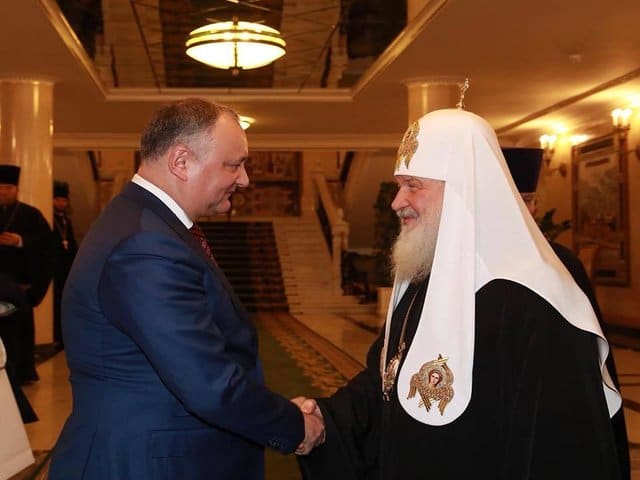
    Conservative tendencies are spreading from russia to neighboring friendly countries. In Georgia, Levan Vasadze, a major real estate investor and former board member of a number of large companies in russia, known for his anti-immigrant, anti-liberal, and ultra-religious views, founded the Demographic Revival of Georgia Foundation, which is part of the WCF. In May 2021, Vasadze announced his official entry into politics as the founder of the “Unity, Essence, Hope” social movement. In the same year, he called on the government to cancel Tbilisi Pride, which was actually right-wing radicals violently interrupted.[20] A Moldovan President himself, Igor Dodon, patronized the 2018 WCF Congress in Chisinau.[21]

    Moldovan President Igor Dodon meets with russian Patriarch Kirill

    russian gendered disinformation in Ukraine

    Research by the Ukrainian Women’s Fund shows that in Ukraine, the conservative part of society could also have received support from the russian Federation, and gendered disinformation was the channel of that support. Narratives benefitting russia were broadcast through affiliated structures (in particular, the Ukrainian Orthodox Church of the Moscow Patriarchate), the media, and other religious and conservative organizations and initiatives.

    The researchers imply that in 2013, russia conducted a strategic information operation to prevent Ukraine’s European integration, which was supported by a tactical information operation to prevent the adoption of draft law No. 2342 (On Amendments to Certain Legislative Acts of Ukraine on Preventing and Combating Discrimination in Ukraine) and further expansion of the scope of the law “On Principles of Preventing and Combating Discrimination in Ukraine.” In the russian and Ukrainian media, similar narratives were observed. They were manipulating the concepts of “sexual orientation,” “non-traditional orientation,” “European values,” and “gender” as those that disrupt the family institution in Ukraine. There was also an attempt to form opinion with draft law No. 2342 and further expansion of the scope of the law “On Principles of Preventing and Combating Discrimination in Ukraine” as a step towards the dominance of fascist ideology in Ukraine (which is obviously not a fight against real fascism, but the use of an emotionally charged term to incite hatred).[22]

    russian narratives in Ukraine did not stop after 2014. For example, in September-October 2015, Vitaly Milonov, a member of the St. Petersburg Legislative Assembly, unleashed a wave of discrimination against the LGBT+ community in the russian media. Simultaneously, narratives similar to Milonov’s (family values are the same as Christian values, the state must protect the family from the LGBT+ community, Ukraine – or russia for Milonov – stands strong in preserving traditional family values, etc.) spread in Ukraine with the common message “joining the EU will lead to the destruction of the family.”[23]

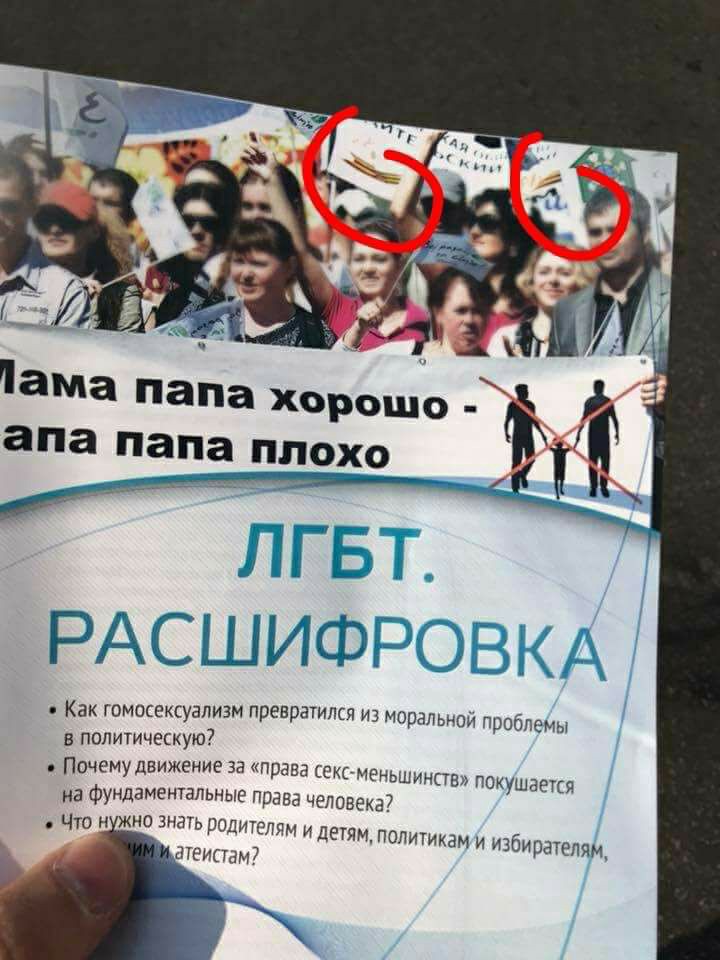
    In 2021, a delegation of the Polish traditionalists Ordo Iuris visited the Verkhovna Rada Committee on Foreign Policy and Interparliamentary Cooperation aiming to convince them against ratifying the Istanbul Convention. Polish feminist activist Clementine Sukhanov conducted her own investigation and provided supporting documents that Ordo Iuris is indirectly funded by russian oligarch Konstantin Malofeev.[24] In Ukraine, the organization signed a memorandum of cooperation with Ruslan Kukharchuk’s conservative association All Together. [25] Kukharchuk’s other organization, Love Against Homosexuality, had been distributing leaflets as early as 2017 with not only conservative disinformation (the rights of LGBT+ people allegedly contradict human rights), but also with images of St. George’s ribbons on them (the ribbon is a russian military symbol). The organization Katechon took part in the same action. They borrowed the rare Greek word, which has no family or heterosexual connotations, from the think tank of the same name. This think tank is a joint project of the aforementioned Malofeev and Dugin.[26]

    Leaflet of the organization “Love Against Homosexuality”

    A news report about Ordo Iuris’ visit to Ukraine also bore signs of disinformation. It presented Ordo Iuris as “an independent legal organization based in Poland, accredited by the European Parliament… aiming to promote legal culture based on respect for human dignity and rights.”[27] In reality, it is a Polish branch of the international pseudo-Catholic movement Tradition, Family, Property (Tradição, Família e Propriedade), founded in Brazil in 1960, which allegedly promotes the “Catholic crusade.” In fact, it is not subject to the Vatican and has a history of extremism in Latin American countries (in particular, its members allegedly plotted to assassinate the Pope during his visit to Venezuela in 1984, after which the movement was banned in the country). In France, the TFP movement is considered a destructive cult (raising funds for unspecified purposes, obscure hierarchy and structure, and progressing requirements for members). The Canadian Bureau of Immigration and Refugees also lists TFP as a “religious paramilitary group.” The Vatican does not recognize this movement and is conducting an internal investigation into it (in particular, for using exorcism and rumors that all recent popes are controlled by the devil).[28]

    Conclusion

    To summarize, gendered disinformation is a practical tool for spreading rape culture and normalizing violent attitudes towards women and violence as such. Gendered disinformation can be disguised as “conservatism” or “family values,” but it does not lose its cannibalistic nature. russia was and is using gendered disinformation in various forms as part of its imperial propaganda, in particular by clogging the Ukrainian information space and supporting conservative movements and activists in our country and other countries.

    After the russian federation’s full-scale invasion, Ukraine finally ratified the Istanbul Convention, and the prevalence of conservative narratives in the media and public space decreased. This can be explained by the fact that conservative activists have more important things to do and security services are working more effectively.

    Photos: Annie Leibovitz for Vogue, Rene Johnston / Toronto Star / Getty Images, Radio Svoboda, Facebook page of Ihor Dodon, Zorian Kis

  • The Culture of Consent in Ukraine: Who Shapes It and Why It Matters

    A few years ago, social media was full of loud jokes and irony about amendments to Ukraine’s Criminal Code that strengthened accountability for sexual and domestic violence. One of the main targets of ridicule was the clause on consent to sexual contact. Now, four years after those legal changes, the idea of a culture of consent has become much clearer and more widely understood.

    Read more about these changes in the article by Kateryna Viter.

    The reasons behind this social shift include active youth education, more accurate and sensitive media coverage, and the advocacy of laws protecting against sexual violence. In other words, building a culture of consent in Ukraine is a daily effort shared by people across different fields — blogging, journalism, politics, advocacy, psychology, and non-formal education.

    Gender in Detail spoke with active women from these sectors to learn how they are helping transform the so-called “rape culture” into a culture of consent, and why doing so is especially important right now.

    Read more about the difference between a culture of consent and a culture of rape in the article by Yevheniia Dyshleva.

    Psychology

    “Previously, no one spoke about the culture of consent — society assumed women should be submissive.”

    Teaching conscious consent, addressing stereotypes, promoting nonviolent communication, and supporting children and teenagers in schools and universities — this is only part of how psychologists influence personal development and the formation of personal boundaries.

    According to Maryna Didenko, PhD in Psychology and expert in tolerance and nondiscrimination, the culture of consent in a psychological context is a set of beliefs or behavioral habits that a person uses to interact with others, including their partner. These habits are shaped by attitudes, upbringing, and learned behavior.

    “Previously, no one spoke about the culture of consent, so society mostly believed that women should be obedient. There were stereotypes that sex is essential for men but not for women. Such ideas harm both sides — women are pressured not to refuse sex, and men are pressured to always want it,” Didenko explains.

    The formation of a culture of consent in adulthood happens through self-awareness, personal development, psychotherapy, and education. These processes help people reshape the basic beliefs that drive behavior.

    The psychologist also notes that during the full-scale war, many couples are separated and cannot engage sexually in person. However, she sees this as an opportunity to build consent culture through communication — by discussing uncomfortable topics, including sex.

    “From a distance, partners can talk about their values, desires, and fantasies. This helps them maintain intimacy and lays the foundation for healthy interaction in the future,” she says.

    At the same time, war brings heightened aggression. Unprocessed emotions, alcohol or drug use, and other stressors heavily affect human interaction, including in sexual contexts. The number of domestic and sexual violence cases has already increased. Didenko believes that zero tolerance and social condemnation will gradually influence all social groups and lead to real change.

    Blogosphere

    “If people start googling what ‘active consent’ or ‘active non-consent’ means — I feel an inner victory.”

    TikTok and Instagram bloggers play a significant role in forming Ukraine’s culture of consent. They address gender stereotypes, sexual and domestic violence, discrimination, and related topics — reaching teenagers and young adults, the main audiences of these platforms.

    Many bloggers use their platforms for educational outreach, explaining the importance of consent and mutual respect in relationships. Creators such as “U Trusakh” (@utrusakh), “Moe Dilo” (@moe_dilo), and bloggers Emma Antoniuk and Yana Brenzei from “Nam palae” (@nam_palae) regularly publish videos analyzing high-profile harassment cases, sharing statistics, and raising awareness.

    Ukrainian sex educator and blogger Asya Say (on Instagram and TikTok: @asyasay) believes that understanding active consent can save relationships — and even lives — because it reduces the risk of violence from the very beginning.

    “For our society, the culture of consent is still a kind of mysterious creature. Even though there’s been ongoing work on nonviolent communication, people still react with confusion when they hear about consent. But if they start googling what ‘active consent’ or ‘active non-consent’ means afterward, I feel an inner victory,” says Asya.

    She notes that some Ukrainians still view asking for consent as a sign of weakness, believing that questions like ‘Can I do this?’ or ‘Do you want this?’ kill romance.

    “But more people are beginning to realize that this is about their own safety. In my experience, people under 30 are more receptive to the idea of consent. It’s harder with older generations, especially those deeply rooted in patriarchal or so-called ‘traditional family values,’” she adds.

    Asya emphasizes that children should start learning about sexual consent around the ages of 9–10, since the average age of sexual initiation in Ukraine is 15 — even though, under Ukrainian law, teenagers that age cannot legally give consent to sexual activity.

    According to Asya, it is also crucial to promote the culture of consent in mass culture — in films, TV series, and books. That way, it will no longer be seen as “a new idea imported from the West” but will instead become an unquestioned social norm.

    Politics

    “Work with civil society should start with conversations with children.”

    Another major driver in shaping the culture of consent in Ukraine is legislation — or more precisely, the people who design, adopt, and implement it. Lawmakers determine how quickly new frameworks that strengthen protection for survivors of any kind of violence are introduced and how effectively perpetrators are held accountable.

    Among those advocating for legislation to combat domestic and sexual violence and to establish the concept of consent in law is MP Inna Sovsun and her team. In March 2023, Sovsun submitted a bill to the Verkhovna Rada that would allow criminal proceedings for sexual violence without a formal complaint from the victim. She also actively supported the ratification of the Istanbul Convention.

    Gender in Detail spoke with Maria Klius, a human rights advocate and assistant to MP Inna Sovsun, who writes legislative texts and anti-discrimination reviews for educational materials.

    “For ten years, everyone who worked on advocating the ratification of the Istanbul Convention talked to politicians about its importance. Over time, this idea became so ingrained that now, as we work on implementation, we no longer have to explain the basics — like why women need specific protection,” Maria said.

    As part of broader advocacy efforts, public awareness has also increased, since many of Sovsun’s initiatives are widely discussed — from anti-discriminatory school textbooks to registered civil partnerships.

    Maria emphasizes that while the ratification of the Istanbul Convention was a huge victory for Ukraine, the next step — implementation — is even more challenging. The Verkhovna Rada is now considering several bills amending the Code of Administrative Offenses and the Criminal Procedure Code to regulate investigations of sexual violence, plea agreements, and related issues.

    “Our team also works with the Ministry of Education, because we are still fighting problematic phrasing in ‘Health Basics’ textbooks. We receive complaints about victim-blaming and other harmful narratives that contradict the idea of a culture of consent. This is critical, because if we want to work with civil society, we must start by talking to children,” Maria explained.

    Maria and her colleagues aim to reform the expert review process for school textbooks to ensure it involves qualified professionals, since current reviewers often ignore problematic content — even when students themselves notice it.

    “Voluntary consent is mandatory in every case.”

    Thanks to their legal expertise and work in protecting survivors of violence, female lawyers and human rights defenders also contribute to dismantling rape culture. They consult victims, help file complaints with law enforcement, and represent women who have experienced violence in court — ensuring that perpetrators face justice.

    They also collaborate with NGOs and advocacy initiatives aimed at combating violence and harassment, conduct trainings and legal education programs, and lobby for improvements in gender-based violence legislation. One of the key organizations working in this field is the Ukrainian Women Lawyers Association “JurFem.”

    As Marta Pavlyshyn, a lawyer and program manager at JurFem: Education, explains, the conversation about consent is directly tied to the 2019 legal reforms. Previously, under Ukraine’s Criminal Code, rape was defined only in cases where there was resistance or the victim was in a helpless state. The Istanbul Convention, which Ukraine signed in 2011 and ratified 11 years later, introduced the notion of consent to sex as central. This change criminalized acts that previously were not considered rape — even though they were committed against the victim’s will through intimidation or coercion.

    The reforms also criminalized sexual violence within marriage, which had often been ignored due to the idea of “marital duty.” Today, the law makes it clear: it does not matter whether the individuals are married or not — voluntary consent is mandatory in every case.

    “Ratifying the Convention legally obliges Ukraine to implement and report on its provisions. In terms of consent, the legislative framework is already sufficient: we have criminalized sex without consent and established liability for it, as the Convention requires,” Marta stressed.

    According to her, the next step is to change investigation practices, since outdated methods from before 2019 are still common. Some investigators still focus on the presence of physical injuries or the so-called “virginity test.” However, the key issue should be whether the accused obtained voluntary consent from the victim.

    Read a detailed legal analysis of Ukrainian legislation from the perspective of the culture of consent by Kateryna Viter.

    For survivors of sexual violence and all forms of gender discrimination, the JurFem: Support hotline offers free and confidential legal assistance:
    📞 068 145-55-90 or 0 800 30 55 90.

    JurFem lawyers provide full legal support — from consultation to courtroom representation. In one current case, JurFem attorneys represent a 14-year-old girl from Zakarpattia, who was raped by three teenage boys.

    Media

    “The issue of sexual violence is about a violation of the law — and about how justice should work.”

    Media professionals play a crucial role in raising public awareness about sexual and domestic violence. Their work creates public pressure on the government and legislative bodies to adopt necessary laws and policy decisions. At the same time, it helps strengthen the culture of consent and build a safer environment for everyone in Ukraine.

    Through sensitive and accurate coverage of difficult topics and publication of high-quality materials on cases of violence, journalists help audiences form a proper understanding of such events, challenge gender stereotypes, and dismantle the victim-blaming narrative.

    However, the media’s handling of sexual violence remains controversial. In February 2023, StopCor editor-in-chief Maryna Titova contacted Dana Okomaniuk, founder of the platform goodjob, who had publicly shared her story of being raped as a student years earlier. Titova asked Dana for the rapist’s phone number to obtain “his side” of the story. When Dana criticized this request as unethical and insensitive, the journalist published an article defending her actions as adherence to “journalistic standards.”

    Read more about how Ukrainian media cover rape in a series of articles by Olha Bilousenko: “‘The neighbors said nothing bad about him’: how Ukrainian media write about rapists,” “Not a sensation but a crime: how to write about rape without causing harm,” and “Accusations and unsolicited advice: how Ukrainian media write about survivors of sexual violence.”

    Writers and human rights advocates such as Larysa Denysenko, Liza Kuzmenko (head of the NGO Women in Media), and Oksana Pavlenko, editor-in-chief of Divoche.media, analyze and explain how journalists should write about sexual violence responsibly.

    Another prominent voice is Tetiana Troshchynska, editor-in-chief and radio host at Hromadske Radio. She emphasizes that journalism plays an essential role in shaping a culture of consent — especially when not only niche but also mainstream media with mass audiences begin to address these topics.

    “Sometimes the audience doesn’t even understand what a media piece is about. That’s why outlets with strong editorial principles must not back down — even if readers or viewers react negatively, saying things like ‘this problem doesn’t exist’ or ‘are we supposed to sign consent forms before sex now?’ It’s important to keep explaining these issues and stay on course,” Tetiana said.

    For journalists who are just beginning to cover sexual violence, she advises not only to report incidents, but also to help advance justice and give survivors space to be heard and supported.

    “The topic of sexual violence is about breaking the law — and about how justice should function. But it’s also about a person who has survived, found inner strength, and moved forward. The media should not focus on the survivor’s age, weight, hair color, or clothing,” she emphasized.

    Journalists should also help survivors feel safe to report crimes to law enforcement and understand the importance of working with lawyers who can help them seek justice in the least traumatic way possible.

    Education

    “Agreeing to go somewhere or have a drink is not the same as consenting to sex.”

    Non-formal education is another powerful tool for cultivating respect, mutual understanding, and consent. Today, lectures, workshops, and seminars on communication, relationship boundaries, and consent are becoming increasingly popular in Ukraine. Such educational programs are offered by organizations like Teenergizer, TolerSpace, Divchata, Vpershe, and by educators such as Yuliia Yarmolenko, Kris Shapran, and Marianna Anoshchenko.

    Olha Kukula, sex education trainer and coordinator of the initiative Girls Create, stresses that the culture of consent must be formed from early childhood. The first thing a child should learn is that their body belongs to them, and no one has the right to touch it without permission. Children in kindergartens and other group settings should be taught the “underwear rule” and how to say “I don’t like this.” As teenagers, they need to understand that every form of interaction — a hug, a kiss, or a touch — requires consent.

    “We still live in a culture of rape rather than a culture of consent. You can see it in how people react to high-profile cases of sexual violence. Girls are often blamed for going to someone’s house or being drunk. But agreeing to go somewhere or have a drink does not equal consent to sex. This must be openly discussed with young people,” Olha emphasized.

    This summer, she worked as a tutor at sex education training sessions for school and university students. Participants discussed sexual violence (including harassment on public transport, catcalling, and street harassment) and the concept of consent. Some girls later shared personal stories of harassment or how adults had blamed victims in similar cases.

    Olha admits it’s hard to measure the success of such work — trainers often don’t know how deeply their lessons affect participants, especially young people. Still, she is convinced these sessions are crucial for teenagers, who need not only information but also support — since many already have negative experiences yet fear speaking up for fear of being blamed again for “improper behavior.”

    The development of a culture of consent requires active engagement from society, as well as support from education, media, organizations, and government. This culture helps build a fair and equal society and creates a safer environment for women and children, who are most often subjected to harassment and various forms of violence.

    Gender in Detail has compiled several useful resources to help you better understand the concept of the culture of consent:

    • Free online course “Sexual Education” on Prometheus.
      The course provides answers to the most common questions teenagers have about sex and debunks popular myths about sexual life.
    • TV series Sex Education (Netflix).
      The show explores topics such as gender identity, hypersexuality, masturbation, teenage sexuality, pregnancy, and the importance of contraception.
    • Book Doing It: Let’s Talk About Sex by Hannah Witton.
      This global youth bestseller discusses sensitive but essential topics — first relationships, virginity and sexual experience, the negative effects of pornography and sexting, and healthy perceptions of one’s body and sexuality.