Category: Society

  • Fight, run, freeze: politicians’ reactions to accusations of sexism

    Fight, run, freeze: politicians’ reactions to accusations of sexism

    Derogatory sexist statements by Ukrainian politicians of various levels are still not uncommon in Ukrainian political culture. Yes, it must be admitted that over time there are fewer and fewer of them. Moreover, as soon as they gain publicity and become known to the general public, they are immediately subjected to devastating public criticism and condemnation, and this criticism is increasingly massive and influential. Society is better at identifying manifestations of sexism and more resolutely condemning them. This may indicate that we are gradually moving away from traditional patriarchal attitudes, and egalitarian views are becoming more and more firmly entrenched at the level of the social norm.

    Probably, that is why fewer politicians resort to open hostile sexism. However, among deputies and civil servants of various levels there are still those who, in a veiled form, under the guise of “good intentions”, express theses that can be identified as “benevolent” sexism. After all, there are still a few politicians who are not ashamed of their sexist position and discriminate against women in an aggressively hostile manner.

    After a sexist comment or act gets on TikTok or Ukrainians’ news feeds and spreads, it is interesting to observe the reaction of the main sexist character. Here, various strategies are traced – from self-defense and justifications to an active attack, accompanied by new sexist pearls. The reaction of a sexist to accusations of sexism is the main subject of research.

    Usually, this reaction allows us to better understand how deep the author’s convictions are in the correctness of his words and actions. It also helps us understand what the author thinks about the phenomenon he is accused of. It is logical to assume that those for whom the criticism was convincing enough and the accusations were fair will at least admit that they were wrong and apologize. On the other hand, those who firmly adhere to their sexist beliefs and believe in their correctness will defend their position to the end and will not see manifestations of sexism in their actions / words.

    Using this approach, it will be possible to assume how those who resort to it (do not) understand and interpret the phenomenon of sexism. Of course, this study does not claim to be representative, so its results and conclusions are inappropriate to extend to the entire Ukrainian political sphere. Let us consider here only the most striking cases of sexist statements and actions over the past few years.

    Flowers as a “friendly gesture” of an apology for sexism
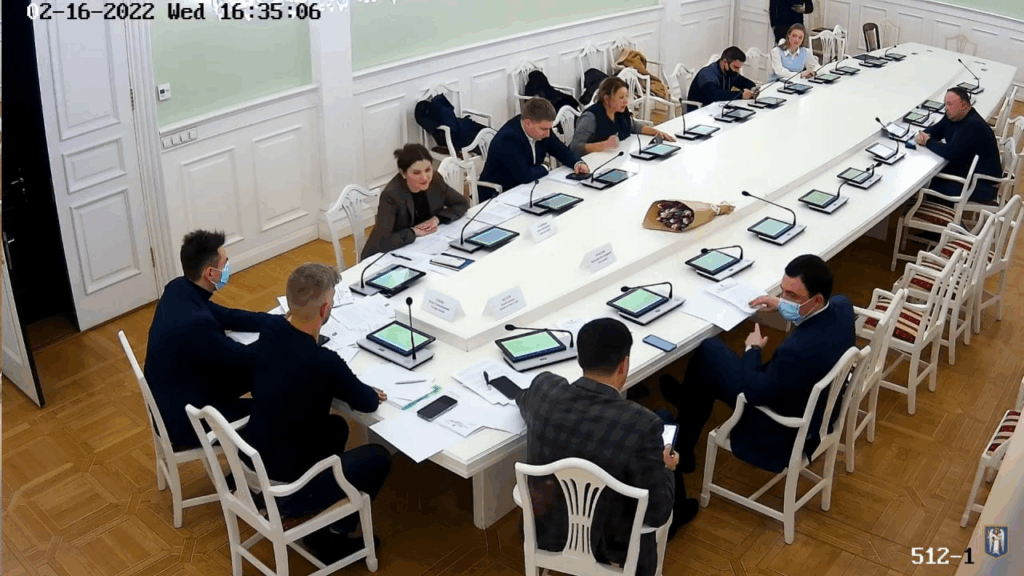
    The first analyzed case occurred shortly before the full-scale Russian invasion. On February 3, 2022, speaking at a plenary session of the Kyiv City Council, Mykola Tyshchenko, a People’s Deputy of Ukraine from the Servant of the People party, called one of his colleagues “a girl who smiles during the war.” On February 16, the Kyiv City Council Standing Committee on Rules of Procedure convened a meeting[1] regarding a violation of the code of parliamentary ethics. Tyshchenko (or his representative) was invited to participate in the meeting “both officially and publicly.” The MP did not appear in person; his assistant took part in the meeting. On Tyshchenko’s instructions, “in order to prevent any political speculation,” he handed over the bouquet to MP Dinara Tarlan, although according to the chairman of the committee, the address was addressed to another MP.

    When asked whether he considered this statement to be discriminatory, Tyshchenko’s assistant replied:

    “I was not present at the meeting. Well, if it was an address to the audience, if we cannot establish who the statement was addressed to, he could have said “woman,” “madam,” “girl.” He addressed them, I believe, this is not a violation. It’s like “sir,” “guy.” Mr. Tyshchenko respects women very much, everyone knows it, all of Kyiv knows it, how he congratulates everyone.”

    This answer suggests that the People’s Deputy does not see signs of sexism in his statement and does not admit that he was wrong. The chairman of the commission once again clarified whether Mr. Tyshchenko considered the expression “smiling girl” discriminatory, to which his representative clearly replied that he did not.

    Later, Tyshchenko’s assistant, Ms. Evelina, who participated in the meeting, also spoke. She also did not see anything offensive in this statement:

    “Such a gesture is not a conflict or some kind of mockery, as some representatives of the Kyiv City Council are trying to speculate again. As a girl, I can also assure you that this is not offensive and Mykola Mykolayovych did not have anything wrong with him in any way and did not violate, I am sure, any political ethics.”

    It is ironic that Ms. Evelina tried to change the focus of the discussion and accuse all the deputies of the Kyiv City Council, who allegedly made noise during Tyshchenko’s speech, of violating parliamentary ethics:

    “But at the same time, I think that perhaps we should consider a violation of political ethics: when a people’s deputy speaks, and other deputies of the Kyiv City Council make noise, treat each other with contempt, it was very loud. I think that this is really disrespect for each other. Perhaps, of course, noise is not regulated, but there are some non-verbal rules that, I think, were violated. Therefore, this gesture with flowers is an exclusively friendly gesture towards Ms. Dinara.”

    When asked whether she personally finds Tyshchenko’s statement offensive, Ms. Evelina replied that she did not:

    “For me, as a citizen of Ukraine and a woman, it is not offensive, because I believe that in that sense there was no offense. Mykola Mykolayovych in no way wanted to offend anyone, because he treats every person with respect, according to any of his colleagues, so no”.

    Even more interesting are the assistant’s thoughts on the situation with gender equality in Ukraine, which she voiced when answering the question about what gender discrimination and sexism are. Ms. Evelina is convinced that such phenomena simply do not exist in Ukraine and we are incredibly lucky with this:

    “I think that, probably, we all understand that in our country it is very rare when women or men are discriminated against on the basis of gender or some other… well, we are probably lucky, but in our country it is not developed. We have a very large female quota, all women are treated very appropriately, responsibly and with respect. Therefore, I believe and am very proud that there is no such thing in our country, I have never encountered such a thing.”

    Meeting of the Kyiv City Council Standing Commission on Rules of Procedure, Deputy Ethics and Corruption Prevention. February 16, 2022

    The coordinator of the secretariat of the Kyiv City Council’s MFO “Kyiv — for Equal Opportunities” noted that the MFO had prepared a statement from 56 deputies who are members of it, stating that they categorically condemn such behavior and consider it unacceptable not only within the walls of the Kyiv City Council, but also in the political space of Ukraine in general. She called for support for the MFO’s statement and emphasized the importance of a personal apology from the deputy through a public statement.
    As a result, the commission voted to:

    1) recognize the inadmissibility of any statements of a discriminatory nature from persons participating in Kyiv City Council meetings;

    2) condemn Tyshchenko’s statement and recommend that the Kyiv City Council leadership contact Tyshchenko if he still participates in Kyiv City Council meetings to apologize to the Kyiv City Council and individual deputies;

    3) recommend that the Kyiv City Council leadership apply the rule of immediately stopping the speech in case of relevant discriminatory statements.

    After this meeting, there were no more personal apologies from the people’s deputy. Overall, this situation very successfully demonstrates that Tyshchenko’s sexist statement is not at all an accident or a failed communication, which he sincerely regrets. Judging by what his assistants, who represented his views, said at the commission meeting, Tyshchenko never understood what was wrong with his words. The gift given by the MP is more like a “kind gesture” on his part, to gently smooth over sharp corners and prevent public publicity of the situation, which could negatively affect his reputation.

    “Sincere apologies for sincere impressions in an unacceptable form”

    A somewhat different strategy of sexists’ behavior can be traced in the situation with Oleksandr Kornienko and Davyd Arakhamia, which, unlike the previous one, has spread widely online. The party chairman and the head of the Servant of the People faction discussed their colleague Iryna Allahverdiyeva and resorted to obvious sexism. This was broadcast live on YouTube, so the situation quickly gained mass publicity, and the politicians were sharply criticized.

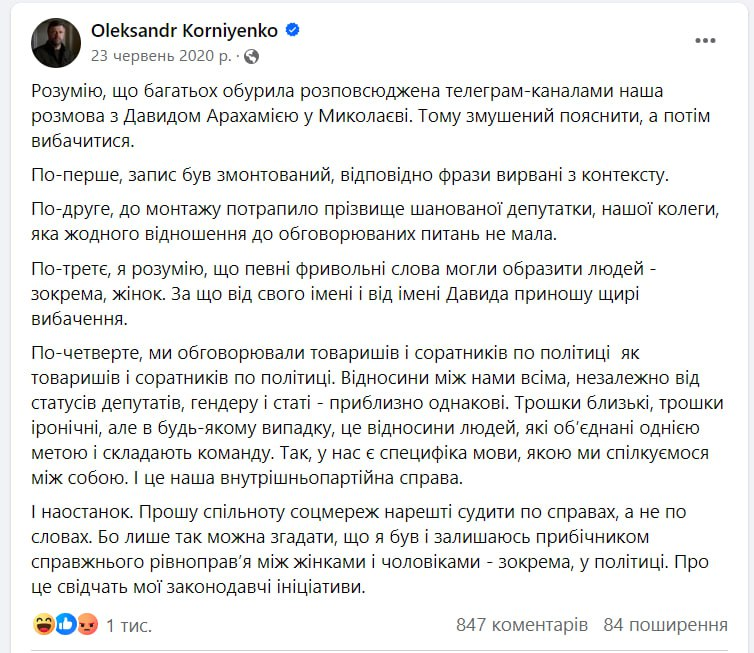
    What was the reaction of the main sexist characters? That same day, Kornienko wrote an explanation and apology on Facebook[2] and gave several arguments in his favor.

    Oleksandr Kornienko’s first post about sexist statements

    First, he chose self-defense and stated that the recording was edited, phrases were taken out of context, and the colleague’s name had nothing to do with what was discussed in the private conversation. Regardless of its content, the very fact of the excuse indicates that the politician realizes that such statements will not find support among the electorate. Therefore, he does not try to defend his beliefs, but immediately renounces them.

    Secondly, in this post, he expresses “sincere apologies” on his own behalf and on behalf of Arakhamia, because he understands that “certain frivolous words could offend people, including women.” In conclusion, after making excuses about the “specificity of language,” Kornienko calls on the social media community to “judge by deeds, not by words” and emphasizes that his legislative initiatives demonstrate that he continues to be a supporter of “true equality between women and men, particularly in politics.”

    The next day, Kornienko took another step — recorded a video address[3] entitled “I will try to put an end to the history of my inappropriate conversations.” From the first seconds, it is noticeable that his arguments have changed somewhat over the past day: here he apologizes to his colleague for “that first small, short part of the conversation, where Arakhamia and I discuss our impressions, actually, of her beauty, charm, but in a completely unacceptable form.” The deputy admits that he had nothing bad in mind, and such words are his sincere impressions of his colleague’s appearance. And he declares that the next part of the conversation is not about Iryna, but about Tetyana Dombrovska, who impressed Kornienko with “her energy, her enthusiasm.” Here he also admits that the form he chose for this was unacceptable and sometimes offensive, which can indeed be perceived as sexism. In conclusion, Korniyenko admits: “I allowed myself sexist, discriminatory, disrespectful statements, for which I sincerely apologize.”
    As we can see, this politician’s strategy is different. Unlike Tyshchenko, who is not ready to admit that he resorted to sexism, Kornienko does come to it. Yes, not immediately. The first post of a people’s deputy is rather an infantile justification and clumsy attempts to remove responsibility from himself and shift it to editing. However, very quickly, either under the pressure of public condemnation or out of fear for his political future, the deputy publicly admitted that his statements contained signs of sexism, and apologized for them. According to the proposed classification of behavioral strategies, the first reaction is closer to the second strategy (justification, refutation), and the reaction on the second day is closer to the first (admission, apology).

    Sexists who do not hide it
    Although I do not want to talk about Arestovych again, each of his reactions to accusations of sexism successfully and clearly demonstrates the third model of behavior of sexist politicians. This category includes those who can be described with the phrase “Yes, I am a sexist and I am not ashamed of it”. Former non-staff advisor to the President’s Office Oleksiy Arestovych last year became the laureate of the anti-award “Sexist 2022” and, as can be seen from his reaction, is proud of it.

    Oleksiy Arestovych’s reaction to his leadership in the anti-award “Sexist of the Year”

    Not once after his numerous sexist statements and the public criticism that followed them, has Arestovych even tried to refute what was said, justify himself or deny it. Obviously, there is no question of a public apology. He firmly stands by his position and usually reacts with another sexist statement. This type of behavior indicates that, firstly, the hero is sincerely convinced of the correctness of his views and is ready to persistently defend them; secondly, he uses the label of sexist as part of his image, an inalienable attribute of his persona.

    Oleg Lyashko’s public sexist statements and his reaction to accusations of sexism are another example of this strategy. For example, in 2019, Lyashko addressed People’s Deputy Alona Shkrum from the rostrum of the Verkhovna Rada:

    “When I look at you — a wonderful, young, intelligent woman who comes here and reports on the laws on civil service and local self-government, I have one question for you: Have you worked for even a day in state bodies or in local self-government bodies?”

    Undoubtedly, such rhetoric discredits the deputy, it is sexist and unacceptable within the walls of the highest legislative body of Ukraine. Iryna Gerashchenko pointed this out to the deputy and urged him to speak objectively about the bills, “and not about the age, gender, beauty or unbeauty of the representative of parliament.” Lyashko’s answer illustrates very well how he understands sexism:

    “Dear colleague, she is young, smart, beautiful, if this is sexism, if this is an insult, if I have to apologize for these words of mine, then I don’t understand what kind of world we live in. What should I have told her – an old witch or what?”

    Such an answer shows that the people’s deputy does not see the problem in his words at all. Unlike Tyshchenko or Arakhamia, who seemed to be trying to take a step forward, ineptly apologizing, or a step back, renouncing their words, Lyashko does not understand the reasons for the accusation and is trying in every way to attack in response.

    This is not the first time that such behavior has been observed. A few years before that, Lyashko used feminine pronouns with mockery (“vice-deputy”), deliberately distorted the surname of a female deputy (“Klympush… Tsitskadze”) and never apologized for it. That is, the people’s deputy is so convinced of the correctness of his position that he is not even afraid of the risk of public condemnation. Or, like Arestovych, he deliberately uses sexism as part of his political image.

    Among the recent cases is the reaction of Lutsk Mayor Ihor Polishchuk to the “Reverse Day” flash mob in one of the city schools. At an operational meeting on June 5, the mayor stated that “when a male person wears women’s clothing, it is a perversion.” In response, one of those present at the meeting commented:

    “The trend towards changing women’s clothing to men’s… it seems to have come from Europe. We missed some certain points during Covid, because distance learning made its own conclusions, and thus such days for changing clothes for men and women were introduced somewhere in educational institutions. But I will say that these trends, they say, have their own basis, subtext. Regarding 24 schools, this is a day of gender equality, which focused on children supporting each other in this part of gender equality, men, women, and so on. But you understand that these scenes of children changing clothes were taken out of context…”

    Operational meeting in the Lutsk City Council

    Yes, this cannot be called a decisive accusation of the mayor in sexism. The response from the audience is rather uncertain attempts either to justify the school administration by blaming the pandemic, or to explain the “European” origin of the values ​​of gender equality. However, for this study, the reaction and response of the mayor are much more important. He stated:

    “These values, these trends—they are foreign to us. These are not our values, these are not our trends. We a Christian city, and we have a city of normal values. These are not our tendencies, remember that.”

    That is, Polishchuk also does not even try to justify himself or, even less, apologize for his sexist statements — he confidently defends his beliefs about “traditional values.”

    Sexists who “do not notice” accusations of sexism
    Finally, another model of behavior of politicians who are accused of sexism is the lack of any reaction to these accusations. Those who belong to this category are probably the most numerous. Among the clear examples, we will recall the manifestation of “benevolent” sexism by the mayor of Lviv, Andriy Sadovy, when he addressed the female deputies: “Girls, do not quarrel.” His colleagues stated[4] that such appeals are unacceptable and Sadovy should publicly apologize. However, there was no further communication: either an admission of his mistake, an apology, or an explanation — from the mayor.

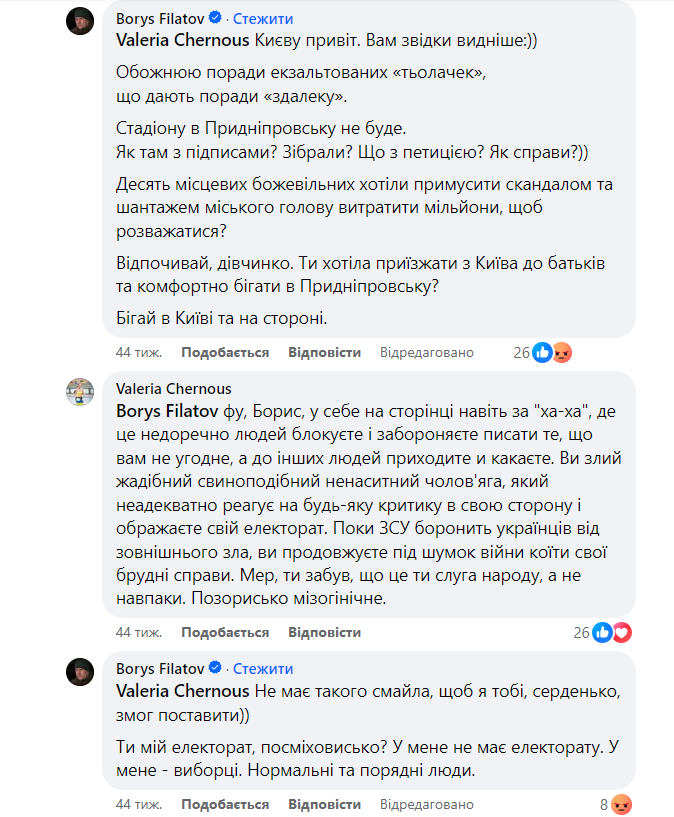
    A prime example of hostile sexism is the communication of the mayor of Dnipro, Borys Filatov. The mayor has repeatedly allowed himself misogynistic and offensive comments on social networks and has not responded in any way to criticism and accusations of sexism. For example, in the comments under A. Gorba’s post, Filatov addressed the commentator as an “exalted “heifer”” who gives advice “from afar”; “little girl.” After the woman reacted to his statements and pointed out their misogyny, Filatov continued: “There is no such emoticon that I could put on you, my dear)) Are you my electorate, a laughing stock? I do not have an electorate. I have voters. Normal and decent people.” The following commentators also noted the inadmissibility of such communication for the mayor, but all these remarks remained without a reaction and response from Filatov.

    Filatov’s misogynistic communication on social networks

    Another example of ignoring the accusations and the lack of any reaction is the communication of the head of the Mykolaiv Regional State Administration (then the Regional State Administration, not the Water Administration) Vitaliy Kim. Back in February 2021, at the All-Ukrainian Forum “Ukraine 30”, Kim, speaking about the region’s tourism potential, mentioned “the most beautiful girls in all of Ukraine” several times as one of the region’s advantages and a reason “to invest in places such as hotels, souvenir shops, catering establishments, whatever.” These statements did not go unnoticed by civil society, and Kim was criticized for sexism. However, he did not react to these accusations in any way, did not admit guilt, and did not apologize. In subsequent posts about the Forum on the official Facebook page, Kim summed up and outlined the main points of his speech, but neither the “most beautiful girls” nor an apology for these words were mentioned. The head of the Regional State Administration probably does not see a problem with them or simply decided to ignore them.
    Conclusions
    Therefore, this study proposed to consider how politicians who directly resort to it understand sexism. Analysis from this angle allows us to assess how deeply sexists are convinced of the (in)correctness of their views, whether they are ready to defend them in response to public condemnation, or whether they abandon them after the first comment, which may threaten their rating.

    Using the inductive logic of the analysis, the behavior patterns of sexists were classified after their sexist act/words became public and were criticized. The first category included those who publicly admit their wrongdoing and try to apologize for their actions or words. It is important that this study did not focus on evaluating these apologies, but on the behavioral strategy itself.

    The second category includes those who try to deny or justify their actions. Such sexists usually resort to explanations such as “it was taken out of context,” “you misunderstood me,” or “that’s not what I meant.” Again, the study makes no attempt to assess the sincerity of their beliefs and the depth of their awareness of their guilt vs. fear of ratings. The focus is on the fact that they do not like the label of “sexist,” from which they try to distance themselves.

    The third category includes those who can be characterized by the phrase “yes, I am sexist, and I am not ashamed of it.” Here, everyone who does not question the correctness of their views and after public condemnation usually makes even more sexist comments and actions.

    Finally, a separate category was identified for those who take an ambivalent position and do not react to accusations of sexism. They simply ignore any criticism, do not apologize or defend their views. In such cases, it is difficult to understand the motives of actions, or rather their absence. Although it can be assumed that the representatives of this category are not so deeply convinced of their views as to endanger their reputation, and are not so brave and aware as to admit their wrongdoing and apologize.

    Such a categorization of the behavior and communication strategies of sexists, of course, does not give a complete picture of the motives and beliefs of all politicians regarding sexism. However, it can be used to analyze reactions and make assumptions about how those who resort to sexism understand this phenomenon.

    This project is implemented with the support of the Swedish Institute.
    [1] Online broadcast of the PC of the Regulations 02/16/2022. Online broadcasts Kyiv City Council.

    [2] Oleksandr Korniyenko’s first post about his sexist statements. Oleksandr Korniyenko, 06/23/2020.

    [3] Oleksandr Korniyenko’s second post about his sexist statements. Oleksandr Korniyenko, 06/24/2020.

    [4] Olha Berezyuk’s post about accusations of sexism and the appropriateness of an apology. Olha Berezyuk, 08/13/2021.


  • A Romance with Sexism: A Brief History of Ukrainian Advertising

    A Romance with Sexism: A Brief History of Ukrainian Advertising

    September, 2021. The Verkhovna Rada of Ukraine adopts Bill No. 3427 “On Amendments to the Law of Ukraine “On Advertising” to Combat Discrimination on the Basis of Gender”. Accordingly, the Law “On Advertising” includes a new definition of the concept of “discrimination” and the amount of fines that brands and advertising agencies that resort to sexism must pay. However, half a year passes and the National Council of Ukraine on Television and Radio Broadcasting concludes: a quarter of advertising on nationwide channels is gender-unbalanced. Even a direct ban and fines do not motivate advertisers to advertise without sexism. Has it always been like this, or did sex not sell at one time?

    It is difficult to imagine the modern world without advertising, even despite the fact that during the full-scale invasion, its volume has significantly decreased. We see it on TV, hear it on the radio, see billboards along the roads, in transport, in the feed of social networks.

    Advertising is everywhere — let’s look chronologically at the history of its development in Ukraine and its relationship with sexism.

    1990s, 2000s, 2010: the formation of the advertising market and sexism on it
    In 1992, the Internet and the ua domain appeared in Ukraine. At the same time, the ICTV, TET, and U2 television channels went on the air. This year can be considered a milestone for the Ukrainian advertising market. Newspapers and magazines existed in parallel — more than 2,000 different publications, including even the first fashionable women’s magazines.

    The 1990s in Ukraine were a time when many spheres emerged. A lot of printed publications were inherited from the USSR, and they began to gradually develop and expand them. New channels appeared on television, and the cultural sphere — music, cinema, and art exhibitions — was developing. There were no frameworks or templates yet.

    60–70% of advertising was in print media, the rest was on television. Television was dominated by advertising for foreign goods, designed for the Western consumer. This was primarily due to the fact that filming video advertising required large amounts of money, which was simply not available. In conditions of shortage, truly necessary everyday goods were purchased without advertising, and if they were used at all, it was more often in printed form – newspapers, signboards, flyers and business cards.

    Since the beginning of the 2000s, the now-famous TV channels “Ukraine”, “Inter”, “1+1”, “STB”, “Novyi Kanal”, radio stations “Lux FM”, “Hit FM”, “Radio Chanson” have been operating. The advertising that was broadcast on them was mainly Western, translated, but not adapted for the Ukrainian consumer. Most of the advertised goods were products: chewing gum, chocolates, candies, sweet drinks, baby food. That is, everything that was not yet part of everyday goods, but there was a great desire to make them so. If the advertisement had one main character, then usually a male expert image was used. The man recommended a magazine, product or service. For general consumer goods, the image of a family was used: happy children eating sweets or a married couple preparing fragrant soup.

    It is difficult to trace the manifestations of sexism here. One of the few advertisements with a hint of sexualization is an advertisement for Cadbury chocolate, where the camera focuses on a woman’s lips in close-up, as if trying to evoke an association of pleasure.

    There are also completely atypical images. For example, a daring policewoman in an advertisement for Stimorol chewing gum: she is the first to court the man whom, according to the plot, she stopped for a violation.

    Changes in the 2021 law and the ban on using sexism in advertising are just one step in the history of legislative permits and prohibitions in the marketing sphere.

    In 1993, an advertising tax was introduced. For one-time advertising placement — 0.1% of the fee, for permanent — 0.5%. In 1996, the well-known law “On Advertising” was adopted, which has been supplemented more than once. For example, today not only discrimination is unacceptable, but also products that are harmful to health are unacceptable for advertising — alcohol, tobacco.

    In the second half of the 1990s, Ukrainian advertising becomes more, but it is very chaotic. The law does not regulate the content much, directors juggle different sketches: someone copies European advertising, someone transfers scenes from the KVN into advertising, and someone tries to come up with something new and unusual. The focus of attention is on the idea. Often, advertising was “bought” with a plot, rather than with specific visual images or aesthetics, which gravitate towards sexualization.

    “Family”, which is so abundant in advertising in the 1990s and which arouses admiration, in the 2000s began to be overexploited. Television advertising can be conditionally divided into several categories according to products: pharmacological products (medicines, dietary supplements, auxiliary drugs), household goods (washing powders, detergents, some appliances), food products (this also includes sweets, baby food, etc.) and other (delivery services, mobile communications, banks). Social advertising commissioned by the state and election campaigning can be distinguished separately.

    Advertising for household products used family images the most, and along with them, stereotypical roles. A housewife has to do the housework: wash dishes and floors, put laundry away, and at the same time take care of children. Men are usually absent or completely absent from such advertising.

    , or existed as a background for several lines of dialogue.

    The famous advertisement for the floor cleaner “Mr. Proper” is interesting in this regard. The concept was criticized, saying that Mr. Proper is an idealized male image that every woman dreams of: he is conventionally handsome (although depicted in a cartoon style), pumped up, knows how to clean quickly and efficiently and does it. In fact, the advertising of this brand is one of the most successful in terms of overcoming stereotypes. For example, in the 1994 advertisement, only a woman cleans, there are no other characters. In 2003–2009, both a man and a woman clean. There are variations of the advertisement where a father and son take on the cleaning task so that the mother comes to a clean apartment, or where the father instructs his teenage son to clean the kitchen. As we can see, there is no stereotyping.

    Another commercial for dishwashing detergent “Fairy” tells about a dinner meeting of the Petrenko family and their neighbors. The men in the frame are eating, the women are washing the dishes. In the commercial from another year, with the Kovalenko family, a mother teaches a teenage girl to wash the dishes; in another commercial from this period, a mother-in-law teaches her daughter-in-law this difficult task.

    Is this sexism? It is difficult to say for sure. Indeed, even now, not to mention the zero years, most of the household chores fell on women’s shoulders, so such advertising is more a reflection of reality and familiar role models for many. When such plots are present in the advertising of almost all products, it only confirms the correctness of reality and consolidates it.

    Gala, Tide, Drug, Perwoll, and even Bosch dishwashers — all of these brands have been actively using images of women washing clothes, cleaning apartments, and washing dishes in their advertising for years. Male images were not included in this sample.

    The people who developed the Ukrainian advertising market were not professionals. They achieved everything by trial and error: trying to make a joke, trying to shoot something aesthetic, trying to tell about a product through a poignant or close story. Gradually, with the development of radio and television, and later the Internet, all this began to form into large media holdings and advertising corporations.

    From the mid-2000s, wireless Internet appeared in Ukraine, the digital era began, and later Internet advertising developed, which we will return to later.

    Technological progress cannot be stopped. Brands began to cooperate with each other, attract international experience, and turned to specialists for advertising. The number of products grew. The decade from the 1998 crisis to the 2008 crisis was the heyday of the advertising market, which almost doubled. In 2007, about 20% of Ukrainians used the Internet, and in 2012 their number reached 50%.

    But for now, let’s talk about television, because it was it that became the basis for the development of video advertising on the Internet. An interesting area is advertising for the pharmacological group of products. Even during the full-scale invasion, pharmaceutical corporations were the first to return to the advertising market after a break. As of June 2022, 80% of advertisers and 90% of advertising in the media space belonged to them. The reason is simple: no matter what happens, medicines are always needed.

    The plot of such advertising is usually simple and does not require adaptation to new realities. Before the full-scale war, pharmaceutical corporations also took the maximum of the advertising market. Given such a wide representation, this advertising will definitely attract our attention. And here it gets interesting.

    It would seem that advertising for pharmacology is the simplest, because we all need various medicines and support for our health from birth to old age from time to time. Therefore, advertising covers the maximum of the target audience. However, women prevail in it, and it is also aimed at women. And this is not only in advertising for painkillers for menstrual pain or medicines for children. The entire industry exists as if treating an entire family is a woman’s business. Although it must be admitted: there are exceptions, but they are rare.

    The advertising for the drug “Citramon Darnitsa” in 2018 caused an ambiguous reaction in society. According to the plot, two companies are sitting next to each other in a cafe: one is completely female, the other is male. The men are discussing among themselves what is most important in a woman. One for good looks, the other says that a woman should take care of her family, the third considers the most important thing in a relationship to be a woman’s love for her man. A woman from a neighboring company intervenes in this conversation, she holds out a package of advertised pills with the words: “The main thing is that a woman does not have a headache.” This advertisement contains a metonymic reference to a folk joke, which says that a woman always has a headache when she does not want to have sex.

    Everything is clear about stereotypical roles. Advertising actively exploited them in such a way that we did not even notice it, because we understood this state of affairs as the norm at that time. And what about sexualization?

    One of the first in Ukraine to openly use a naked human body was the advertisement for “Bounti” in 2001. A slender girl in a swimsuit lies in a hammock on the ocean shore and receives “paradise pleasure” from a chocolate bar. At the same time, the camera captures her entire body, breasts, bikini line and how the girl directly eat candy.

    The next such advertisement that was remembered by the audience was the chocolate desserts “Bonjur”. This is probably one of the loudest cases in the entire history of Ukrainian television: in addition to the conventionally ideal male body, the slogan of the advertisement sounded like “Bonjur. All for the sake of female pleasure”. The sexual overtones were not hidden at all, and it was such an unexpected and daring decision that the advertisement quickly entered the TOP.

    To repeat such an advertisement immediately (the events take place in 2006) is to copy the decision and style, which few brands dared to do. For example, the “5 Golden” crackers tried to use the sexualized image of the female body in the same frank way, in the advertisement of which, under the words “thoroughly fried and saturated”, young slender girls in swimsuits are shown

    And “Mobilochka” went even further: in its advertisement, a woman is ready to give herself to a man for a new phone.

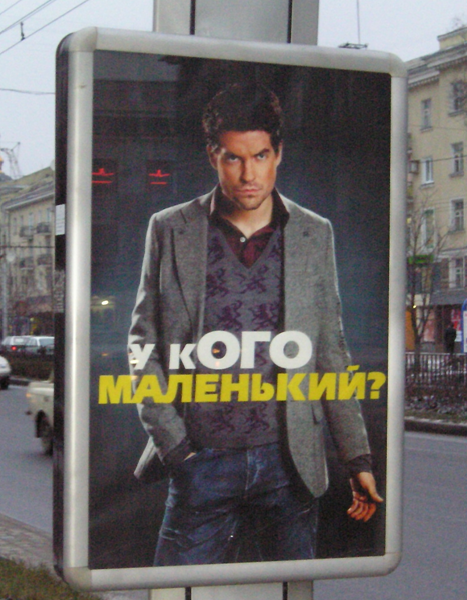
    As we can see, such advertising did not prevail in the market, but its rapid flourishing began. It seemed like a bold decision: to talk not about the product, but about the hidden desires and pleasure that the product could potentially bring. Gradually, this began to be used more and more often, and not only in television advertising. Billboards simply adored sexism, here are some examples of typical old advertising.

    In 2005, YouTube appeared, and since 2007 it has been gradually monetized. In 2006, the Russian social networks VKontakte and Odnoklassniki.ru appeared, which were actively used in Ukraine, and the American Twitter (now the X network). In 2010, Instagram joined them, so we can talk about the era of digital marketing.

    And therefore, more and more advertising is being made comprehensive. There are a lot of products, advertising platforms too, it is very difficult to cover them all, but companies and businesses are trying, giving more and more money to agencies. Given the number of brands and money in the industry, it is difficult to come up with something completely new. Some advertising was taken from Russian television (which was generally typical at that time, as well as the same entertainment shows, films, series, etc.) and simply translated or subtitled; they constantly turned to stars and famous people to become the face of the brand.

    However, the use of a naked body (mostly female) and allusions to sex were so obvious and repetitive that already in 2013 such advertising was called low-grade and clichéd, they said that it harmed business, not helped.

    They even conducted sociological studies to determine what women and men pay attention to if they see a naked woman on static advertising (billboards, flyers, leaflets). Thanks to them, more than a decade ago, in the early 2010s, it became obvious that such advertising is not memorable. Men are more likely to look at the model’s face, women – at the whole body, consider the figure, clothing (if it is at least partially) and manicure. None of the respondents remembered the type of product or a specific brand.

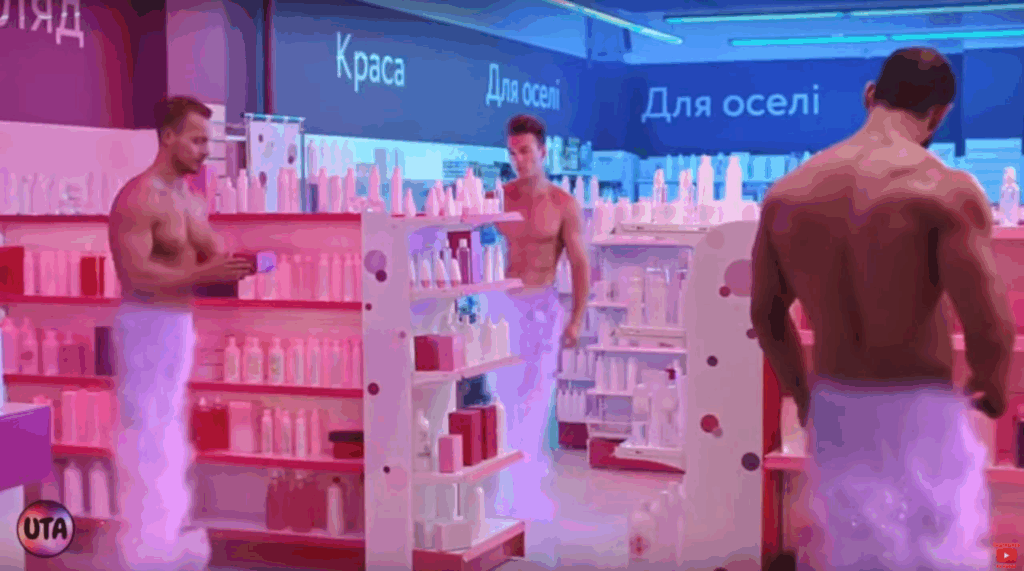
    However, this did not prevent television from following the beaten path. Let’s recall a few more high-profile cases from a period closer to us. Over the past six years, we can recall many cases of obviously sexist advertising on television. For example, “Prostor” (“Space”) and the embodiment of desires, this is 2017.

    The advertisement almost completely copies the famous “Bonjour”: conventionally beautiful men demonstrate their naked torsos and embody women’s desires, ready to do anything for the sake of female pleasure.

    Why did advertising continue to follow the path of sexism, even though it was becoming typical and contradicted research on effectiveness?

    Maidan as a turning point
    2012–2013 is a time of oversaturation with advertising and marketing. As already mentioned, the Internet has been at the peak of user activity since its appearance in Ukraine. Television and radio broadcasts are broadcast around the clock, technological progress allows you to create bright and dynamic commercials that begin to tire you, advertising is more likely to annoy rather than entertain. In addition, in 2012 Ukraine will host the European Football Championship, which will transform urban spaces (especially Kyiv, Donetsk, Kharkiv and Lviv, where matches were held in stadiums) into everyday advertising platforms.

    The Revolution of Dignity affected everything. The political and economic crisis led to the collapse of the Ukrainian advertising market. Marketing budgets were significantly reduced, and devaluation took place. In the eastern regions and in Crimea, people are not into advertising at all – sales are falling.

    But besides the obvious consequences of the crisis, there are others – the emergence of new media and the emergence of a fashion for everything Ukrainian. What we call today “gentle Ukrainization” took place: new resources appeared (for example, “Hromadske”), which quickly reached more listeners than television in general that year. The marketing sphere is increasingly switching to the Ukrainian language, brands are starting to use national authenticity. It would seem that this is a convenient moment for the death of sexism, but no.

    Fewer and fewer people trust television, which leads to a reduction in advertising budgets and the number of advertisements. The main category of goods is pharmacology with the typical plots listed above. In second place is social and advertising and advertising designed to draw attention to the Ukrainian army. Brands are irrelevant on state broadcasting (we will see a repeat of this in 2022 with the creation of the Unified News Marathon), so they move to social networks, and this is convenient. For advertising, they use both static images and videos previously shot for TV format, collaborate with influencers and opinion leaders.

    Feminist optics are strengthening. People no longer consider the use of a naked body or fat hints in advertising to be the norm. The flourishing of social networks helps: the more attention is paid to cases of sexism, the sooner official media will write about it. We can conclude that the marketing institute of reputation is forming, but still some brands resort to sexism in advertising not because they do not understand where the line is, but because they know that they can outrage, and black PR is also PR.

    High-profile cases included a billboard in Lutsk advertising the “World of Leather and Fur” stores, and a scandalous social media ad for a pizzeria in Rivne.

    Such advertising, such as the latest case, could exist exclusively on social media. There is no law banning sexism yet, but television is more cautious, and radio broadcasting is limited to purely advertising slogans, without any visuals. At the same time, social media, which has no control whatsoever, creates a feeling of permissiveness: creating an ad with a reference to a well-known pornographic video is bold, although outrageous. The half-naked men from the “Prostor” ad seem like something trivial in comparison, and television uses this. These were the three advertising spaces not long ago.

    Social media, which have their own influencers and everyone tries to cooperate with them, are also not controlled by the state (with the exception of Russian resources that were blocked in Ukraine). You can do literally anything, attract attention in as many ways as possible. The naked body is becoming a popular way: the Internet is more relaxed than in real life, and even if someone is outraged by it, he or she will still comment on the advertisement. Social media algorithms have always worked like this: the more attention a post receives, the more it will be shown to other people. Television cannot afford the same relaxedness as the Internet, but all the old methods are preserved there: a half-naked body, erotic hints or actions, ambiguous slogans. Against the background of the Internet, it is not daring, so it hardly attracts the attention of the community. It is not that such marketing is beginning to be tolerated, but it is perceived to some extent as something inevitable, because the idea that sex sells has become commonplace. Moreover, if the brand is completely Ukrainian-language, not connected with any cooperation with Russia and supports the army, no one dared to criticize the advertisement at the beginning of the war. We saw this repeated at the beginning of the full-scale invasion and even now: illegal advertising is justified by paying taxes.


    Billboards and flyers are becoming fewer in the digital age, but they are not disappearing. Most often, as independent advertising, they are not very successful, so they are used as an auxiliary method. They have the same images as in television or online advertising, the slogan is in large font and the brand is indicated. If the billboard is sexist, it is worth looking for a television advertisement for this brand, most likely it is even worse. A completely naked body in urban space was not very well received, but veiled hints were loved.
    At the same time, quite feminist advertising appears, such as the collaboration of the brand “bra bra bra” with the rapper Alyona Alyona.

    What the full-scale war changed
    During the period of the full-scale invasion, Ukrainian brands are experiencing not the best of times. Many people have left, the economy is unstable, most of the money of every company and every person goes to providing basic needs and supporting the army. Marketing has had a hard time adjusting to this new era. We have many successful advertising cases, for example, the New Year’s ad of Nova Poshta, which was remembered by everyone for its sincerity. However, there is also a lot of sexist advertising, although it is now illegal, despite the outrage on social networks and in the media, despite what has become obvious: vulgarity does not sell.

    If you are an ordinary citizen, do not tolerate sexist advertising. Yes, it no longer attracts attention and the brand is not remembered, but it is worth writing a complaint so that the marketing department understands: sexism is not black PR, it is bad form and an obstacle to business.

    For more information on how to write a complaint about sexist advertising, read Kateryna Viter’s article “How and why to fight sexism in advertising.”

    If you are creating an advertisement and are not sure whether it is sexist, check yourself with the advice in Alena Gruzina’s article “How to prevent sexism in advertising: five practical tips from Gender in detail”.

    This project is implemented with the support of the Swedish Institute.

  • Unfunny: The History of Sexism in Ukrainian Humor

    Unfunny: The History of Sexism in Ukrainian Humor

    Humor is a very important socio-cultural element of our everyday life. It reflects the prevailing mood, reaction to certain events, attitude towards them. With the help of humor, we talk about everyday life and distract ourselves from it. The famous quote by Les Poderviansky: “Ukrainians often laugh at themselves — this is a sign of mental health.”

    We are used to talking about Ukrainian humor and especially the sexism in it in the modernity of the already independent Ukraine — with the flourishing of television shows and humor in magazines and newspapers. And this is quite fair, but in fact certain manifestations can be traced much earlier.

    Ukrainian humor and folk traditions.
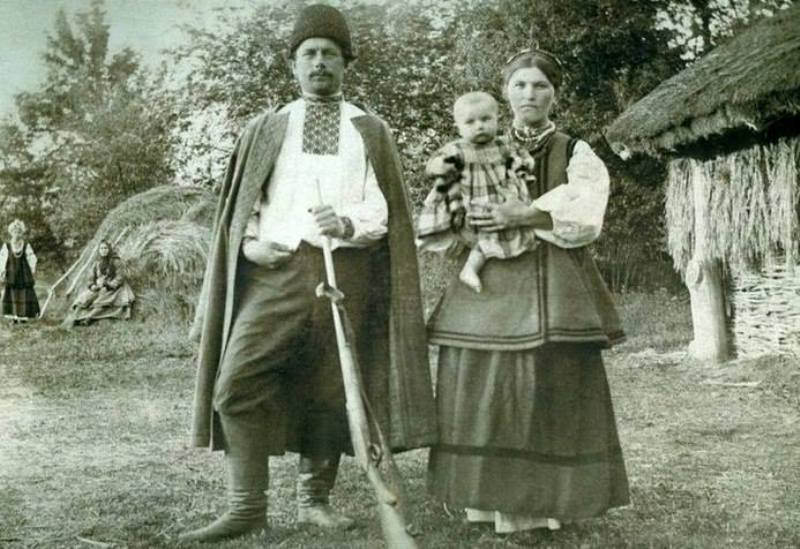
    Ukrainian humor is rooted in folk traditions that reflected the stereotypes and gender roles inherent in that time. Women acted as objects of jokes and laughter, often in connection with their family status and/or role in the household. The specifics of humor of each people are determined by its worldview, and Ukrainians are no exception.

    Much information can be gleaned from folklore: folk songs and legends, proverbs and superstitions. An equally interesting source of information is the collection of anecdotes published in 1899 by ethnographer Volodymyr Hnatiuk. This is one of the most complete collections of that time, from which one can draw conclusions about what was considered funny. An entire section in the collection is devoted to women and is called “Women”[1].

    There is nothing in such collections that was considered wrong in the realities of that time. A woman is stupid because she is a woman. A woman can only do household chores because she is a woman. This is the norm of that time and sexism today.

    Women in folk anecdotes, legends and fables appear in typical roles – wives, mothers, housewives: “The girl carried water with a jug from the cistern”; “A vigilant hostess”; “A young man came to woo a woman’s maid”; “A stepmother came to look after other people’s children and cooked a full pot of porridge.” Traditionalism is no different: women are depicted as housewives, responsible for household chores and the family, men are shown as the main owners, a leading figure in work or public affairs.

    A woman’s inability to manage the household was ridiculed, and a man’s manifestation of power over her was welcomed. There is, for example, such an “anecdote.”

    It is interesting that even despite the low respect for women, the 1899 collection includes feminine nouns: “strong woman,” “doctor,” “spinning woman,” “young woman,” etc. This suggests that feminine nouns are inherent in the Ukrainian language, they are recorded both in the vernacular and in historical literary sources.

    Stereotypical, traditional attitudes towards women were the norm – other roles were not considered possible in principle. Humor as a reflection of the state of society also did not provide an understanding of gender inequality or sexism, so female images were often objects of jokes and laughter. Women were portrayed as careless, stupid, and unable to do anything without a man.

    The humor and satire of that time focused mainly on political phenomena, so it is difficult to systematize jokes about women, but several stereotypes can be distinguished.

    A woman – a mistress, a prostitute or a “walking problem”?
    Everything is clear about the woman-mistress: this image was mainly used in jokes, either ridiculing a woman’s skills and her household chores, or this image ruled in the background – a woman was a secondary heroine of a funny story about a man and his antics or about children. The image of a “walking problem” was often repeated here: although a woman had many tasks that she solved independently, most often a man was equally positioned as the one who knows better and whose word is decisive.

    From the second half of the 19th century, sorority folklore began to be recorded. The largest collection of it was left by Khvedir Vovk. True, not only women but also men were ridiculed here. The humor is very reminiscent of today’s: the size of the genitals, the number of partners were considered funny. At the same time, sexual relations were not considered something dirty, and Ukrainian folklore contains a lot of information about how our ancestors made love. A woman who had many sexual partners appeared as a funny figure, not always ready for marriage and “open” to everyone. A man with the same number of partners was criticized at most mildly for being unpretentious, but was not particularly ridiculed.

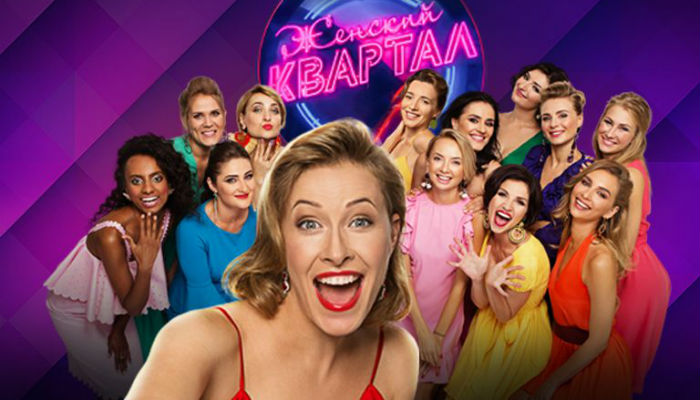
    Watching modern humorous TV shows, one gets the impression that nothing has changed since the 19th century. A woman is also portrayed as a housewife who constantly makes scandals with her husband for the mess at home and waits for March 8 as her only day off; women are also ridiculed, calling them easily accessible, commenting on their figure, sexual preferences or number of partners; it is also considered funny to show that a woman does not know how to do anything and cannot do anything herself: neither drive a car, nor do repairs, nor plan, nor decide.

    Soviet satire – about sexism or equality?

    The position of women in the Soviet Union is a separate big topic, which often becomes the subject of heated debate. On the one hand, equality was supposedly achieved: women in production and construction of factories, in war and in everyday life. In reality, equality was only declared, not fixed, because while men were in the factory, women were in everyday life and in the factory. The reproduction did not disappear anywhere The role of the mother was elevated to the highest level in the USSR. Such a division could not but affect humor as a reflection (and often a construction) of reality.

    Satire and humor in the USSR were assigned the role of a “party weapon”. Soviet newspapers and magazines relied, on the one hand, on caricatures, feuilletons and humorous stories, which were more entertaining than serious. On the other hand, these genres were based on typical recognizable images, because the laughing effect was achieved precisely at the expense of recognizability.

    Read more about this in the article by Katerina Yeremeyeva “Worker, Victim, Consumer: Female Images in Soviet Satire”

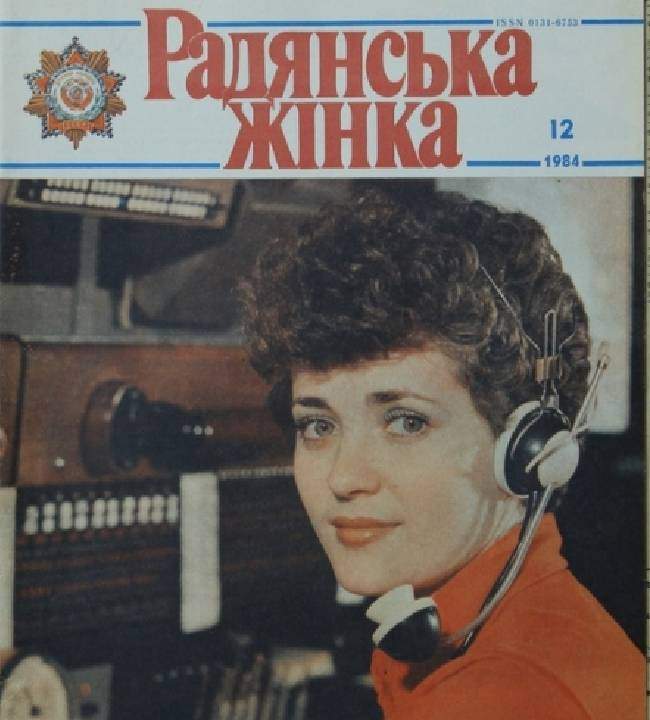
    Periodic publications exploited typical images. A woman had to be a conscious citizen of her state, obey the authorities, be a patriot, understand world events and evaluate them accordingly. At the same time, she is the guardian of the home: her house is clean, her children are well-groomed, dinner is ready, and the woman herself is a skilled housewife and a faithful wife. She must look good – an athletic, toned figure is in fashion, clothing patterns and makeup tips were printed for her. That’s her, the ideal Soviet woman.

    Magazines and newspapers, and even folk art, are isolated sources of humor. Most of it is political and strictly prohibited, because the Soviet authorities perceive it as agitation and propaganda. Of all the jokes that have come down to us, it is difficult to determine which of them is Ukrainian humor: some jokes exist in different languages, others exist in a bunch of variants in different territories. It is impossible to trace the history of their distribution and say for sure that such and such jokes were created by the Ukrainian people. The information was not recorded, because from the beginning of the 1930s, a joke could lead to 2 years in prison, and in 1935 this term was increased to 3 years. Any jokes, especially if they criticized the authorities, social roles, ridiculed stereotypes or certain groups of people, were considered discrediting the authorities. In 1937, unsuccessful jokes could lead to execution. All this did not contribute at all to the creation of jokes or their dissemination. Of course, jokes existed, but they were passed on from mouth to mouth or presented in a mild form in the text.

    The most famous representative of Ukrainian Soviet humor, Ostap Vyshnya, also chose mainly political topics for jokes, ridiculing the authorities and certain human flaws through images of animals or random passers-by. He also used images of women – mainly wives and housewives. Sexism? It seems so, but it should be borne in mind that humor reflects the cultural context and what is unacceptable today can be considered in a different historical context.

    However, this does not mean that today we should perceive such humor as the norm, saying that there are women who drive poorly, and there are blondes who do not understand anything. Isolated cases do not characterize a group of people, and our task is to respond to sexism in humor.

    Is modern humor a stronghold of sexism?

    The situation is changing greatly when it comes to modern Ukrainian humor. Just as in the past, political and social themes remain the main ones, but humor on everyday topics is in full swing, and sexism in it (mainly towards women) is becoming a leading motif.

    It is difficult to say whether public humor normalizes sexism, or whether the existence of sexism in society normalizes such humor. The fact remains: sexism exists, and with the development of television and the Internet, it has become ubiquitous.

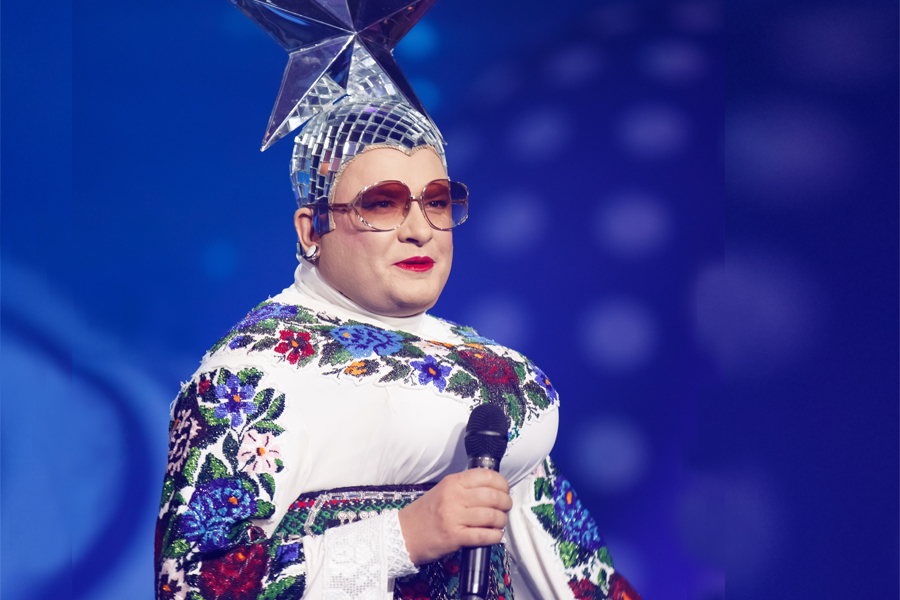
    In 1991, Andriy Danylko appeared on the Ukrainian stage in the image of Verka Serdyuchka. The image became iconic: a certain type of woman began to be called “serdyuchka”.

    Verka Serdyuchka is a costumed performance: a man dresses up in women’s clothing. He uses padded breasts, high-heeled shoes, and wigs. The clothes are always flashy.

    This resembles drag, a technique of personifying the opposite sex by dressing up in women’s or men’s clothing. However, this is not said and is presented as comedic. Most people identify Verka Serdyuchka first as a comic, then as a musical project. Her lyrics are always everyday, with a twist, she makes fun of herself. The image debuted in the theater, and Danilko gained nationwide fame in 1997 thanks to the humorous “SV-show”.

    Literary critic Tamara Gundorova noted in her book “Transit Culture”: “First of all, it is important that Serdyuchka, by her origin, originally personifies the type of an uncultured provincial woman of low social status”[2]. The image of a simple woman from the people seems funny, although it is often used even in politics (for example, Yulia Tymoshenko). Thanks to self-mockery, this does not seem like a problem, although in fact it stigmatizes not only women, but also “nationality” in general, understanding it as provinciality. In Ukrainian humor, the image of “village life” or “village girl” appears.

    This type of humor has another negative feature: Verka Serdyuchka speaks either Russian or a recognizable Poltava surzhyk. Later, most of these images of a “simple village girl” are Ukrainian-speaking, and in addition to the moment of misogyny – hatred of women, there is humiliation and ridicule of the Ukrainian language. In particular, because of such humor, Ukrainian began to be associated with something rural.

    sly and uncultured. However, again, it is inappropriate to criticize only the image of Serdyuchka as sexist: she is an element in the great history of Ukrainian humor and, as Volodymyr Beglov notes, “she was what, I apologize, we were”[3].

    The rapid formation of post-Soviet media culture made possible many phenomena, including television shows and visual clowning. In 1996, “The Weevil Show” was released on screens – an absurd multi-part production with a lot of special effects. The show had five sections: “The New Adventures of Sherlock Holmes and Doctor Watson” (a parody of the Soviet TV series of the same name), “The Residence of Wonderful People” (an absurd retelling of biographies of famous people), “My New Program”, “News with Shendorovich” (news in a funny poetic form), “In Case of a Fire, Call 01” (parodies of social advertising).

    No sexism — and this is an important indicator of the new humor of the 1990s. The realm of humor has not yet been explored, television shows are just emerging, and with them a wide audience throughout Ukraine. Sexism is too simple, everyday humor, some minimal manifestations of it on TV are perceived as the norm — everything is like in life.

  • Spirituality and Tolerance? How Different Religions Open Up to the LGBT+ Community

    Spirituality and Tolerance? How Different Religions Open Up to the LGBT+ Community

    On February 8, 2024, the official website of the Ukrainian Orthodox Church of the Kyiv Patriarchate (UOC-KP) reports, “His Holiness Patriarch of Kyiv and All Rus’-Ukraine Filaret awarded medals for “Sacrifice and Love for Ukraine” to the entire personnel of the medical post of the 1st mechanized battalion of the 72nd separate mechanized brigade named after the Black Zaporozhians of the Armed Forces of Ukraine.” And already on February 25, the UOC-KP announced that they were canceling this award for one of the awardees, Viktor Pylypenko, because they “do not share his sinful preferences and LGBT agitation.” In other words, Viktor Pylypenko was recognized as unworthy of the medal because of his sexual orientation, because he is an open activist for the rights of LGBT+ people, one of the founders of the association “Ukrainian LGBT Military for Equal Rights.”

    It is no secret that the UOC-KP and other religious institutions are the most ardent opponents of the promotion of LGBT+ rights in Ukraine. Not so long ago, a scandal erupted over a video clip featuring Khrystyna Solovyi and Serhiy Zhadan, filmed in Lviv in the church of St. Andrew the First-Called, which showed two girls kissing. For years, the Council of Churches opposed the ratification of the Istanbul Convention on Combating and Preventing Gender-Based Violence by the Verkhovna Rada, because this document allegedly promotes “gender ideology” and “non-stereotypical gender roles,” and now it is actively opposing the legalization of civil partnerships. And when in 2023 the Pope allowed the blessing of same-sex couples, the Ukrainian Greek Catholic Church was quick to make a statement that Rome’s will does not apply to it.

    Being a believing LGBT+ person in Ukraine is obviously very difficult. It’s one thing if you are an atheist and what Church representatives write on the Internet is offensive to you at best, and more often seems like outdated anti-scientific nonsense, the main problem of which is the delays in advancing LGBT+-friendly legislation in Ukraine. But what about a person for whom the Orthodox or Catholic, Muslim or Jewish part of the personality is as integral and important as national identity or sexual orientation? What is it like to feel and understand that a community that is important to you stops accepting you simply because of who you are from birth? And how is it that people who profess religions that are based on love for their neighbor so easily allow themselves to push away and be cruel to people for something that should not concern them: because of their romantic feelings or how they express their gender?

    These questions have been bothering me for some time, and a few years ago I began to take an active interest in welcoming, inclusive churches and religious institutions of various faiths. As it turned out, some religious communities have nevertheless taken a step forward towards a more inclusive interpretation of their own religious texts and acceptance of human diversity. In this text, I would like to share a few stories that, in my opinion, best illustrate that religion can truly be about love and acceptance, and not about stigmatizing those who do not fit into the rigid framework established by the Church. And most importantly, I have decided not to write about progressive churches in Sweden or Iceland, from which everyone probably expects, first of all, tolerance and openness to the new. I want to show you that acceptance can also be found in less predictable places. For example, in very Catholic Latin America or in South Africa.

    John Botja. Gay Pastor in Bogotá, Colombia
    I met John a year ago when I came to Colombia to interview local LGBT+ activists. The topic of conversation turned to religion, which is an important part of national identity in Latin American countries, and my colleague mentioned an openly gay Methodist pastor she knew. I couldn’t pass up the opportunity and asked to share his contact information. John responded to my request to chat almost immediately and invited me to attend their service on Sunday morning. However, he warned me that, as a non-local, I should call a taxi or Uber and have the driver drop me off at the church door, because this area of ​​Bogotá is not very safe.

    The Methodist Church of Bogotá (Iglesia Metodista de Bogotá) occupies two small but bright premises in what is certainly not the most peaceful area of ​​the city. If it weren’t for the cross on the roof and the sign on the door, I would never have guessed that this was a church: most of the visitors arrive on motorcycles and mopeds, dressed in leather jackets, many with piercings or tattoos. Although the church is open to all comers, the vast majority of the parishioners are LGBT+ people and their families and allies. John himself looks like an ordinary, nice young priest, the least striking figure in this diverse crowd.

    An hour before the service begins, some people gather in a separate room for a Bible reading, and I join them to listen. Today’s topic of discussion is patience and acceptance. How do we explain our opinions without alienating them? How do we be open to a position that doesn’t coincide with ours? How do we understand those who hate us? It all feels more like a psychology debate club than a discussion of the truth.

    liturgical texts. However, someone constantly reads passages from the Bible.

    Service at the Methodist Church of Bogota

    The service itself also somewhat resembles a rock concert. In addition to John, who conducts the service, there are two more girls in leather jackets in front of the congregation. One plays the bass guitar, the other plays the synthesizer. At some point, I myself sing along and dance to a song about how God is love. If it weren’t for this and the large number of men in leather jackets around, it would be no different from a regular Protestant service. After communion, everyone goes to the common kitchen to drink tea and cookies. I start a conversation with a couple next to me, ask who they are and how they came to church.

    Everyone’s stories are different, but in general about one thing. Here is Luis from Venezuela, which he left due to the political and economic crisis in search of work in Colombia. The Catholic church at home was not even open to accepting him as gay, but faith had always been very important to Luis, so he looked for a way to join another church until he met John. Maria and Natalia are a couple who help John organize various events. This time they are collecting donations for a shelter for victims of domestic violence. They came to get John from their previous church, where they could not openly talk about who they were.

    Finally, I have the opportunity to talk to John about his story.

    “I grew up in a Catholic family,” he says. “I fell in love with another boy for the first time when I was about seventeen. I tried to suppress these feelings for a long time because I grew up knowing that it was a sin, that it was a crime to be attracted to someone of the same sex. I struggled with myself for several years, and at one point I even started dating another guy, but it felt like something terrible, a sin. I had to hide who I was from my church, and therefore lie. It killed me from the inside for several years, until I ended up in the hospital with a serious illness. And then, when I was lucky enough not to die, I said to myself: “Enough! If God made me this way, then this must be His will.” And I accepted myself. Then I started thinking: “I can’t be the only gay believer in Colombia!” And I started googling “gay Christians,” “LGBT+ believers,” “LGBT+ Christians,” and I saw a bunch of websites! I started writing to them, making my thematic posts on social media, and little by little I built a community that became almost a family. But what I was missing was ministry. And after years of searching, I joined the Methodist Church, where I started helping the pastor because this church accepted LGBT+ people, had female priests, and our values ​​coincided. It so happened that this pastor was going to serve in Argentina, so he invited me to be ordained and take his place. On February 25, 2018, I became the first openly gay pastor in a Protestant church in Colombia and all of Latin America. Of course, there were other gay pastors before me, but their sexual orientation was hidden, and I became the first gay priest to be ordained, and everyone around me knew it. The whole world knows that I am gay.”
    When I asked how his church is changing the world around him, John gives two answers:

    “First, we try to change people by our example. When we moved into this building (in a poor neighborhood), people knew that I was gay and didn’t see me as a priest. They immediately thought of debauchery, drugs, alcohol, all these things that some still associate with homosexuality. But then they saw how we help children, women, young people who use drugs, anyone, and they started to respect us. Now they say: “Yes, this pastor has a different sexual orientation, but he is a good, decent person.” That’s how I gained people’s favor over these five years. Secondly, it’s education. I can’t do anything if people don’t understand the basic things: who is an LGBT+ person, what is sexual orientation, gender identity, what is it all about? We have to teach people what diversity is, tell them about the rights of LGBT+ people, why it is important. We need to talk more about our experiences and listen to the experiences of other people. If we are talking about transgender people, I will invite a transgender person to tell about their life, I can’t speak for them. We have to listen to each other. This is how we learn, this is how we become a better version of ourselves.”
    And what if God is a transgender woman? Rita Gomez and Iglesia Antigua de Las Américas
    Since I worked for several years in Ukraine in the Parental Initiative “TERGO”, which supports families with LGBT+ children, I was interested in talking to similar parenting groups in Latin America. That’s how I found Rita. But she turned out to be not just a lesbian mother and a named mother of a transgender woman, but also a bishop of the Ancient Church of the Americas (Iglesia Antigua de Las Américas). I came to Rita’s house, where I found her surrounded by several dogs and houseplants. The bright red-haired woman told me her story so emotionally and captivatingly that, sincerely rejoicing, I turned on the recorder with her permission, because it was impossible to take my eyes off her and record something.

    “The way we see the world depends on where we come from. I am from Osho.

    a rich family: my dad and mom were poorly educated people, but, on the other hand, had a fairly liberal mindset for their time. Our home was always a safe place for LGBT+ people, they were part of the environment in which I grew up. They were not strangers, they were part of my family, my dad and mom’s friends, or the children of those friends. It was natural, normal. I myself was not born into a Catholic family. Let’s say, 70% of people in Latin America are believers. A large percentage of them are Roman Catholic. But my parents belonged to the Presbyterian Church, which was already quite progressive in matters of female leadership. Somehow it happened that for me in the church there was no question at all that something was not allowed. So I was a deaconess, I was a pastor, I was a reverend, because women have the right to be ordained just like men. But many churches still fail to understand and accept the issue of gender diversity. Eight years ago, I belonged to the Presbyterian Church. In general, women are welcome in the church, but not everyone in the church sees the issue of sexual diversity the same way. Eight years ago, someone from the church said to me at a leadership meeting: “Rita, I’m praying for you, because you must be really hurt by this.” I ask what exactly hurts me. And she says to me: “Do you know that your daughter is a lesbian?” I look at her and realize that this is my moment. And I tell her: “Of course I know. I knew from the moment she was born and everyone in the family knew, and no one has a problem with it.” And everyone around me fell silent, somehow very awkwardly. And the next week, the pastor invited me for coffee and said that the church was not happy. “So,” I say, “you’re not ready to accept my daughter anymore? My daughter grew up in church, was the youth coordinator of the church, organized meetings for two hundred people. And by Saturday my daughter was an example for everyone, and the next week she was asked not to come to church because, you see, she was not good enough!”
    That day I decided that this was not my place. If there is no room for everyone where there is communion with bread and wine, this is not my place. If you are required to be a heterosexual person to be part of the community, this is not my community. And so I left. For a year I went to a Methodist church that accepts LGBT+ people. I sat in a corner for a whole year, learned a lot during the sermons. Then I felt that I wanted more, and then I met a wonderful woman named Gabriela Guerreros and a wonderful man named Hugo Cordoba Quero. Two wonderful theologians from Argentina. She is a lesbian who built a whole process called Las casitas. Casitas are shelters for people with transgender experiences and substance abuse issues. Hugo and Gabriela introduced me to Iglesia Antigua de Las Américas, and I immediately fell in love and joined. Three years ago I started serving, and after a while I was asked to become a bishop in Colombia. It was not easy for us, because our Church challenges traditional religious models.

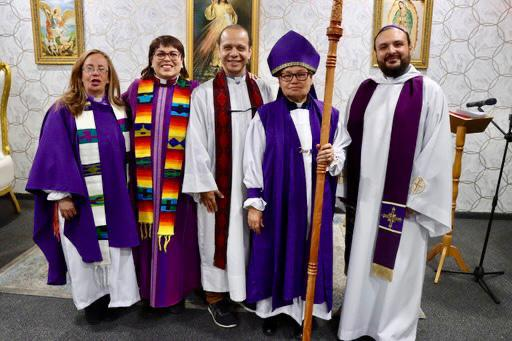
    Rita Gomez (far left) in August 2023 after her ordination as a bishop. Source

    First, we are pro-abortion as a church. We believe that women are the only ones who have the right to decide whether or not to have an abortion, and we believe that we cannot allow women to continue to die from clandestine abortions, we cannot allow raped girls to give birth at the age of eight. As a church, we consider ourselves people who support legal, free, safe, permitted abortions with consent, with guarantees as a woman’s right. And we also think about how important it is to approach a person’s decision to undergo euthanasia with understanding. When a person is suffering, who am I to force them to live, because otherwise they will go to hell? Moreover, we do not believe in hell.

    Hell is a religious construct that was invented to control people. If you are gay, you will go to hell, if you are a lesbian, a socialist, if you decided to have an abortion or euthanasia, you will also go to hell. Hell is a social, even political construct that the religious world created to rule over people. I have never believed in the idea of ​​hell. I believe in a theology called realized eschatology. Hell is here and now. Hell is starving to death, it’s being a mother of two or three children at 16 and not being able to go to school. Hell is a 50-year-old woman who can’t read or write. That’s what hell is. But we love drama, give us flames and a red devil with horns and hooves.”

    Rita then enthusiastically recounts her experience speaking to the participants of Pride in Bogotá:

    “I’ve never had the opportunity to talk about God to more than 10,000 people in my life, I only had three minutes. I took the microphone and said, “I know that 90 percent of those present think that God is the biggest symbol of patriarchy in the world, because all our lives we’ve been told that God is a man. I want to tell you that God is Love, that’s what the Bible says, and love doesn’t hurt, because love cares, protects, builds. How many of you have had to explain your diverse lives to a religious person only to be told…

    and did you accept this?” Everyone in the square raised their hands. “I want to tell you that being different from others is not a sin or a crime. A crime and a sin is when a supposedly believing person takes advantage of the vulnerability of a child, woman, or young man to satisfy their sexual needs. Today I want to show you that God is a God of diversity. I believe that God is trans. I believe this and I say this seriously. After all, God had to make a transition in his eternal essence to a temporary physical incarnation in Jesus, had to stop being an absolute power in order to become a man who died, starved, suffered, cried, and feared death on the cross. God created the transition. God also travels in the Holy Spirit after the death of Jesus and accompanies us. The Holy Spirit accompanies us. Period! Wherever we go and whoever we are. God makes the transition. Now it is up to us, the new generations and those who think differently, to let God pass through our lives and accept His love, understanding that we must love ourselves in order to be able to love others as well.” And when I saw the wild reaction of the crowd, how people reacted to my words, I realized what uncontrolled power the religious world can have over other people. And that day I asked God to help me better determine how to accompany people more carefully in their transition, because it is a huge responsibility.”
    Judaism: Reform Jews
    Quite by chance in the middle of 2010, I rented an apartment in Berlin from a Jewish woman who turned out to be not just a slave, but also the first female slave in the (then) CIS countries to perform a religious wedding ceremony for a lesbian couple. That’s when I learned about the existence of a branch of Reform Judaism, which, unlike Orthodox Judaism, supports the rights of LGBT+ people.

    Reform Judaism has its roots in Germany, where it originated quite a long time ago, back in the 19th century, and from there it spread to other countries in Central and Western Europe. It is now very popular in the United States and has about two million followers worldwide. The movement of progressive or Reform Judaism is a liberal trend in Judaism. Such Judaism believes that Jewish tradition is constantly evolving, acquiring new meaning and new content with each new generation, therefore it strives to renew and reform religious rites in the spirit of modernity.

    Reform Judaism has been advocating for LGBT+ rights since 1965, when the Women of Reform Judaism (WRJ) passed a resolution calling for the decriminalization of homosexuality. In 1977, the Central Conference of American Rabbis and the Union for Reform Judaism passed their first resolutions calling for equal rights for homosexuals. Since then, American Progressive Jewish organizations have passed a series of resolutions on issues such as the inclusion of gays and lesbians in the rabbinate and cantorate, support for marriage equality, the elimination of discrimination in the military and Boy Scouts, and support for comprehensive nondiscrimination and civil rights legislation. In 2015, the Union for Reform Judaism adopted a resolution on the rights of transgender and gender nonconforming people, and the Religious Action Center recently published a Guide to Integrating Transgender People to help congregations better include them and their families.

    While researching Judaism’s stance on homosexuality, I was intrigued to read an interview with Denise Eger, a female rabbi who began her work in 1988 at a gay synagogue in Los Angeles at the height of the AIDS epidemic. She traveled to the medical center every day to visit young patients being treated for the disease. She says that at that time, the fear of AIDS, especially for those living with it, was palpable.

    Rabbi Denise Eger before a same-sex marriage ceremony. Source

    Eger, who is the founding rabbi of Congregation Kol Ami, a Reform Jewish synagogue in West Hollywood, California, remains committed to helping those who are marginalized and uses her rabbinate as a platform for social activism. She is the president of the Central Conference of American Rabbis (CCAR), the largest and oldest rabbinical organization in North America. Eger is also the first openly lesbian rabbi to serve as the head of the Reform rabbinate.

    The first gay imams: LGBT+ rights in Islam
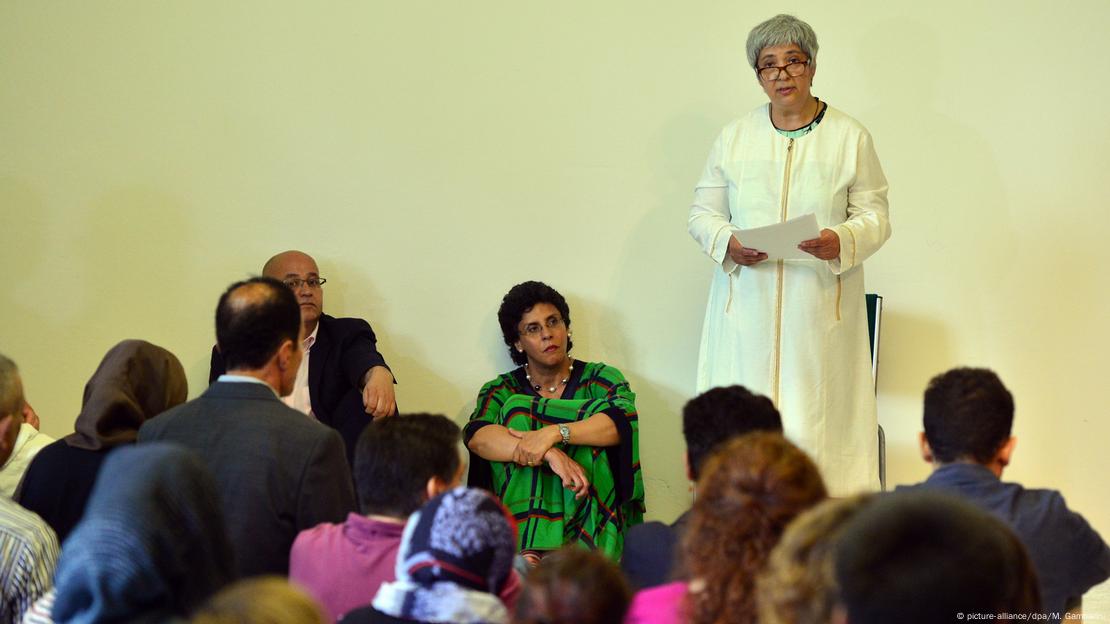
    It took a little longer for mosques to open their doors to LGBT+ people: the first LGBT+-friendly mosque in Europe with a gay imam of Algerian origin was founded in 2012 in Paris (at that time, several such mosques were already operating in Canada, the USA, and one of the first known gay imams opened such a mosque in South Africa).

    Imam Ludovic-Mohamed Zahed says in his interview:

    “Our mosque became the first inclusive mosque in Europe. Today, such communities exist all over the world: in Western Europe, the United States, Indonesia, South Africa, even in Tunisia. So it spread everywhere, but it started mostly in the USA and Canada […] It was the first time in my life that I was asked to perform the duties of an imam after I left

  • Mothers, Daughters, Caregivers: How to Recognize Misinformation About Women in the Media

    Mothers, Daughters, Caregivers: How to Recognize Misinformation About Women in the Media

    A third of the Ukrainian population monitors the news every hour, and almost half use their phones for 4-6 hours a day. A huge amount of information is perceived by everyone constantly. It can be difficult to distinguish facts from fakes in this flow. Especially if the manipulations are based on existing stereotypes, including gender stereotypes.

    Discrediting Ukrainian refugees and female military personnel is still one of the goals of hostile propaganda. Russia is actively using it for its own benefit. So what is gender disinformation and how to recognize it?

    Gender disinformation: what is it and how does it spread
    The prevailing opinion is that gender disinformation is misleading or false gendered and/or sexualized narratives created to damage the reputation of women and prevent their participation in the public sphere. That is, when you read another Russian fake about Ukrainian refugees who “became prostitutes in the EU,” it is gender disinformation.

    “Russia loves to use gender disinformation. It serves to justify its aggressive policies and war crimes, and is also a tool for dividing into ‘ours and ours’. This vividly illustrates the propaganda construct about Europe, which is opposed to ‘traditional’ Russian values,” said Dzvenyslava Shcherba, an analyst at the NGO Internews-Ukraine, at the conference “DesOut: How to Knock Manipulations Out of the Information Field.”

    Dzvenyslava Shcherba

    In a study on gender-based disinformation by the NGO Internews-Ukraine, respondents from among journalists and public figures identify two main reasons for the spread of such disinformation.

    Sometimes publications reprint external information without checking the facts;

    Social media users may spread fake news because they often seek to draw attention to an event or news item, without questioning its veracity.
    It is also worth remembering the dominance of Russian propaganda. Together, these factors help gender stereotypes and outright fake news to spread and take hold online.

    “Women are often reduced to the role of mothers, daughters, and caregivers, instead of being seen as full-fledged political and economic actors,” says researcher Sarah Soberai from Tufts University in the United States. She identifies three main strategies by which women are forced to be silent or limit their influence: intimidation, shaming, and discrediting.

    Sarah Soberai

    A striking example is the social media campaign launched in 2017 against Svitlana Zalishchuk, a Ukrainian MP of the 8th convocation. At that time, she gave a speech at the UN about the impact of the war on the lives of Ukrainian women. Fakes began to spread on social networks that the deputy had allegedly promised to run naked through the streets of Kyiv if the Armed Forces of Ukraine were defeated. This is how they tried to discredit Zalishchuk, reducing her role as a woman to a sexual object.

    Gender disinformation is also being used against the first lady of Ukraine, Olena Zelenska. The most aggressive topics in information operations against her are corruption and crimes against children. Since the beginning of Russia’s full-scale invasion, hostile propagandists have accused Olena Zelenska of spending $1 million on jewelry, purchasing a Bugatti Tourbillon car for €4.5 million, and being involved in child trafficking. All reports turned out to be fakes.

    Although such manipulations are always refuted, their presence in the information field harms women. Not all people check information, and some of them may believe fakes. In order not to become the target audience of propagandists, it is necessary to develop media literacy.

    How to check media content for gender misinformation and manipulation
    Dzvenislava Shcherba suggests asking four questions, the answers to which will help you easily check the content for objectivity. They will be useful for everyone who wants to develop their media literacy and critical thinking.

    1. Does the media content contain generalizations about a certain gender?

    Check whether the content contains stereotypes and gender clichés. For example, are women described as “caretakers” or “mothers” in a context that is not related to family or household duties? Are men portrayed only as “strong” and “brutal”? Such narratives promote gender stereotypes, on the basis of which many fakes are built.

    1. Are the statements supported by facts?

    Make sure that the ideas are supported by facts and research. Many of the statements used to spread misinformation about women, such as “all women fled abroad and don’t think about the fate of the country,” “women don’t serve in the Armed Forces of Ukraine,” have no factual basis.

    1. Does the content contain manipulative comparisons?

    Comparing two issues or experiences that are not actually comparable can mislead people. Common examples include comparing workplace harassment and innocent compliments. The latter are usually aimed at professional qualities and achievements, rather than a person’s appearance. Therefore, “You did a great job” or “You are a true professional in your field” are perfectly appropriate compliments. However, if they relate to appearance or fuel stereotypes (“You are not like that, I am other women”, “You don’t whine like other women”) is a warning signal.

    This also includes statements that gender discrimination against men and women is equally widespread, or comparing men with women to show them as “weak” or “worthless”. The latter can often be found in Russian propaganda, where gender stereotypes are used to humiliate both sexes.

    1. Does the content justify or encourage violence?

    This tool of disinformation is widespread in Russian media. There, they often justify the rape of Ukrainian women by Russian soldiers and even encourage new crimes.

    Other examples can be found on social networks – derogatory messages about Ukrainian servicewomen. They write about them that they “came to the army for men”. These narratives justify violence and insults against Ukrainian women in the ranks of the Armed Forces of Ukraine. Fakes are aimed at undermining democratic values ​​within the country, as they devalue the contribution of women to its defense. And therefore, they increase inequality and tension in society.

    Gender disinformation is a form and tool of Russian propaganda. It contributes to the spread of stereotypes and the normalization of violence against women, discrediting and intimidating them. Therefore, content on social networks and in the media should be carefully checked for sexist and discriminatory statements.

    The material was created by the team of the NGO “Internews-Ukraine” within the framework of the project “Strengthening Truthfulness, Transparency and Democracy to Counter Disinformation”, funded by the Government of Canada.