
Category: The right

  • The Right to Equality: How and Why to Create a Work Environment That Is tolerant of LGBT+ People

    The Right to Equality: How and Why to Create a Work Environment That Is tolerant of LGBT+ People

    On November 12, 2015, a landmark event took place in Ukraine: the majority of the Verkhovna Rada deputies, albeit only on the fifth attempt, after long inter-faction negotiations, under pressure from civil society and European institutions, voted to amend the current Labor Code, prohibiting any discrimination in the workplace, in particular on the basis of sexual orientation and gender identity. “Better a gay pride parade on Khreshchatyk than Russian tanks in the capital,” was how Yuriy Lutsenko, the leader of the BPP faction, explained his vote in support of the bill at the time, clarifying that he himself did not support the “LGBT+ way of life,” but “if we are going to Europe, we must recognize all norms, including LGBT+ rights.”

    Amendments to the Code should potentially significantly improve the lives of LGBTQI+ people in our country, because the prohibition of discrimination means that a person would not have to worry, for example, that they would be fired or harassed at work if colleagues or management found out about their homosexuality or bisexuality. However, what do we know about (non-)discrimination of LGBT+ employees by Ukrainian employers almost ten years after the adoption of the amendments to the Code?

    Before the start of the full-scale invasion in Ukraine, extremely few studies were conducted on the living conditions of LGBT+ people, and the situation on the labor market is no exception. At the end of 2023, the NGO “Tochka Opory UA” conducted a qualitative study “(non-)discrimination of LGBTQI+ people in the workplace and an inclusive labor market. Results of a national survey of the LGBTQI+ community”[1], which sheds some light on the experiences of LGBT+ people living and working in our country. More details about its results, as well as the best practices of Ukrainian and foreign employers, can be found in this article.

    I am not beaten, therefore I am not discriminated against. “Marrying a heterosexual” and other survival strategies
    Despite the fact that the norm of non-discrimination in the workplace has existed in Ukraine for almost ten years, during all this time there have been no precedents with lawsuits against employers on the grounds of discrimination against an employee due to their sexual orientation or gender identity. However, this does not mean that such discrimination does not exist in Ukraine. Instead, one of the explanations is that, contrary to the claims of opponents about equal rights for LGBT+ people, proving the fact of discrimination in the workplace and holding the perpetrator accountable is a rather difficult and laborious procedure. In addition, many LGBT+ people have a well-founded distrust of the Ukrainian judicial system and police, as they or their acquaintances have already had negative experiences with these institutions.

    Another reason for the lack of information about cases of discrimination against LGBT+ people is the generally low awareness of what is and is not discrimination and what rights a person can expect in a democratic country. Many LGBT+ people are so used to living in a society where they are not considered the norm that they have normalized things such as homophobic and transphobic jokes and comments, the lack of inclusive practices in the workplace, and limited access to certain services, such as friendly doctors or housing. Often in the interviews I conducted, my interlocutors answered that they were fine, since they had never encountered direct violence or physical threats against themselves, everything else did not seem “serious enough” to them to have the right to “complain”.

    At the same time, many LGBT+ people in Ukraine, when asked whether they had encountered discrimination or violation of rights in the workplace, answered that they had not had such experience, since no one among their management or colleagues guessed about their sexual orientation or gender identity. In other words, they use the so-called straight-passing strategy — “passing off as heterosexual”.

    Most LGBT+ people are forced to hide their sexual orientation and gender identity at work.

    However, following such a strategy means that LGBT+ people have to constantly hide at work, monitor their behavior and words, and often endure tactless questions about their personal lives and the alleged absence of a loved one. Such people cannot bring their partner to a corporate party or put a photo with their loved one on their desk or as a mobile phone screen saver. They have to control their social networks, photos, content, in which photos and with whom they are tagged, under which posts they have liked.

    Among the participants in the study by the NGO “Tochka opory UA” was a person who, in particular, said: “It’s like wearing a collar on a dog. You have to sit and think all the time, assess the situation. I have never felt safe. Every time, before opening up to someone and saying something, you have to think 20–50 steps ahead. There is no ease when you are just honest with people, just living your life because you are who you are, no… you have to think ahead. Because you know that any careless word, any show of weakness, that tiny bit of trust that you have in any person… all of that can affect you ; you cannot simply be independent, free from everything. When you work, you depend on this job, you hope for it. Because, perhaps, you have a debt or you are saving money to buy something, for example, for your dream. And then you are forced to leave this job due to harassment or bullying. It is not because you work badly, you do your job perfectly, but you cannot work with these people, because they simply laugh in your face.

    Such behavior, as a rule, is a response to the atmosphere of rejection in the organization where a person works, to his feeling or assessment that opening up to colleagues or management at this workplace will be dangerous. Usually this is expressed in inappropriate jokes by colleagues, comments on relevant news, private discussions, etc. As most participants in the study of the NGO “Tochka opory UA” agreed, the tone in the organization is set by the management, and it mainly depends on it whether the team will be accepting and tolerant or not. In those Ukrainian companies where the values ​​and principles of the organization were clearly discussed and where it was clearly declared that discrimination and oppression of any groups are unacceptable, and, most importantly, where management did not separate words from deeds, employees were more likely to admit to some colleagues or even the entire team about their homosexuality or bisexuality, or felt comfortable enough to make a transgender transition while working at the same workplace. Unfortunately, the number of such companies in Ukraine is still small.

    Outing and harassment: what LGBT+ people working in Ukraine face
    Even if a person consciously chooses not to talk to colleagues and management about their private life, there are always risks that someone, accidentally or intentionally, will not only find out about their sexual orientation or gender identity, but also make this information public without permission, that is, they will make the person so-called out.

    Outing is the public disclosure of information about a person’s sexual orientation or gender identity without their consent. Source

    The participants in the study spoke about very different experiences and consequences of outing. Someone was seen by colleagues with a partner in a cafe, someone had their phone hacked, and there were several stories about how information that directly indicated or hinted at a person’s non-heterosexuality came from their private social media profile. As a result, rumors spread in the workplace, the person heard inappropriate jokes about them, and in several situations there was outright harassment, as a result of which the person had to resign from their job.

    Such stories show that the fears of LGBT+ people who hide their sexual orientation or gender identity are well-founded. In addition to the risk of verbal or even physical harassment from management and colleagues, one must also consider how difficult it will be to find the next job. While it is easier to start a new life in big cities, in small towns or rural areas, opportunities for career changes may be limited. In addition, the profession plays a role: it is very difficult for LGBT+ people associated with the school education system, since in our society there are still a lot of stigmas and stereotypes about homosexual orientation and transgenderism related to how it can potentially affect children (none, except for a healthy expansion of the understanding of diversity in society). Not to mention the mythical connection between homosexuality and pedophilia, which is actively propagated by some conservative and religious groups. For example, one of the participants in the study, a school teacher in a district center, said that she was forced to leave school because she was constantly worried that someone would find out about her relationship with another woman. Moreover, when she and her partner broke up, she did not dare to register on a dating site, because she was afraid that if one of her students’ parents suddenly found out, the consequences would be painful.

    Of course, there are also positive examples. Several participants spoke of complete support at work from both colleagues and management. As a rule, such people said that if they had to look for a new job, they would no longer agree to work in a company where they would have to hide who they really were. Many of these people are professionals, so inclusivity in the workplace is a small price to pay to retain valuable specialists/current. And why else are businesses turning to creating a safe and tolerant work environment?

    Why is tolerance profitable?
    Probably, many have seen, at least in photos or videos, that in Western countries, for example in Germany, the Netherlands or the United States, large corporations very actively support Pride Month: they hang rainbow flags, produce thematic branded products, and often organize their own platform at the Pride March.

    IKEA in support of Pride Month. Source

    Source

    This is how companies declare their values ​​(both for employees and potential consumers)

    c), and also improve brand visibility and recognition. In past years, many Ukrainian companies and organizations have supported this trend in different ways. In 2023 and 2024, rainbow flags were placed on logos by retail chains and Ukrainian mobile operators, posts in support of Pride Month were made by some Ukrainian channels, and PrivatBank, in partnership with Gender in Details, even offered thematic plastic cards.

    You can install skins in the Privat24 application.

    Of course, we can talk about the general improvement in attitudes towards LGBT+ people in Ukraine, which is evidenced by recent sociological research, and about the principles of business owners and heads of organizations, who are more likely to support so-called European values ​​during a full-scale invasion. However, we also know that private business is not least about profits. What motivates business owners to take steps that potentially involve the risk of losing a share of a more conservative group of consumers?

    Ukrainian society’s attitude towards LGBT+ people, 2022 – 2024. Source

    Economists and experts from international organizations such as the World Bank and UN Aids have long considered the economic and financial consequences of discrimination and exclusion of vulnerable groups, and in particular LGBT+ people. Back in 2019, Professor Lee Budgett from the University of Massachusetts at Amherst (USA), having analyzed legal and economic information from 132 countries for 1966 – 2011, together with colleagues, recognized that there is a strong connection between the inclusion of LGBT+ people and the economic development of the country.

    Discrimination against LGBT+ people not only harms them themselves, but also harms the country’s economy. Legal equality for LGBT+ people is strongly associated with higher GDP per capita.[2] In addition to GDP, experts point to a close association between the level of LGBT+ rights and such economic indicators as the World Economic Forum’s Competitiveness Index, the World Bank’s Ease of Doing Business ranking, and the World Intellectual Property Organization’s (WIPO) Global Innovation Index (GII).[3]

    In 2021, a study conducted by Open For Business on the economic impact of LGBT+ inclusion in Central and Eastern Europe, which also covered Ukraine,[4] found that discrimination against LGBT+ people costs Ukraine between UAH 15.5 billion and UAH 37.4 billion (USD 553 million and USD 1.3 billion) annually. Such high figures are due to a number of factors caused by discrimination and exclusion of LGBT+ people from the labor market. These factors include, for example, the emigration of highly skilled professionals to more LGBT+-friendly countries, a decrease in attractiveness for Western investors, health inequalities that reduce the productivity of workers who identify as LGBT+, and the wage gap.

    When it comes to creating a safe work environment within individual companies, scientists also agree that a non-discriminatory approach and cultivating diversity in the workplace work to the benefit of economic indicators. For example, a study published in 2019 by the US Chamber of Commerce shows that the shares of companies that support diversity and inclusion policies are on average 6.5% more expensive than the average stock in the relevant industry. The report also proves the positive impact of a safe work environment on a number of critical business indicators, such as team loyalty, engagement in work processes, innovative approach to work and creativity, and overall employee satisfaction. It is not surprising that if a person feels safe and comfortable in a team and does not have to spend energy hiding who they are, they will be more motivated to work productively and will probably be less inclined to change jobs.

    Best global practices
    So, the awareness of the fact of economic benefit can push companies and organizations to be more inclusive. And what are the strategies for encouraging private and public institutions to support diversity in their teams?

    In addition to making appropriate changes to national legislation to create legal mechanisms to counteract and prevent discrimination (including on the grounds of sexual orientation and gender identity), there are also less formal tools.

    One common practice is the creation and promotion of rankings and indices in which companies compete for the status of “more inclusive”. An example of such an index is the Corporate Equality Index, a survey of leading American companies and law firms published annually by the Human Rights Campaign Foundation. In 2023 and 2024, almost 1,400 companies participated in this ranking in the United States alone. By the way, there is a similar initiative in Ukraine, the Ukrainian Corporate Equality Index, a national study of corporate policies, rules, and practices of private and public companies regarding the support of equality and diversity, as well as the prohibition of discrimination in the workplace. An analogue of the Index In the EU member states, there is a Diversity Charter, by signing which the organization undertakes to make efforts to create a diverse and inclusive work environment. It is important to note that not only private companies and corporations can participate, but also state structures.

    In addition to creating policies and procedures, another common way to support the inclusion of LGBT+ people in the workplace is to create networks and groups within organizations or institutions. Such groups are organized so that LGBT+ people working in the same institution have a safe space to communicate and discuss their problems, do not feel alone in the team and have additional safe channels to voice their needs to the company’s management. These groups can be partially or completely anonymous, in case not all employees feel insecure about disclosing information about their identity for various reasons. In addition to being established within an organization, groups can be sectoral, such as LGBT+ police or healthcare workers (or, as in Ukraine, LGBTQI+ military groups).

    Fig. 4. Representatives of the British LGBT+ Police Group. Source.

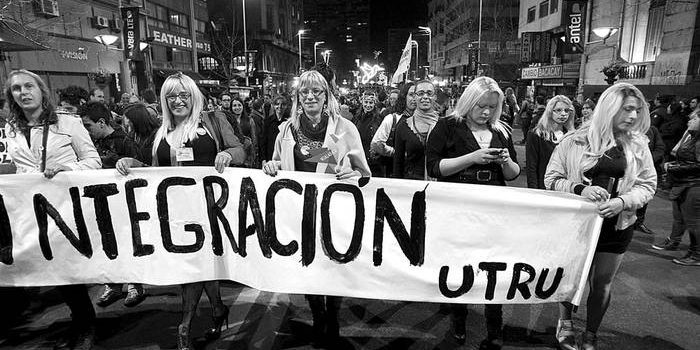
    In cases where it is important to protect particularly vulnerable groups, one option may be to introduce additional mechanisms of state regulation of the labor market. Transgender people remain one of the most marginalized and discriminated groups in Ukraine and abroad. Due to limited access to medical services, complex legal procedures, and a general high level of social rejection, many of them do not dare or simply cannot afford the transgender transition procedure and continue to live with documents that do not match their gender expression, which often makes it impossible to find employment and can push them into prostitution. All the more interesting is the example of some Latin American countries, whose governments are concerned about the high level of transphobic violence and have launched inclusion programs. Uruguay and Argentina became the first countries in the region to introduce quotas for the employment of transgender people.

    Fig. 5. Photo from the March for Diversity in Montevideo, Uruguay, 2014. Source.

    The government of Uruguay in 2018 and the government of Argentina in 2020 adopted bills according to which one percent of positions in the public sector must be held by transgender people. Although the quota mechanism is often criticized for its imperfections, civil society activists in both countries have generally supported the initiative, hoping that it will lead to increased visibility of the transgender community and attract more attention to the issues. Unfortunately, so far, only a small number of transgender people have actually been able to take up such positions, as they face structural inequality and discrimination very early in their lives, which reduces access to education and qualifications. Therefore, they advocate for educational reforms and try to draw more attention to the problems of this group.

    Consulting: how to make your workplace safe and comfortable for LGBT+ people too
    If this article has convinced you and you are already thinking about how you can make your company or organization a comfortable place to work for everyone, including LGBT+ people, I offer you a few simple steps.

    Ensuring gen
    Develop and implement policies.
    Some people think that developing policies or procedures is just a waste of team time that could be spent more productively. In fact, having policies such as an anti-discrimination or equal opportunities policy that clearly state that any discrimination in the team (including on the grounds of sexual orientation and gender identity) is unacceptable sends a clear signal to the team about the principles and values ​​of the organization. Of course, it is important that the company’s employees participate in the development of policies and that all new employees first familiarize themselves with these policies and understand their importance for all members of the work team.

    Education and awareness raising.
    Very often, people behave tactlessly or unconsciously discriminate against others due to lack of awareness. Raising awareness of colleagues on issues of sexual orientation and gender identity should not be the task of LGBT+ people already working in your team. Instead, regular training for employees on diversity and inclusion, as well as specific issues related to the LGBT+ community, will contribute to understanding and acceptance of LGBT+ people.

    Creating a supportive environment.
    As Ukrainian and global research shows, creating a supportive environment begins with the leadership of the organization. If the leaders of the company, departments and divisions openly support and encourage an inclusive culture, where diversity is respected and valued, and gossip, inappropriate jokes and bullying are not allowed, as a rule, subordinates also become more inclined to reproduce appropriate behavioral models and organizational culture.
  • Invisible Crimes. Why Ukraine Needs Bill No. 5488

    Invisible Crimes. Why Ukraine Needs Bill No. 5488

    Imagine that you are walking down the street on your usual route, lost in your own thoughts. Your favorite song is playing in your headphones, which is suddenly interrupted by a scream from behind. You barely have time to take them off when you are knocked off your feet, you feel a sharp pain from the blow. The attacker shouts insulting words about your appearance, hints at your sexual orientation, comments on your hairstyle and clothes. The blows do not stop, people around for some reason do not dare to intervene, and you cannot understand why he hits you, as if with impunity…

    What happened is called a “crime based on intolerance”. Each such case is not just a statistic, behind it stands the life of a person whose basic right to safety has been violated.

    Hate that affects everyone
    Hate crimes are often not related to personal hostility towards a specific person, but rather reflect prejudices and stereotypes about a certain group of people. The motives for such crimes usually relate to inseparable characteristics that a person cannot or does not want to change. These can be nationality, sexual orientation, gender identity or other personal characteristics.

    Prejudices often determine the choice of the “victim” or are manifested during the attack itself. For example, a person who just happened to be near Pride may become the object of an attack simply because of their presence at an event that aroused the anger of the attackers. Criminals may target human rights activists or members of the LGBT+ community, even without having personal hostility towards a specific person, but because of their identification with a certain group. Or, say, if the owners of a store hung a rainbow flag, this may become an excuse for vandalism or destruction of the window. Such actions are an immediate and often unpredictable threat, which makes combating these crimes particularly important.

    Hate crimes are a clear manifestation of social injustice and discrimination, which negatively affects not only a specific person, but also society as a whole. They undermine trust in the community and contribute to the spread of an atmosphere of fear and tension.

    These acts of aggression are often accompanied by serious psychological pressure and leave a lasting traumatic experience for the victims. Attackers seek not only to cause physical harm, but also to undermine a person’s confidence in their own safety, which can negatively affect their mental state, social activity and quality of life.

    Therefore, it is important to understand that combating such crimes is not only a matter of protecting individual groups, but also of creating a safer and more inclusive society, where everyone has the right to live without fear of violence and discrimination.

    How war intensifies aggression against LGBT+ Ukrainians
    Aggression and hatred are deeply rooted in stereotypes and prejudices that exist in society. These attitudes are formed through upbringing, education, and media influence. Negative attitudes towards certain groups of people can be reinforced by religious, political, or cultural beliefs. War intensifies these attitudes, creating an atmosphere of fear and distrust, which further exacerbates social conflicts.

    Uncertainty and fear for the future push people to look for “enemies” among those who look or behave differently. In times of social instability and conflict, representatives of the LGBT+ community find themselves in a particularly vulnerable position due to discrimination based on sexual orientation, appearance, and gender identity.

    Over the past two years, Ukraine has seen an alarming increase in hate crimes, including homophobia and transphobia. In its 2022 report, Freedom House highlights the increase in violence and discrimination against LGBT+ people during the war. It is noted that the war has intensified xenophobic sentiments and contributed to an increase in hate crimes. However, the real number of such incidents remains unknown due to irregular monitoring and insufficient awareness of victims about their rights. Many cases of violence and discrimination against LGBT+ people are not registered due to distrust in law enforcement agencies and the potential threat of re-traumatization.

    The publication “The Situation of LGBTQ People in Ukraine in January-June 2024” recorded 39 cases of such crimes, which already exceeds the indicators for the whole of 2023. This increase is likely due to both the activation of LGBT+ organizations and anti-LGBT+ groups. Cases of physical violence, attacks on LGBT+ centers and activists, as well as deliberate destruction or damage to property during events in support of the LGBT+ community, such as Pride Month and the Sunny Bunny Film Festival, are common. It is worth noting that these statistics reflect only publicly disclosed cases. The real number of hate crimes is much higher due to difficulties in obtaining information from the occupied territories and general problems with documenting such cases.

    Law enforcement agencies often qualify the hate motive as ordinary cases of inflicting bodily harm, without taking into account the homophobic or transphobic motive. Only two cases of bringing criminals to justice based on hate motives in 2023 remain the only ones in Ukrainian judicial practice.

    Legal vacuum in combating intolerance
    Ukrainian legislation lacks clear definitions and specific punishments for acts of violence motivated by hatred of race, nationality, especially sexual orientation or gender identity. This legal vacuum allows criminals to avoid fair punishment.

    Experts from the Gender Stream advocacy department note that universal articles of the Criminal Code do not take into account the specifics of hate crimes. This leads to the fact that such crimes are considered simply violence or hooliganism without taking into account the motives. Therefore, the detection and investigation of discriminatory crimes, which may have deeper social causes, is complicated. The lack of special units in the Ministry of Internal Affairs systems for such cases also creates a problem, as there is often a lack of experience and resources for an adequate response.

    Ukrainian legislation already includes an article on crimes based on discrimination. The current Article 161 of the Criminal Code of Ukraine defines liability for violating the equality of citizens based on their race, nationality, religious beliefs, disability, and other characteristics. However, this article has several significant limitations that make it difficult to effectively combat hate crimes. In particular, it does not contain specific references to sexual orientation and gender identity, which are critically important for the protection of the LGBTIQ+ community.

    As a result, cases of discrimination and violence against LGBT+ persons do not receive full legal assessment and punishment. Such crimes are forced to remain outside the attention of law enforcement agencies and the judicial system. This not only complicates the process of punishing criminals, but also creates a situation where individuals who have suffered discrimination or violence because of their identity may feel unprotected by the law, which, in turn, reduces their trust in the legal system.

    To effectively address the problem of hate crimes, it is necessary not only to supplement Article 161 of the Criminal Code with the characteristics of sexual orientation and gender identity, but also to ensure a comprehensive approach to combating such crimes.

    Draft Law No. 5488 as a comprehensive system for combating intolerance
    Draft Law No. 5488 was initiated by the Cabinet of Ministers of Ukraine under the current Prime Minister Denys Shmyhal precisely with the aim of introducing criminal liability for hate crimes. Its adoption will be an important step in the fight against discrimination and violence in Ukraine. The main goal of this bill is to create a legal mechanism that will allow for the clear definition and punishment of hate crimes motivated by race, nationality, sexual orientation, gender identity or other personal characteristics. This bill not only fills the existing gaps in the Criminal Code of Ukraine, but also provides a legal framework for the protection of vulnerable groups of the population, who are often targets of violence and discrimination.

    Bill No. 5488 proposes a comprehensive approach to combating hate. This involves the creation of clear mechanisms for registering and investigating hate crimes, training law enforcement officers, developing national strategies to combat discrimination and violence, and raising public awareness. In order to ensure protection from such cases, it is necessary to introduce systematic monitoring and assessment of the situation.

    Civil society organizations as a driving force for change
    The path to the adoption of Bill No. 5488 in Ukraine turned out to be difficult and thorny. Since its registration in May 2021, the document has undergone numerous discussions, revisions, and obstacles. The Law Enforcement Committee recommended it for adoption in May 2023, but there are still many stages to go before the bill enters into force or even comes up for a vote.

    Currently, bill No. 5488 is on the agenda of the Verkhovna Rada of Ukraine. Its further fate depends on the votes The second and third readings, the signing by the Chairman of the Verkhovna Rada and the approval by the President, as well as whether it will be put to a vote at all. The civil sector does not cease to actively work on supporting the draft law, attracting international assistance and mobilizing resources to achieve ultimate success. The full-scale invasion threw off the attention and priority in promoting draft law No. 5488. But already in 2022, advocacy work was resumed.

    In this process, civil society organizations play a critical role in promoting anti-discrimination legislation. One of the leading organizations in the advocacy process No. 5488 — Gender Stream is actively working on promoting the draft law. Over the past two years, the Gender Stream team, based on its own advocacy strategy, has initiated the creation of a coalition of human rights organizations to promote draft law No. 5488, and has held a number of strategic meetings to support it both in Ukraine and in the international arena. These include, in particular, meetings with MEPs and international organizations, appeals to international institutions, official and informal meetings with key figures in Ukraine and the country’s partners, work with the European Parliament and the European Commission and close partnership with the Council of Europe, participation in shadow reports, etc.

    Since July 2024, Gender Stream has been a member of the Expert Council on Equal Rights under the representative of the Commissioner for Equal Rights and Freedoms, Rights of National Minorities, Political and Religious Views. This is another opportunity to influence decision-making and the political context in Ukraine so that the needs and challenges of LGBT+ are taken into account at the state level.

  • Istanbul Convention and combating violence: Ukraine’s steps

    Istanbul Convention and combating violence: Ukraine’s steps

    Why does Ukraine need the Istanbul Convention?
    One of the international treaties around which numerous myths and stereotypes have been born, and manipulations have continued, is the Council of Europe Convention on Preventing and Combating Violence against Women and Domestic Violence (hereinafter referred to as the Istanbul Convention).

    In my opinion, this is due to the fact that this document is valuable and holistic. It contains norms that oblige states to review established practices in combating violence against women and domestic violence, and primarily to eradicate gender stereotypes. After all, stereotypes about the “desirable” or “acceptable” behavior of a woman or a man in Ukrainian society are not just harmful, but also lead to tolerance of violence and human rights violations against those who, in our opinion, behave “not in accordance with the rules”, or against those who have less power, protection opportunities, etc.

    In her book “How to Understand Ukrainians: A Cross-Cultural Perspective,” Maryna Starodubska explores our national mentality, culture, and values, which explain our attitude and perception of certain processes in the country. The author notes that at the personal level, the most important value for Ukrainians is freedom (83.9%), but at the same time, justice (72.5%) is lower than freedom, and the demand for dignity (60.4%) and equality (56.5%) is decreasing from year to year.

    “It is not surprising that under such conditions, it is so difficult for people from different communities (we often call them “bubbles”) to negotiate, because everyone strives for maximum freedom of choice and benefit for themselves and does not think about its fairness or accessibility for others.”
    We have gone through this path of heated discussions, debunking myths, and have come to the conclusion that we still need to ratify the Istanbul Convention, because the country really lacks tools to combat domestic violence and violence against women.

    We have faced new challenges generated by Russia’s full-scale war against Ukraine; after all, we are the ones confidently moving towards the EU, and therefore, we must not only bring our legislation into line, but also work to systematically change approaches to working with victims of gender-based violence in practice.

    I started working with victims of domestic violence in 2007. At that time, we had the old Law of Ukraine “On the Prevention of Domestic Violence” in force. The practice of applying this law has shown that we do not have enough tools to respond to violence, that the very concept of “domestic violence” significantly limits the circle of persons who can be held accountable.

    For example, at that time, it was impossible to hold a former husband or wife, who did not live together and did not have a common life, liable for violence, since this was not included in the definition of “family” within the meaning of the Family Code of Ukraine. There were also no tools to isolate the abuser from the victim. Law enforcement agencies often complained about the insufficiency of mechanisms for stopping violence and removing the abuser, the ineffectiveness of existing administrative measures, etc. Until 2017, there was no such crime as “domestic violence” in the Criminal Code of Ukraine. And if the victim did not suffer any physical injuries, the abuser could only be held administratively liable, even if the violence had lasted for years.

    In 2016, there was an attempt to ratify the Istanbul Convention and, in parallel, to adopt a new Law of Ukraine “On Prevention and Combating Domestic Violence” and make relevant amendments to the Criminal Code of Ukraine.

    The Convention was not ratified, but the law was adopted and in parallel with this, amendments were made to the Criminal Code of Ukraine.

    So, since 2017, the Law of Ukraine “On Prevention and Counteraction to Domestic Violence” has been in force in our country, Article 126-1 Domestic Violence has appeared in the Criminal Code of Ukraine, as well as in Articles 152 of the Criminal Code and 153 of the Criminal Code of Ukraine, which relate to sexual violence, the concept of “voluntary consent” has been introduced, the absence of which means that rape or sexual violence not related to penetration of the person’s body has been committed.

    It is also very important that in the case of committing any crime against a spouse or ex-spouse or another person with whom the perpetrator is (was) in a family or close relationship, this will be considered an aggravating circumstance, which gives the court the right to apply a more severe punishment.

    Thus, Ukrainian society has changed its approach to investigating domestic violence cases at the legislative level, which have become crimes, not just administrative offenses.

    It would seem that why should we ratify the Istanbul Convention, if we have already adopted a new law, made amendments to the Criminal Code and can work without the Convention.

    However, this turned out to be not enough. In practice, problems began to arise with the investigation of domestic violence cases, while we have not learned to identify and investigate sexual violence, because it is difficult for us to understand what the concept of “voluntary consent” is.

    And here we return to the fact that Istanbul The Istanbul Convention is a valuable and holistic document. A system aimed only at applying a formal approach cannot work. It is not enough to adopt a law.

    It is important for us to understand the spirit of the Istanbul Convention, because it is not for nothing that it speaks of a comprehensive, systemic and coordinated approach to combating violence against women and domestic violence.

    The 4P formula, embedded in the content of the Istanbul Convention:

    Prevention

    Protection

    Prosecution

    Coordination policies

    All these four areas must develop in parallel, otherwise we will not achieve results.

    Regarding values ​​and understanding of the problem, the Istanbul Convention outlines in its preamble the main roots and deep understanding of the phenomenon of violence against women and domestic violence, namely emphasizing:

    the realization of de jure and de facto equality between women and men is a key element in preventing violence against women;
    violence against women is a manifestation of the historically unequal balance of power between women and men, which has led to the domination of women and discrimination against women by men and to the prevention of the full emancipation of women;
    the structural nature of violence against women as gender-based violence, as well as the fact that violence against women is one of the main social mechanisms through which women are forced to occupy a subordinate position compared to men.
    Joining the states that strive to “create a Europe free from violence against women and domestic violence”, in June 2022 the Verkhovna Rada of Ukraine voted to ratify the Istanbul Convention.

    This important document was adopted in the year of Russia’s full-scale invasion of Ukraine. It is worth noting that in its preamble, the Convention emphasizes that states, by ratifying it, recognize “the ongoing human rights violations during armed conflicts that affect the civilian population, especially women, in the form of widespread or systematic rape and sexual violence, as well as the possibility of an increase in gender-based violence both during and after conflicts” and, in this regard, agreed to implement measures to prevent, protect and prosecute such crimes and to build a coordinated policy.

    Implementation of the Istanbul Convention: the state of affairs at the beginning of 2025
    Despite the full-scale war, work on the implementation of the norms of the Istanbul Convention continues. All key parties, namely the Government, Parliament and civil society organizations, continued to work on the analysis and amendments to the legislation and, in parallel, on changing the approaches in the work of all responsible entities.

    It is important to note that the time since the adoption of the Law of Ukraine “On Prevention and Combating Domestic Violence” (2017), the amendments to the Criminal Code of Ukraine in the area of ​​domestic and sexual violence have shown us to this day what gaps have arisen in terms of application practice and what is important to take into account both in the work on bringing the legislation into line and in the work on forming approaches in practice.

    It is necessary to realize and understand that laws are living documents that are polished by the practice of their application.

    Since the ratification of the Istanbul Convention to this day, there have been a number of legislative and other initiatives aimed at implementing the norms. I will mention some of them in this publication, on which the Ministry of Internal Affairs, the National Police of Ukraine, a number of deputies, including Maryna Bardina, Inna Sovsun, the NGO “La Strada — Ukraine”, the Association of Women Lawyers of Ukraine “YurFem”, the judicial and scientific communities worked.

    On December 19, 2024, the Law of Ukraine “On Amendments to the Code of Ukraine on Administrative Offenses and Other Laws of Ukraine in Connection with the Ratification of the Council of Europe Convention on Preventing and Combating Violence against Women and Domestic Violence” came into force.

    We can highlight the following changes introduced by this law:

    Article 173-7 of the Code of Administrative Offenses provides for administrative liability for sexual harassment, including in the field of electronic communications, as well as in relation to a person who is in material, official or other dependence. Before the adoption of this law, there was no separate article in the legislation of Ukraine on liability specifically for sexual harassment. In practice, such actions were classified as gender-based violence in the Code of Administrative Offenses or as sexual violence in accordance with Article 153 of the Criminal Code of Ukraine.
    Gender-based violence has been removed to a separate article 173-6 of the Code of Administrative Offenses. So, we now have Article 173-2 Perpetration of domestic violence and a separate article on gender-based violence. This makes it possible to correctly qualify and collect data on the commission of an offense.
    Separately, Article 269 of the Code of Administrative Offenses emphasizes that if “domestic violence and gender-based violence were committed in the presence of a minor or underage person, such a person is also recognized as a victim, regardless of whether the damage caused by such an offense, and it is subject to the rights of the victim, except for the right to compensation for property damage.

    Also, on December 19, 2024, the Law of Ukraine “On Amendments to Certain Legislative Acts of Ukraine on Improving the Mechanism for Preventing and Counteracting Domestic Violence and Gender-Based Violence” came into force.

    Among the many important provisions of this regulatory document, I would like to highlight the amendments to the Family Code of Ukraine, namely to Articles 110 and 111, which give the right to apply to the court with an application for divorce during the wife’s pregnancy and in the event of a child under one year old, and also prohibit the court from applying reconciliation during divorce in cases of domestic violence.

    It would seem that very simple norms on the most important principle of “voluntariness of marriage”, but at the same time extremely strong resistance from the legal community, including from the side.

    Before the adoption of these changes, spouses (either only the husband or only the wife) could not even apply to the court with an application for divorce if the wife was pregnant or had a child under one year old. If such an application was filed, the court refused to open proceedings on formal grounds. That is, in fact, the husband and wife lost the right to access justice. And what is more important, in the case of domestic violence, it was the perpetrator, who tried to keep the victim under control, who used this norm as one of the ways to make it impossible to dissolve the marriage, and therefore, to depend on him.

    And, of course, abuse of the right to reconciliation was also often used by the perpetrator as a way to put pressure on the victim, so in view of this, in the case of divorce in the presence of domestic violence, such reconciliation cannot be applied.

    Of extreme importance is the draft law, registered on December 9, 2024, No. 12297 “On Amendments to the Criminal and Criminal Procedure Codes of Ukraine to Ensure the Full Implementation of the Provisions of International Law on Combating Domestic and Other Types of Violence, Including Against Children”.

    The Ministry of Internal Affairs of Ukraine, the National Police, JurFem and La Strada have been working on this draft law since 2022. The draft law covers a wide range of issues that need to be resolved in view of the challenges that exist in practice and the requirements of the Istanbul Convention.

    The draft law, in particular, proposes to resolve the following important issues:

    To define the concept of “criminal offense related to domestic violence”. Yes, since 2017, our Criminal Code has provided for a separate article on the commission of domestic violence (Article 126-1 of the Criminal Code of Ukraine), but this is not the only article under which one can be held criminally liable for domestic violence. For example, the perpetrator may inflict bodily harm on the victim for the first time or commit beatings or torture, or other crimes that will be related specifically to domestic violence and liability for which will be provided for in other articles of the Code. Therefore, in order to emphasize the commission of crimes related to domestic violence, it is important to provide for the concept of “criminal offense related to domestic violence” in the Criminal Code. This is important not only for statistics, but also for the rights of the victim and avoiding pressure from the perpetrator, who will try to force the victim to close the case. After the innovations, it will be impossible to close a case when a criminal offense related to domestic violence occurs, even if the victim refuses to file a statement.
    Explain what should be understood by the “systematic commission of domestic violence”, which gives grounds to talk about criminal liability. After all, in practice, different interpretations of systematicity have arisen.
    It is very important that this draft law proposes to provide for criminal liability for stalking, namely, intentional, twice or more illegal surveillance, imposition of communication, other illegal direct or indirect intrusion in any way into the personal or family life of the victim against their will, including using electronic communications, which causes them to fear for the safety of their life or the health of their loved ones.
    Special attention in the draft law is paid to the use of restrictive measures in cases not only regarding domestic violence, but also sexual violence.
    An extremely important issue, which has already been tried to be regulated by other draft laws, is the exclusion of cases of domestic violence, rape, sexual violence from the list of cases of private prosecution. This means that it is not necessary to place responsibility on the victim for initiating criminal proceedings by means of a corresponding appeal. This will mean that if law enforcement officers become aware of such crimes from any sources or from any persons, they are obliged to initiate criminal proceedings and investigate them.

    From the moment of registration of the draft law to the time of its adoption, as practice shows, it can change significantly: some norms can will be removed, and others will be added. However, in its current form, this bill addresses a significant range of issues that arise in practice and are extremely necessary for effective protection and investigation of cases of domestic and sexual violence.

    On February 4, 2025, the Committee of the Verkhovna Rada of Ukraine on the Integration of Ukraine into the European Union issued its conclusion, according to which this bill meets the requirements of the Istanbul Convention, does not contradict EU law and international obligations in the field of European integration.

    What still needs to be done
    Two and a half years since the ratification of the Istanbul Convention, significant steps have been taken to implement it in wartime. Of course, much work remains to be done both at the legislative level and in practical implementation.

    Regulatory documents are the basis, but they are applied by people working in law enforcement, judicial, social spheres, public organizations, etc. Therefore, in parallel with legislative initiatives, it is necessary to implement victim-centered approaches, especially to ensure the localization of those approaches and documents that have been formed at the national level.

    Comprehensive assistance to the victim, avoidance of re-traumatization, communication with society and destruction of stereotypes that lead to victimization and stigmatization of victims are what we need to work with.

    For the past two years, JurFem, in partnership with the Prosecutor General’s Office, the Ministry of Internal Affairs, the National Police, with the participation of the Ministry of Social Policy and the Free Legal Aid System and public organizations, has been holding an annual conference “Justice Focused on Victims of Gender-Based Violence”. Based on its results, we always form the next steps together with the community. In particular, in 2023, we set ourselves the task of preparing, together with the UCP, standards for pre-trial investigation of domestic violence cases using victim-centered approaches. Such standards were prepared and presented to the community at a conference in November 2024.

    In addition, three blocks of recommendations were identified that outline our next steps.

    The first block is the issue of institutional changes. During one of the workshops, Judge Vira Levko noted that initiatives are based on individual people, but it is important to build institutional memory, strengthen effective interaction, cooperation, which includes not only the law enforcement sector, but also forensic experts, social workers, the free legal aid system, and public organizations.

    There should be a cross-cutting inclusion of a victim-centered approach. It is important to remember about human resources that are being depleted, so we need to think about how to maintain the mental resource.

    The second block of recommendations is approaches and internal policies in work. Everyone is talking about unification, standardization of approaches, procedures, documents on needs assessment and more. We need to standardize and at the same time look for approaches to each person, because each person is an individual.

    The third block is legislation. Introduction of the institution of a lawyer by appointment for victims of gender-based crimes, expansion of the range of sanctions, the concept of criminal proceedings related to domestic violence, systematicity. These issues are on the agenda and are being resolved.

    In the implementation process, it is important to remember that all changes are made by people for people. Therefore, if we proceed from this principle, we will be able not only to formally fulfill the requirements for the implementation of the Istanbul Convention, but also to adopt its spirit and form victim-oriented mechanisms and services.

  • Legal vs reputational responsibility: lessons from the “Temliak case”

    Legal vs reputational responsibility: lessons from the “Temliak case”

    On August 9, photographer Anastasiia Soloviova (Chornobai) publicly accused her ex-boyfriend, actor Kostiantyn Temliak, of years of domestic abuse and humiliation. She described numerous incidents of physical and psychological violence. According to her, Temliak hit her, pulled her by the hair, twisted her arms, pushed her, controlled her life, and forbade her from communicating with friends or wearing revealing clothes.

    Anastasiia shared photos showing bruises on her body, videos of the actor’s aggressive behavior, and screenshots of abusive messages as evidence. Following her statement, musician Moonmanita claimed that Temliak had sent her inappropriate messages when she was 15 years old. Temliak publicly admitted to using physical force against Soloviova during their relationship, though he has not commented on other allegations — including the alleged sexual correspondence with a minor.

    After lawyers from the Miller Law Firm became Anastasiia’s legal representatives, she was officially recognized as a victim in the criminal case. With the firm’s involvement, she underwent the initial investigative procedures. The legal team collected and submitted evidence to the police, indicating not only violence against Soloviova but also other possible cases of abuse against women, and even the alleged corruption of a minor.

    The situation resurfaced in the media just before the 2025 Golden Dzyga National Film Awards ceremony.


    Divided reactions within the film community

    The decision to present Temliak with an award sparked public outrage. Opinions in the film industry were sharply divided: some argued that the Ukrainian Film Academy should have at least postponed honoring the actor until the investigation was completed, while others stressed that such a prestigious award should reflect not only artistic talent but also moral integrity.

    Actress and Academy member Olesia Zhurakivska joined the critics, sharply condemning the decision in a public post. She wrote that those responsible for awarding Temliak were “mocking victims and undermining the foundations of a civilized society.” Zhurakivska reminded readers that similar cases had occurred before — such as director Andrii Bilous, who was granted an academic title despite allegations of sexual harassment.


    Temliak’s decision to return the award

    Temliak ultimately responded to public demands by voluntarily returning his award the day after the ceremony. In his official statement, the actor said he was giving up the prize because the situation around his name required personal and legal resolution. He considered it inappropriate to keep an award that symbolizes public recognition amid such controversy and expressed a desire to focus on his work and cooperate honestly with investigators.

    “Returning the award is, for me, a sign of respect for the film community, the audience, and the award itself,” Temliak explained.

    The statement was generally welcomed online — many commentators noted that the actor had shown greater accountability than the award organizers, who had failed this reputational test.


    Ukrainian Film Academy’s response

    Following the backlash, the Ukrainian Film Academy announced plans to review its award regulations. Executive Director Hanna Machukh explained that at the time of the voting and award ceremony, there were no mechanisms to revoke a prize once it had been granted. The Academy has now begun polling its members about the possibility of annulling Temliak’s award and intends to amend its regulations next year to allow such reviews in similar situations.

    The Academy also clarified that the voting for Temliak’s nomination took place before the public accusations and criminal proceedings were initiated and that Temliak himself is not a member of the Academy. At the same time, it pledged to communicate its stance and actions more transparently in future cases of this nature.

    First of all, there was more than enough time.

    From August 9 — when the first evidence of abuse was made public — to the September 13 awards ceremony, 35 days passed. That’s more than a month — ample time for the Academy’s board or general assembly to convene and make a decision: at the very least, to suspend or revoke the award. For comparison, Hollywood institutions have taken decisive action within days.

    After the allegations against Harvey Weinstein, both the Academy of Motion Picture Arts and Sciences and BAFTA expelled him within a week. Netflix and the International Academy of Television Arts & Sciences ended their cooperation with Kevin Spacey within days of the accusations. BAFTA revoked Noel Clarke’s award immediately after The Guardian’s investigation was published.
    In all these cases, the decisions were swift and principled — no court rulings, no bureaucratic excuses.


    Secondly, the Academy is a private organizationч

    The Ukrainian Film Academy is registered as a non-governmental organization (NGO). By law, NGOs are private associations created by individuals, not the state. They are not government bodies, and thus not bound by the principle “only what is explicitly allowed by law is permitted.”
    In private law, the reverse applies: “everything that is not forbidden is allowed.”
    This means that even without a special procedure in its bylaws, the Academy had every right to act — to make a reputational decision based on ethics and values.

    All statements like “we don’t have such a mechanism in the regulations” or “changes will come next year” are manipulations. No law prevented the Academy from convening urgently and making an extraordinary decision. Western institutions have done so repeatedly — cancelling awards, cutting ties, or expelling members without pre-defined “procedures” — simply because the situation demanded it.


    Thirdly, the Academy demonstrated reputational impotence

    Instead of taking responsibility, the Academy hid behind talk of legal formalities, the absence of a court verdict, and promises of “discussion” and “future reform.” That is not defending values — it is abandoning them.

    Reputational responsibility is independent from legal responsibility. It’s not about punishment through law, but about public trust. When the prestige of the country’s main film award is at stake, taking a principled stance should have been unconditional. Otherwise, the award’s credibility — and the Academy’s — collapses.

    The proper course of action was clear

    1. Emergency board meeting or general assembly.
    2. A public statement: the award is suspended or revoked.
    3. Protecting institutional integrity and expressing solidarity with survivors of violence.

    This is standard global practice, and precisely what Ukrainian society expected. Instead, the Academy chose bureaucratic inaction — and lost the chance to prove that values, not formalities, guide the film community.

    The Temliak case exposed a fundamental misunderstanding: the difference between legal and reputational responsibility.

    Legal responsibility operates within the legal system — it begins only when guilt is proven in court or confirmed by official authorities. It requires evidence, due process, and adherence to the presumption of innocence. This is a lengthy process involving investigation, trial, and a final verdict. Only then does the state impose punishment — such as imprisonment or fines.

    Reputational responsibility, however, is entirely different. It’s not about courts or police — it’s about the community’s response to unethical or harmful behavior. It comes into play when a person faces professional and social consequences — loss of trust, career setbacks, or exclusion — even without a court ruling. It’s a “social sanction” imposed by peers and institutions that refuse to associate with someone whose behavior contradicts shared values.

    In the film industry, reputational consequences almost always precede legal ones. After multiple #MeToo allegations, studios and institutions routinely terminated contracts or rescinded awards — regardless of pending legal proceedings.

    The key point: reputational responsibility does not replace legal responsibility — but it also does not depend on it. One does not need to wait for a court ruling to make a morally right decision. When it comes to awards, public honors, or trust, organizations and peers have both the right and the duty to act on credible allegations.

    The presumption of innocence governs criminal law; in professional and creative communities, another principle applies — the presumption of a safe environment. The priority must be the well-being and dignity of the community’s members — especially in creative settings built on trust and mutual respect.

    In the global film industry, swift reaction to misconduct has become the norm — especially since the #MeToo movement. According to Axios, since 2017, hundreds of influential men have faced allegations of sexual harassment or violence; at least 201 lost their jobs or high-ranking positions, while only a handful faced formal convictions.

    Some of the most well-known examples:

    • Harvey Weinstein (USA): In 2017, after dozens of women accused the producer of sexual assault and harassment, he was immediately dismissed from his own company, and the Academy of Motion Picture Arts and Sciences unanimously expelled him. At the time, no charges had yet been filed — but the film community refused to wait.
    • Kevin Spacey (USA): After several men accused him of sexual misconduct in October 2017, Netflix halted all projects involving him, removed House of Cards from production, and reshot entire scenes of All the Money in the World with another actor. No court decision was needed — reputational risk alone justified the action.
    • Brett Ratner (USA): When six women accused the director of harassment in November 2017, Warner Bros. immediately terminated its partnership and cancelled upcoming projects. Although there were no convictions, Ratner has effectively been barred from the industry ever since.

    These examples show that reputation carries real accountability — and that institutions maintaining public trust cannot afford to remain silent.

    Global experience shows that reputational mechanisms are a way for society to self-regulate, especially where formal law acts too slowly or fails to respond effectively. When an industry takes responsibility to remove individuals whose behavior violates basic norms, it thereby:

    • Protects potential victims. Reputational sanctions help prevent further abuse. For example, suspending a teacher accused of misconduct immediately after the first complaint can protect students even during an ongoing investigation. In Temliak’s case, his former partner admitted she had remained silent for years out of fear and shame. A system of reputational accountability creates an environment where survivors see the community’s response and feel supported — it becomes easier to speak up, knowing they will be heard and protected.
    • Upholds declared values. If organizations publicly claim that “violence has no place in the industry,” the logical step is to avoid supporting those accused of violent behavior. Otherwise, words and actions lose alignment.
    • Safeguards the reputation of the community and the award itself. The prestige of an award like the Golden Dzyga — or any other — declines if it is given to someone with a questionable moral reputation. Such recognition should represent not only artistic excellence but also integrity. Reputational oversight protects the credibility of the brand and the audience’s trust: ignoring a scandal can undermine the legitimacy of the entire award.
    • Drives social change. When a well-known actor or producer faces reputational consequences, it sends a clear message: such behavior is unacceptable, and consequences are inevitable. This acts as a prevention for potential offenders and as validation for survivors. The success of the #MeToo movement lies precisely in this — public exposure was followed by swift repercussions, gradually transforming cultural norms.

    In summary, the situation with Kostiantyn Temliak became a kind of test for the Ukrainian film community. Initially, this test was not passed properly — excuses prevailed over moral imperatives.

    The key lesson: “Innocent until proven guilty” does not mean worthy of awards or trust until proven guilty.
    Legal responsibility will take time and deliver a verdict, but reputational responsibility already defines a clear boundary: violence and abuse will find no justification within the creative community, and protecting its values should not require a court seal.