
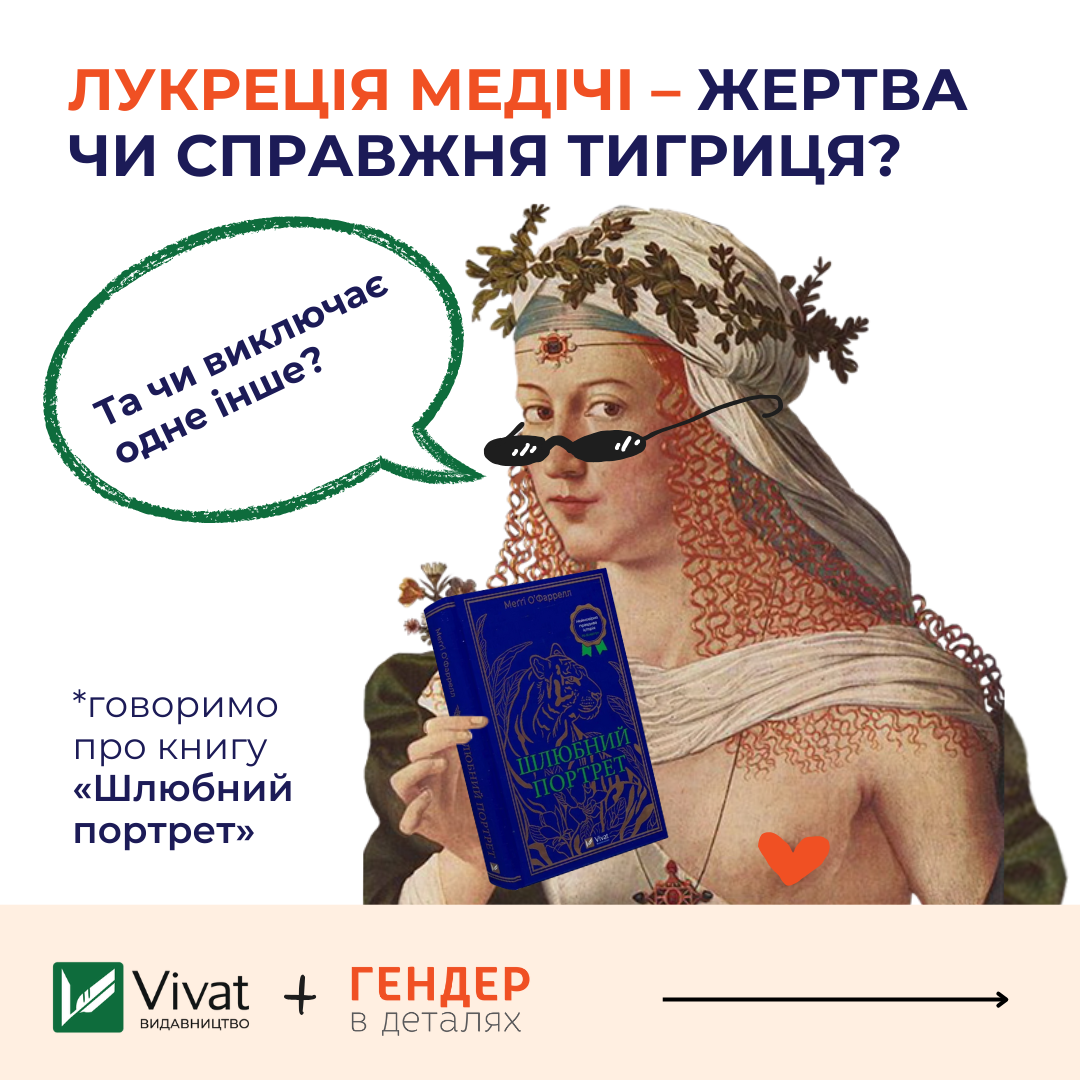
Who is Lucrezia?
Lucrezia di Cosimo de’ Medici (February 14, 1545 – April 21, 1561) was the third daughter and fifth of eleven children of Cosimo I de’ Medici, Duke of Florence, and the Spanish aristocrat Eleanor of Toledo (Lady Whistledown would have definitely rated “the most prolific family in the upper echelons of society”).
The duchess made sure that her children received the best education: when teachers come to your palazzo, you can’t skip “school”, so all the Medici children were enrolled in science, whether they were boys or girls.
But what’s the point of educating a girl if you can’t demonstrate your knowledge to your husband?
So in 1552, Lucrezia was engaged to Pope Julius III’s nephew, Fabio Dal Monte, but the engagement had to be called off three years later due to the Pope’s death. It seems like we can breathe a little, but will it get better?
In 1557, after the death of her older sister Maria de’ Medici, Lucrezia takes her place as the bride of the future Duke of Ferrara, Alfonso II d’Este. Her dowry was 200,000 scudi – a huge sum by the standards of that time. With this money, three Palazzo Pitti could have been built and there was still enough left for pins and lace. But what is money worth if even the best doctors were powerless and could not prevent Lucrezia’s death from tuberculosis in 1560? The sixteen-year-old girl was buried in the monastery of the Corpus Christi in Ferrara, but after her death, rumors circulated for a long time that the young wife was poisoned by her own husband.
And what about the book?
The author took care to ensure that Lucrezia’s life on the pages of her novel was authentic: she allows only a number of factual inaccuracies, justified sometimes by design, sometimes out of concern for the reader, so as not to confuse him with names and statuses. Thus, the line of relations of Alfonso II d’Este’s sister Elisabetta (in reality also Lucrezia) is shifted in time by 14 years and became an important and vivid episode of the story.
Lucrezia de’ Medici was indeed an educated and intelligent girl, but we know nothing about her keen hearing, clumsiness in dancing, or talent for drawing. These are details added by the author to make the character’s image more voluminous.
Why a tigress?
In the Palazzo Vecchio of Cosimo I Medici there was a menagerie with exotic animals, among which were majestic tigers, but information about whether the children of the Duke of Tuscany were allowed there, if they were, has not been preserved.
It is worth noting that the parallel drawn by the author transforms the usual expression “like a bird in a cage”: the girl is no longer seen as a poor helpless bird. She is a tigress. Strong, powerful, with extremely great potential, with energy and abilities that are capable of conquering the world if they are recognized and not neglected.
The theme of suppression of inner strength, abilities and self-realization becomes one of the key ones in the novel.
Did Lucretia have the opportunity and right to be happy?
Few people were concerned about women’s happiness in the 16th century, because if you are a woman, your function is reduced to the role of “wife” and “mother”. Lucretia was expected to be submissive, modest, and to follow moral standards. She was to become an electron that revolved around her husband, without the right to exist in a world separate from him.
Lucretia had no chance of becoming free in a society where you were taught music and art only to entertain your husband. What kind of happiness could there be if you were perceived only as a bargaining chip to strengthen the status and influence of the family?
Freedom of choice was not something a woman had then. And Lucretia was no exception. Even clothes were chosen for her.
When first your mother, and then your husband, tell you what to wear, it relieves a little of the headache. At least, you can deceive yourself with this thought. Maggie O’Farrell pays a lot of attention to the clothes of women of that time, so let’s take a look at Lucretia’s wardrobe.
Sottane is the main item of clothing of the Duchess. A kind of designer dress, consisting of a skirt, bodice and sleeves (they could be fastened with ribbons, laces or buttons). Lucretia wears it both under another layer of clothing and on its own.
Zimarra is a loose dress that a girl wears over the bottom layer, like a modern cardigan.
Giorneas is a sleeveless cape dress, open on both sides and in front. Fur lining makes it an outfit for any season.
Camicia is an undershirt made of white linen, wool, cotton, hemp or silk. It protects outerwear from sweat and dirt. Lucretia’s camicia is guaranteed to be decorated with sewing and decoration.
Scuffia is a net into which hair was laid. In Lucretia, it is woven from gold threads, decorated with stones and pearls.
It sounds and looks very beautiful.
Would you be willing to bring back Renaissance fashion at the cost of your own freedom? After all, not all women managed to get into progressive circles of like-minded people. Usually they spent their lives in a golden cage of a tigress.



Leave a Reply