
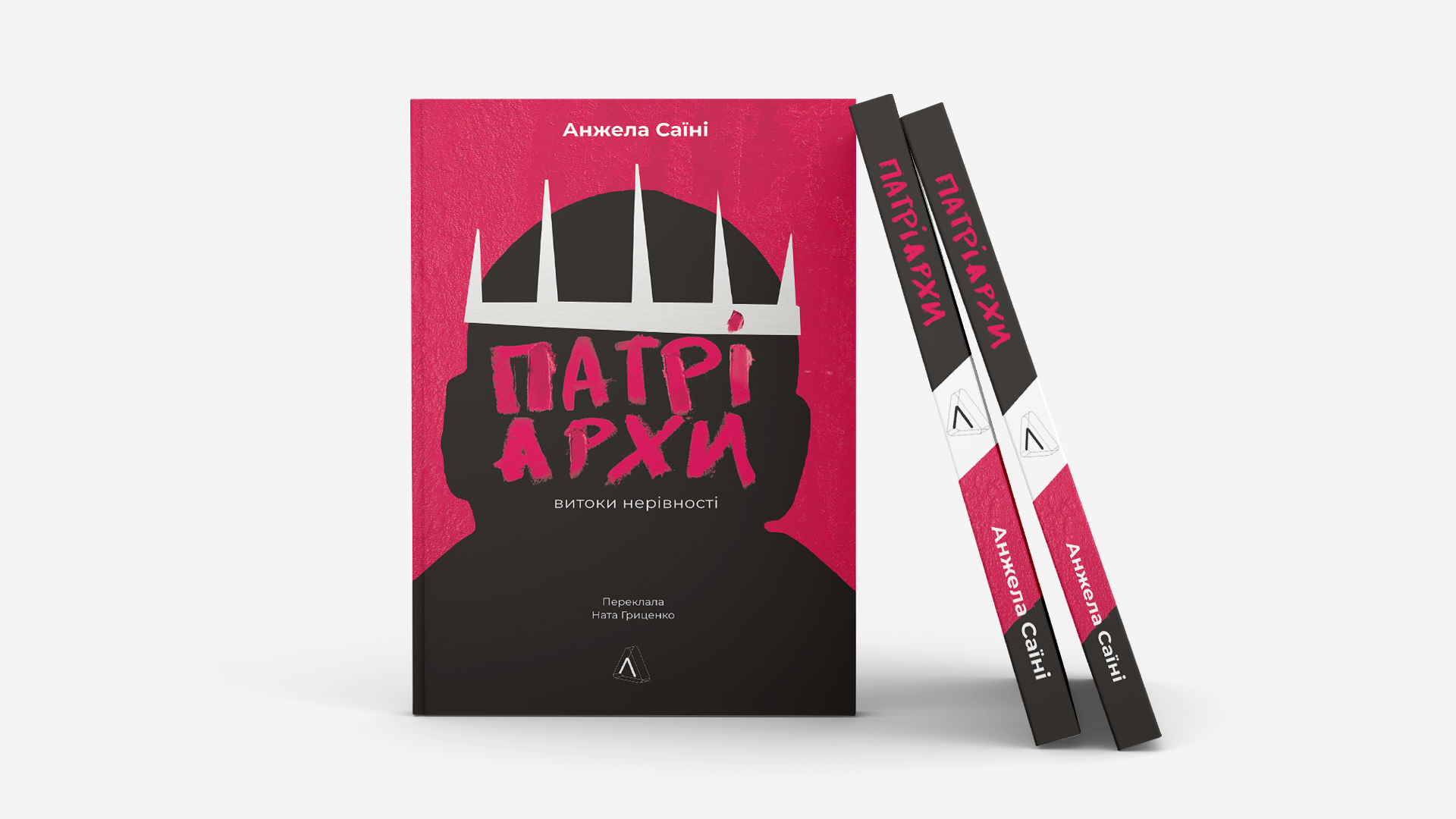
In this bold and radical book, Patriarchs: The Origins of Inequality, forthcoming from Laboratorio, science journalist Angela Saini explores the roots of what we call patriarchy: how it first took root in societies and spread across the world from prehistoric times to the present. Saini travels to the oldest known human settlements, analyzes the latest research findings, and traces cultural and political histories, arguing that colonialism and empires have radically changed the way of life in Asia, Africa, and the Americas, spreading rigid patriarchal customs and undermining the way people organize their families and work. In our time, despite the fight against sexism, violence, and discrimination, even revolutionary efforts to achieve equality often end in failure. But “Patriarchs” inspires hope—it reveals the multiplicity of human arrangements, challenges old narratives, and exposes male supremacy as an ever-changing element of control.
A dusty road lined with pistachio trees leads me from the ancient Turkish capital of Konya, home to the tomb of the Sufi poet Rumi, to the ruins of Çatal Göyük, once described as the world’s first city.
The place defies comprehension. Most of the settlement was long buried beneath a rise in the generally flat and arid plains of southern Anatolia. The small part that has been excavated reveals a society in which nothing follows the rules we’d expected. The edge of the archaeological site abruptly disappears into several floors of caves. The houses at Çatalhöyük—which means “fork of the road,” because that was all it was until the excavations—were built tightly together, back to back and wall to wall. They had flat roofs but no windows or doors. Residents entered and exited by ladders through openings in the roofs, walking on top of the houses, not between them. The dwellings were built in layers on top of older dwellings.
What makes Çatalhöyük special is that it was inhabited at the end of the Old Stone Age, at least 7400 BC, in the Neolithic period, before humans invented writing. This means it was inhabited almost 5,000 years before the first pyramids in Egypt and more than 4,000 years before Stonehenge was built in Britain. It is likely older even than the Harappan civilization in the Indus Valley. Çatalhöyük is located near the Fertile Crescent, a region in the Middle East that supported some of the world’s earliest farming communities. The land appears dry now, but it was once a wetland teeming with fish and birds. People gathered berries and herded goats nearby. They had clay and reeds to build their homes. But as incredibly early as Çatalhöyük is, it is still brimming with social and artistic complexity.
Thousands of people once called it home. The walls were regularly plastered, and striking works of art were created on the fresh surface. Bright red frescoes depict tiny stick figures hunting huge animals. Headless bodies, stalked by soaring vultures with wide wings. The walls are set with bull heads, their horns jutting out, as if in the interior of some American cowboy ranch.
“It was thought to be in the middle of nowhere, this huge mound with a really rich material culture that was 9,000 years old,” says Ruth Tringham, a professor of anthropology at the University of California, Berkeley, whose work focuses on the archaeology of Neolithic Europe. Almost as soon as excavations began in May 1961, Çatalhöyük became a focal point for those seeking to understand human organization at one of the oldest known settlements on the planet. In 1997, Tringham led part of a team that continued archaeological work at the site, helping to piece together a picture of what life might have been like for the people there.
It wasn’t just the buildings or the murals that fascinated archaeologists. My attention focused on something much smaller, something that would fit in the palm of my hand. Now proudly displayed in its own glass case at the Museum of Anatolian Civilizations in Ankara, the treasure is known as the “Seated Woman of Çatal-Göyük.”
Experts believe that Çatal-Göyük may have been the site of an ancestor-worshiping cult. The remains of dead ancestors were kept in the same houses as the people, under platforms in the floor. The skulls were sometimes removed, even plastered and painted, and then passed on to one another. Hundreds of small figurines have been found at the site—some clearly human, others resembling animals or something more ambiguously anthropomorphic. Yet the sculptural finds at many Neolithic sites in this region and beyond are unmistakably replete with the likeness of the female form. There are dozens of them in the museum, a handful of tiny Barbara Hepworth-style clay figures. One figurine depicts the torso of a pregnant woman on one side and the protruding ribcage of a skeleton on the other. But nothing compares to the awesomeness of the Seated Woman.
When I see her, I understand the general admiration. Her head had to be reconstructed because it was missing when she was found, but that’s It doesn’t matter when the rest of her body says so much. Several scholars have described her as a symbol of fertility. To me, at least, she doesn’t look pregnant or particularly provocative. She’s curvy, and the bare curves of flesh cascade down her body like waterfalls. Deep grooves mark her knees and navel. These are the signs of a body that has lived a long time—perhaps an older woman, hardened by age. But what stands out most is her posture. Her back is perfectly straight. On either side of her thighs, beneath her palms, are what look like two large cats, perhaps leopards, staring straight ahead.
So the most intriguing aspect of the Seated Woman of Çatalhöyük is not her famously curvaceous body. It’s her posture, commanding two large cats. In a society apparently preoccupied with animals, hunting, and death, her appearance is admirably commanding.
Even matriarchal.





Leave a Reply